Quick Guide: The 4 Golden Rules of Reptile Aesthetics
Never sacrifice husbandry for looks. Before styling your tank, make sure your design follows these four non-negotiable safety rules:
- Protect Your Gradients (Function Over Form): Reptiles rely on external heat and UVB to survive. Never let hanging foliage, bridges, or backgrounds block your UVB lamp or halogen basking bulb. Always measure your hot side, cool side, and humidity levels after your decor is fully installed to ensure proper airflow and heat distribution.
- Zero-Tolerance for Toxic Substrates & Woods: Not all natural materials are safe. Never use pine, cedar, or eucalyptus wood/shavings, as their aromatic oils cause severe respiratory toxicity in reptiles. Avoid “calcium sand” and crushed walnut shells entirely, as these pose a lethal bowel impaction risk if accidentally ingested during feeding.
- Anchor All Heavy Decor to the Enclosure Floor: Burrowing species (like Corn Snakes, Leopard Geckos, and Bearded Dragons) will happily dig underneath heavy decor. Always place heavy slate, rocks, and large branches directly on the glass or PVC floor before adding your substrate. If placed on top of loose dirt or sand, the animal can undermine the structure, causing it to collapse and crush them.
- Use Strictly Vetted, Non-Toxic Greenery: If you are using live plants, remember that omnivores and herbivores will sample their landscaping. Only use verified non-toxic plants like Pothos, Sansevieria (Snake Plant), Spider Plants, and Bromeliads. If using artificial foliage, ensure there are no exposed sharp wires or toxic chemical dyes that bleed when misted.
We all love scrolling through Pinterest looking at gorgeously styled homes, but when it comes to our scaly pets, standard interior decor rules don’t apply. A beautiful terrarium means nothing if it doesn’t support the biological needs of your reptile.
Whether you are bringing home your first Leopard Gecko or building a centerpiece jungle for a Crested Gecko, you don’t have to choose between a healthy pet and a stylish living room. You just need to build with safety first.
These reptile enclosure ideas are meant to inspire your terrarium design, but every setup should be customized around your reptile’s exact species, natural habitat, size, temperature, humidity, and lighting needs.
Part 1: Species-Specific Aesthetic Setups
The easiest way to style a stunning terrarium is to take design inspiration directly from your reptile’s natural wild habitat. By mimicking their native environment with upgraded, aesthetic materials, you get an enclosure that looks like a slice of nature in your living room, while giving your pet exactly what they need to thrive.
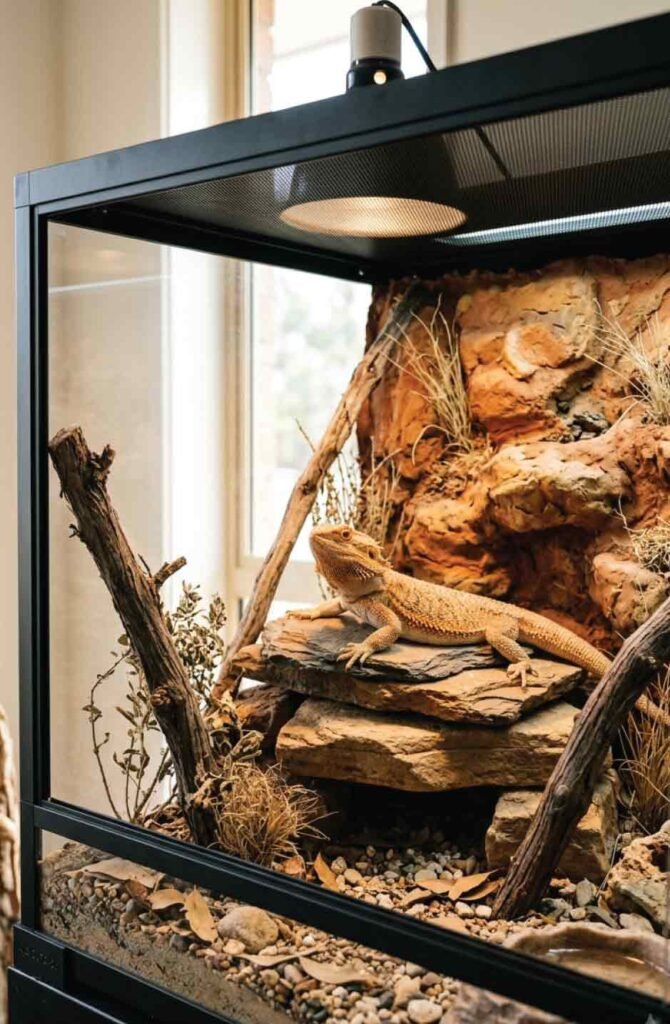
Natural Desert Bearded Dragon Enclosure
- The Terrarium Look: Warm, texturized, Australian outback chic. Think terracotta tones, natural stone, and matte black enclosure frames.
- Key Elements: A custom-carved excavator clay background, authentic mopani or spider wood, and layered natural slate tiles for the basking zone. Slate is visually striking and exceptionally functional, as it absorbs heat from your basking bulb and provides essential belly warmth for digestion.
- Scannable Tip: Never use loose play sand or calcium sand for juveniles due to the high risk of fatal bowel impaction. Instead, opt for textured ceramic slate tiles or custom clay mats. If you are debating whether this active, sun-loving reptile fits your lifestyle, check out our honest breakdown on How Challenging are Bearded Dragons as Pets? before building their home.
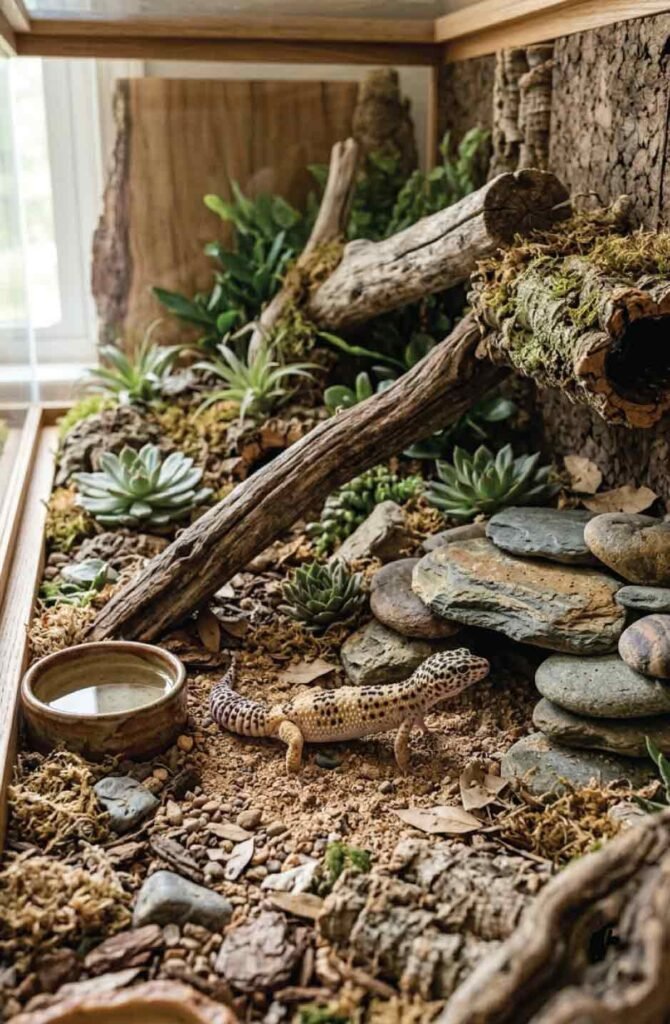
Cozy Leopard Gecko Tank Setup
- The Terrarium Look: Low-profile, earthy, and warm, featuring desert stone aesthetics and muted green accents.
- Key Elements: Faux succulent clusters (without sharp plastic edges), low-lying branches, and custom stone-textured hides. Leopard geckos are nocturnal explorers that love to squeeze into tight, dark spaces.
- Scannable Tip: Every leopard gecko terrarium strictly requires a 3-hide system: one warm hide, one cool hide, and one enclosed humid hide (essential for healthy shedding). You can easily camouflage unsightly plastic humid hides by stacking flat, sanitized stones around them to keep your aesthetic cohesive. For a complete deep-dive into temperature gradients and feeding routines, read our full guide on Leopard Gecko Care: The Perfect Low-Maintenance Pet?.
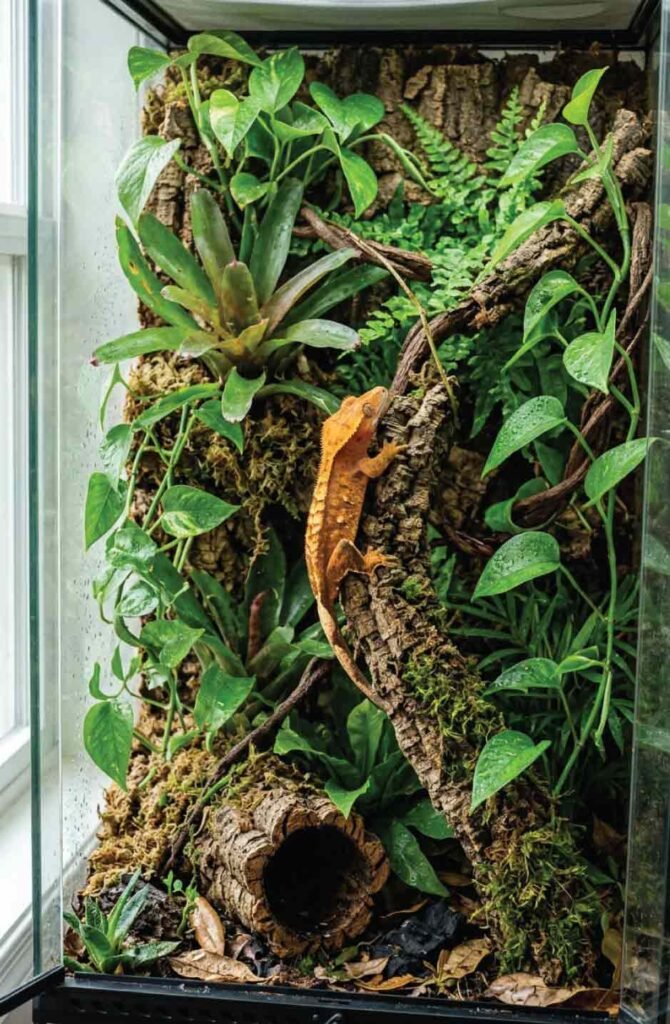
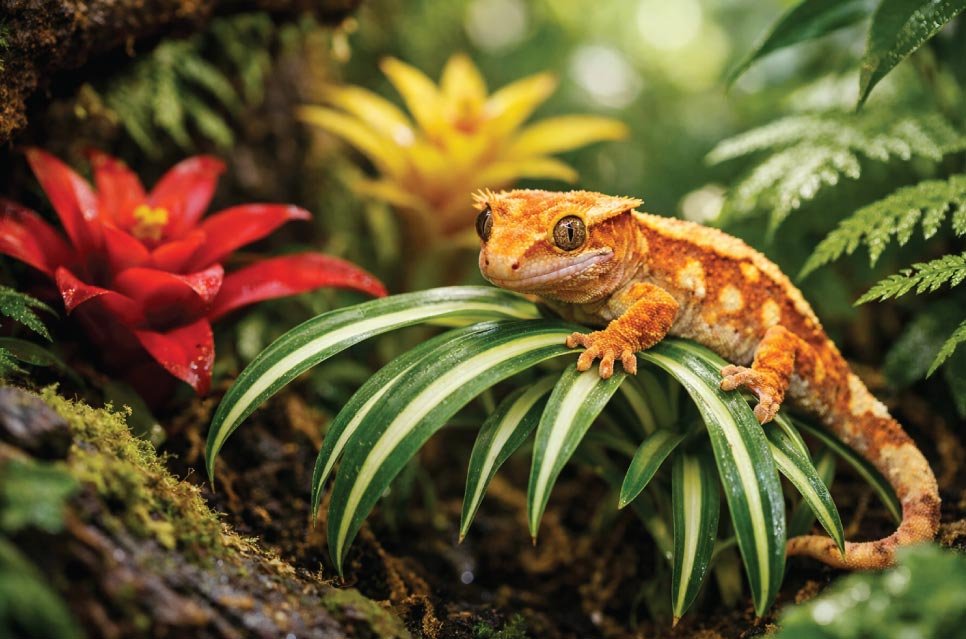
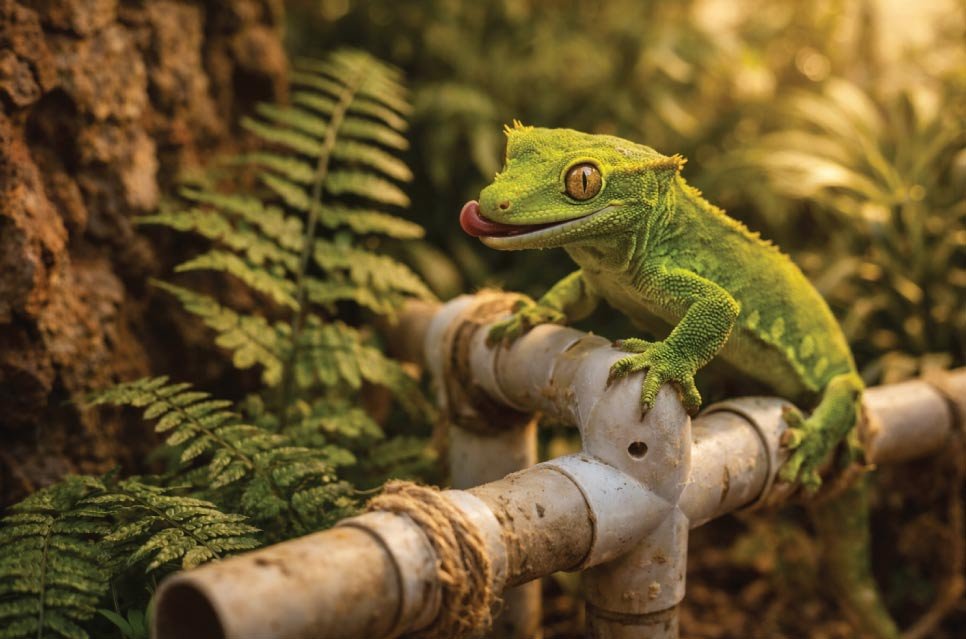
Vertical Crested Gecko Jungle Terrarium
- The Terrarium Look: A lush, vibrant tropical rainforest that adds a pop of rich greenery to any room.
- Key Elements: Tall hollow cork bark tubes, thick trailing vines, magnetic elevated feeding ledges, and sturdy broad-leafed plants (like live Pothos or Monstera Adansonii).
- Scannable Tip: Crested geckos are strictly arboreal and rarely touch the floor. Design your layout to utilize the top 50% of the tank. For environmental accuracy, cross-reference your humidity cycling and UV-B lighting setup with evidence-based care standards from organizations like ReptiFiles, ensuring your artificial jungle performs just like the wild.
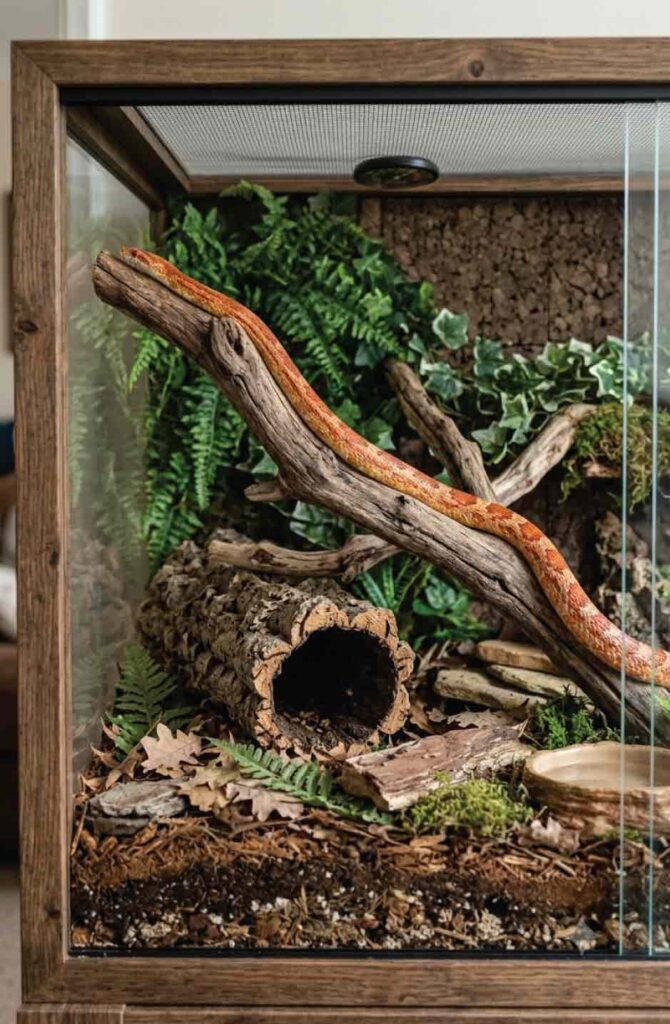
Simple Corn Snake Enclosure
- The Terrarium Look: Clean, minimalist woodland featuring rustic wood tones and forest textures.
- Key Elements: Lightweight hollow climbing logs, sturdy branches anchored securely to the walls, and a deep layer of laboratory-grade aspen shavings or an organic topsoil/play sand mix.
- Scannable Tip: Corn snakes are semi-arboreal escape artists that love to both climb and burrow. Give them at least 3 to 4 inches of clean substrate to dig tunnels, and ensure every lid or door has heavy-duty locks. If you are setting up your first colubrid habitat, our Corn Snake Care Guide for Beginners walks you through exact heating setups and feeding schedules.
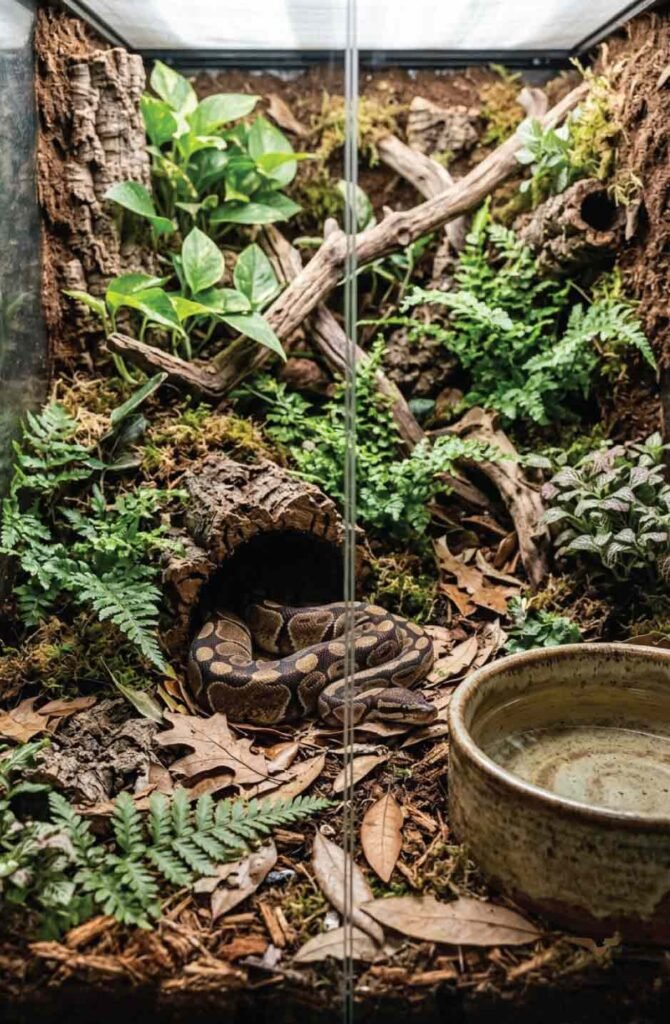
Ball Python Hide-Focused Setup
- The Terrarium Look: A dark, mysterious, and secure rainforest floor with deep brown earth tones and dense leaf litter.
- Key Elements: Heavy, enclosed dark resin hides with single entrances, a heavy-duty ceramic water dish large enough for soaking, and sterilized oak or magnolia leaf litter scattered across the floor.
- Scannable Tip: Unlike desert species, Ball Pythons require high ambient humidity (60%–80%). Never use aspen bedding for a Ball Python, as it molds quickly in high humidity; instead, use moisture-retentive cypress mulch, organic topsoil, or coco husk. Ball pythons value security over open space, a tank that looks “cluttered” with artificial foliage and low branches will actually make your snake feel safer and reduce feeding strikes. For routine health checks and advice on humidity-related respiratory issues, always consult a certified exotic vet through the Association of Reptilian and Amphibian Veterinarians (ARAV).
Part 2: Lifestyle & Space-Saving Concepts
You don’t need a sprawling suburban house or an unlimited budget to create a stunning reptile habitat. Whether you are styling a chic studio apartment or trying to maximize an awkward room corner, these concepts focus on smart space utilization, clever DIY hacks, and sleek integration into your existing home furnishings.
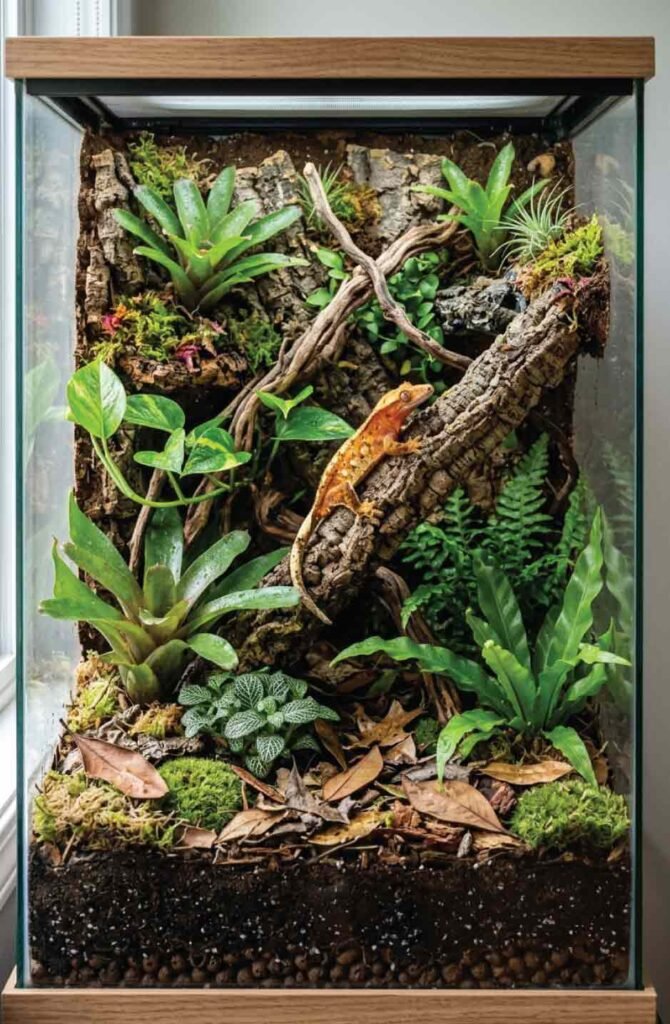
Bioactive Reptile Tank Idea
- The Terrarium Look: A lush, self-sustaining slice of nature, like having a miniature, living botanical garden that also houses your pet.
- Key Elements: A distinct drainage layer (clay hydroballs), a mesh substrate barrier, a nutrient-rich organic soil mix (like ABG mix), sterilized leaf litter, and live tropical plants. The secret sauce is the “clean-up crew”, a thriving colony of isopods and springtails that naturally break down organic waste and keep the soil healthy.
- Scannable Tip: Bioactive habitats are incredible, but they are not 100% maintenance-free right out of the box. It can take several weeks for your clean-up crew colony to establish itself. During this period, you must still spot-clean waste! If you are ready to build a self-cleaning ecosystem, follow our step-by-step instructions in Bioactive Reptile Tank Setup for Beginners, and make sure to choose your plants from our 10 Best Reptile Safe Terrarium Plants: Non-Toxic Greenery Guide.
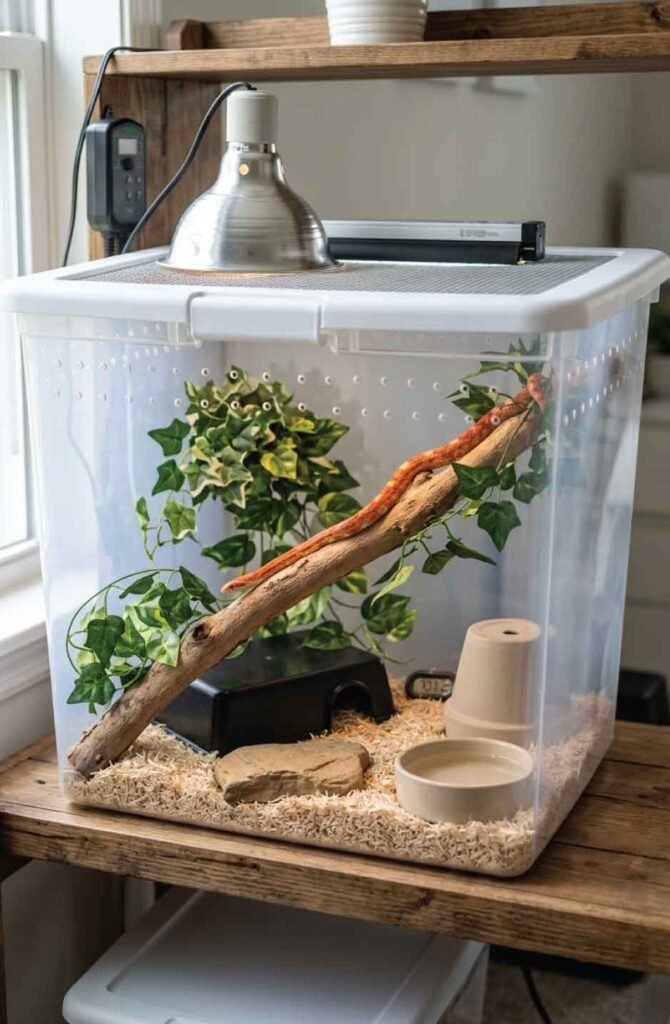
Budget-Friendly Reptile Enclosure
- The Terrarium Look: High-end, clean aesthetics on a thrifty, DIY budget. Proving that great husbandry doesn’t require spending hundreds of dollars on brand-name decor.
- Key Elements: Modified Sterilite storage bin conversions (fantastic for high-humidity species like juvenile colubrids or geckos), dollar-store silk foliage (thoroughly checked for exposed sharp wires or bleeding dyes), and natural branches gathered safely from pesticide-free outdoor areas.
- Scannable Tip: Never compromise on your heating and thermostat hardware to save money. If you are on a tight budget, save your money on the enclosure body and visual decor, but always invest in a reliable dimming thermostat and safe, quality UVB/basking lighting to prevent burns or metabolic bone disease.
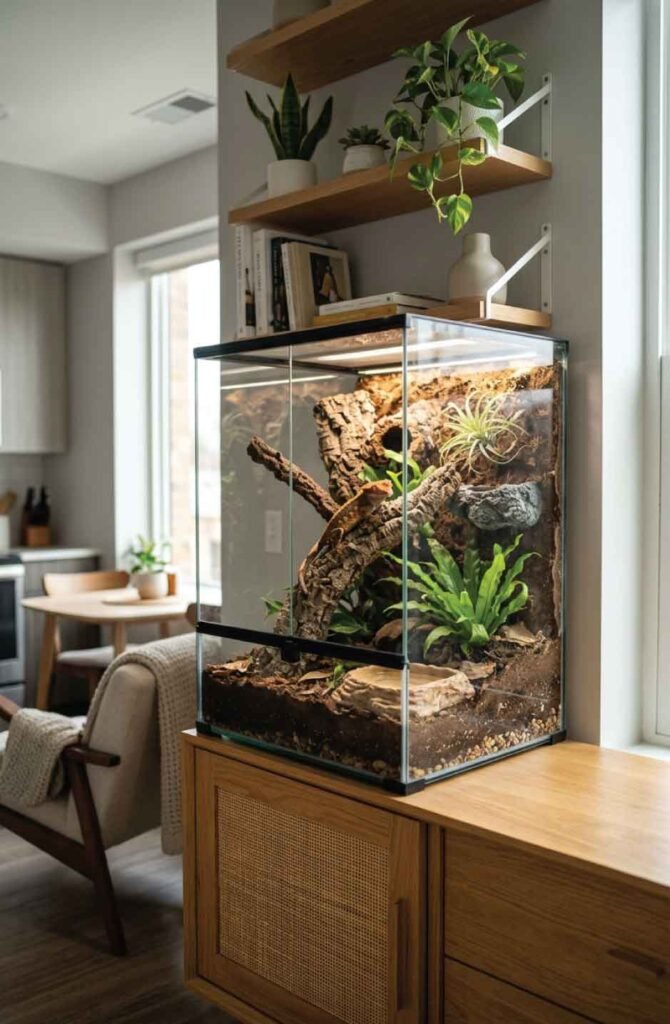
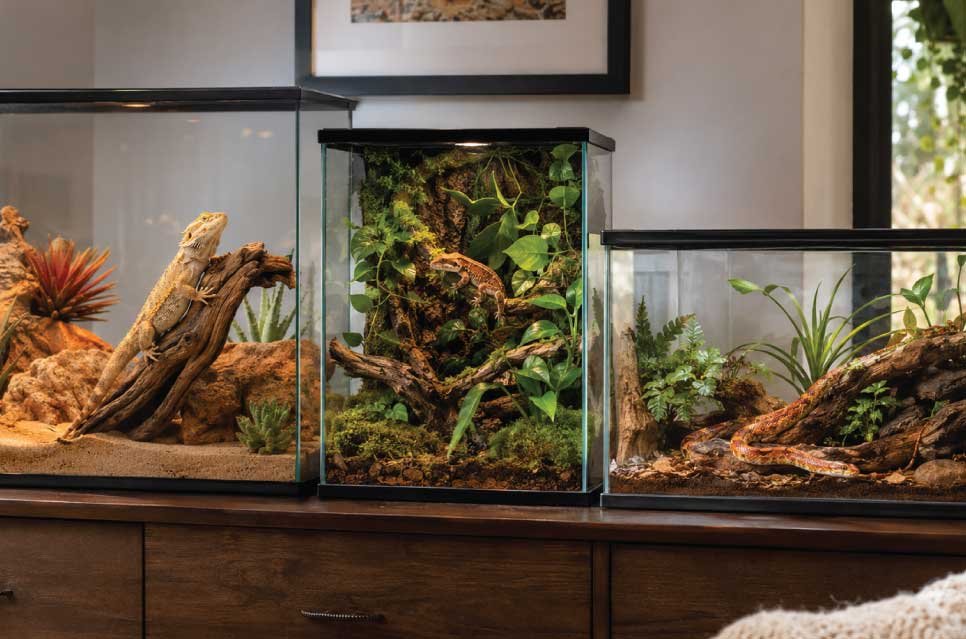
Small Apartment Reptile Setup
- The Terrarium Look: Seamless multi-functional furniture integration that maximizes vertical living space and looks like a custom piece of interior design.
- Key Elements: Front-opening glass or PVC terrariums placed securely on top of sturdy, stylish sideboards, credenzas, or integrated into heavy-duty shelving units (like reinforced industrial bookcases).
- Scannable Tip: Front-opening doors are absolute game-changers for small spaces. Top-opening tanks require empty clearance above the lid for maintenance, which wastes valuable vertical storage space in an apartment. Plus, reaching in from the front is far less intimidating for your reptile than a giant hand coming down from above like a natural predator!
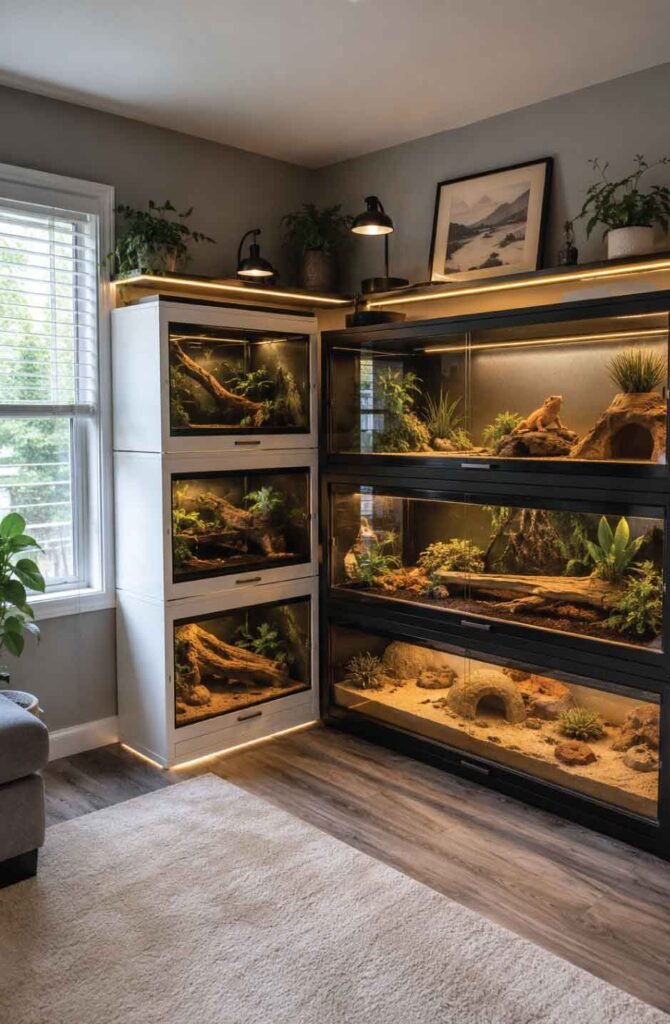
Reptile Room Corner Idea
- The Terrarium Look: A sleek, organized, and professional hobbyist sanctuary that turns an empty, awkward room corner into a magnificent focal point.
- Key Elements: Modular, stacked PVC enclosures with uniform black or white frames, hidden cable management channels to tuck away messy cords, and warm LED ambient strip lighting along the shelving edges.
- Scannable Tip: PVC enclosures are the undisputed kings of stacking and space-saving. They are significantly lighter than standard glass tanks and hold ambient heat and humidity far more efficiently, which will noticeably lower your monthly electric bill! To ensure your stacked setup has all the required hardware and safety gear, cross-reference our Reptile Habitat Setup: Essentials Every Pet Owner Needs.
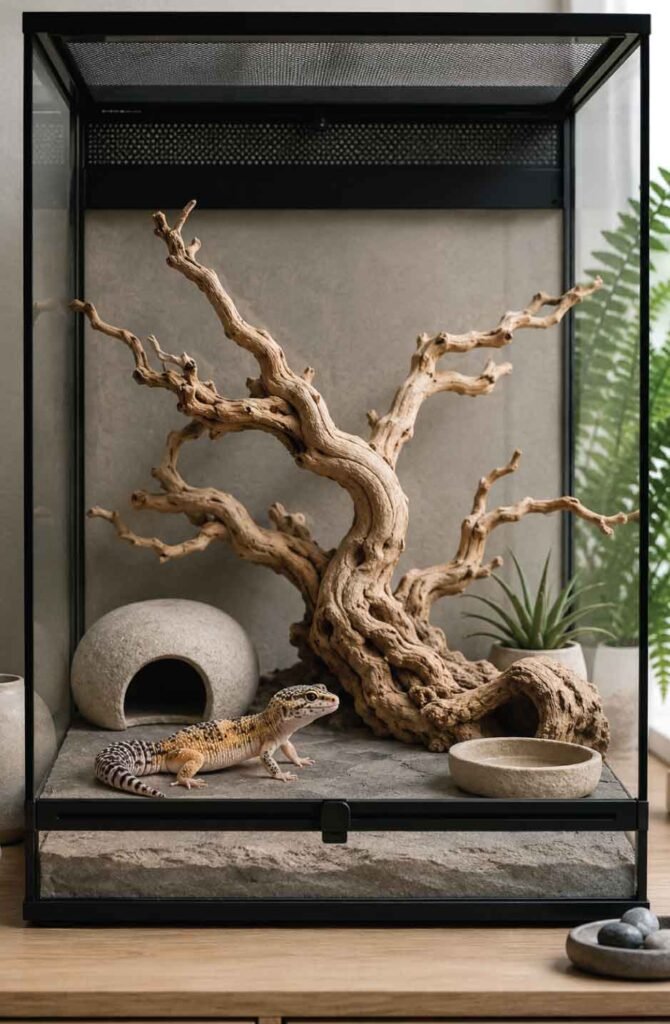
Minimalist Modern Terrarium
- The Terrarium Look: Zen, architectural Scandinavian design featuring clean visual lines, uncluttered layouts, and intentional, highly curated decor.
- Key Elements: Frameless or slim-profile glass tanks, a single striking architectural centerpiece (like a dramatic piece of sandblasted manzanita wood or pagoda stone), and sleek, monochromatic ceramic hides that match your room’s color palette.
- Scannable Tip: Minimalism for humans must still provide emotional security for reptiles! Never leave a tank bare just for the aesthetic. You can achieve a clean, modern minimalist look by using color-coordinated, solid-colored decor and grouping your climbing structures and hides strategically into visual zones, ensuring your pet still has plenty of cover to feel safe.
Part 3: Advanced Decor & Enrichment
If you want to take your terrarium design a step further, focusing on sensory stimulation, advanced custom DIYs, and natural behaviors will completely transform your pet’s life. Reptiles are far more curious and capable than people give them credit for, and these setups encourage them to explore every inch of their home.
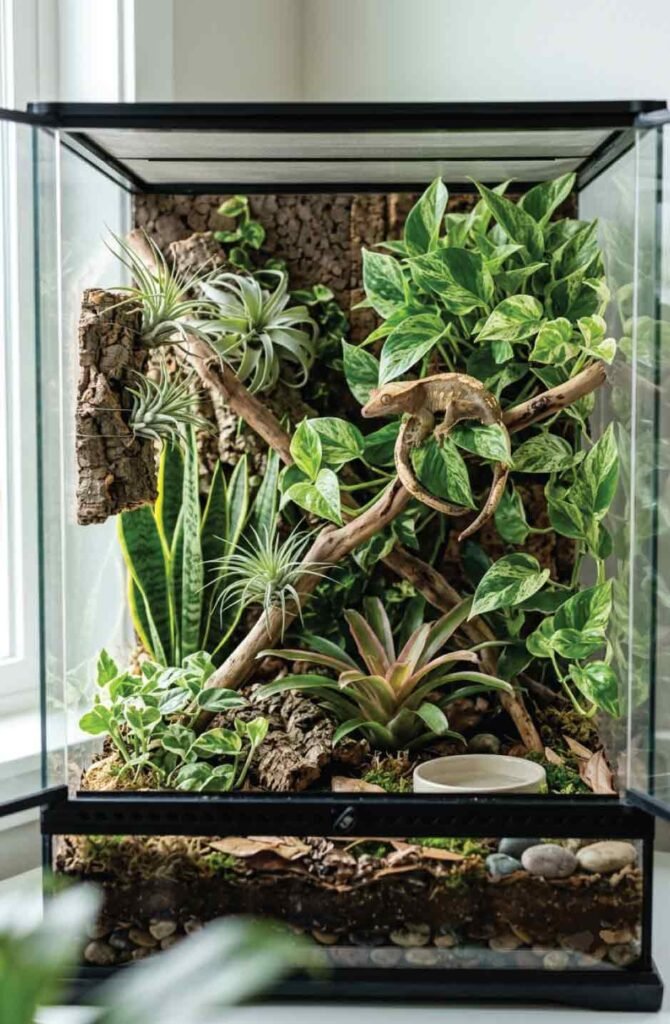
Reptile-Safe Plant Setup
- The Terrarium Look: A lush, thriving botanical haven that turns your terrarium into a premium interior design feature.
- Key Elements: Live, sturdy, and vetted non-toxic flora like Sansevieria (Snake Plants), Tillandsia (Air plants), and Pothos. Plant them in organic, fertilizer-free soil or anchor air plants elegantly onto branches using aquarium-safe thread.
- Scannable Tip: Always quarantine and wash new plants before adding them to your tank. Commercial nurseries heavily treat decorative plants with systemic pesticides and fertilizers that are toxic to reptiles. Wash the roots completely bare of commercial soil, rinse the leaves with treated water, and let the plant grow outside the tank for 2 to 3 weeks to ensure it is 100% clean. For a full list of safe species, refer to our 10 Best Reptile Safe Terrarium Plants: Non-Toxic Greenery Guide.
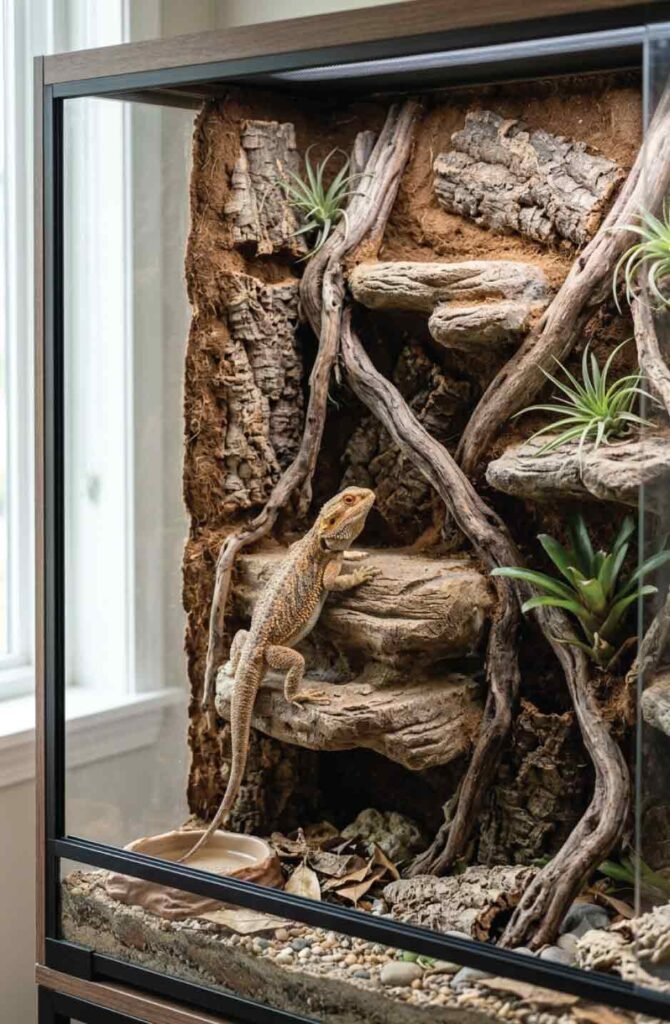
DIY Background Enclosure
- The Terrarium Look: A professional-grade, seamless 3D rock wall or tree-root background that adds incredible depth and realism.
- Key Elements: Aquarium-safe expanding polyurethane foam (like Great Stuff Pond & Stone), 100% silicone (Type I, with zero mold inhibitors or antimicrobials), cork bark chunks, and dry coco coir or sand to press into the wet silicone.
- Scannable Tip: You can carve the expanding foam with a utility knife once it dries to create built-in, custom basking ledges. Crucial safety step: Allow the entire background to fully cure and air out until there is absolutely zero chemical smell remaining before you introduce your reptile. This usually takes 3 to 7 days depending on your ventilation.
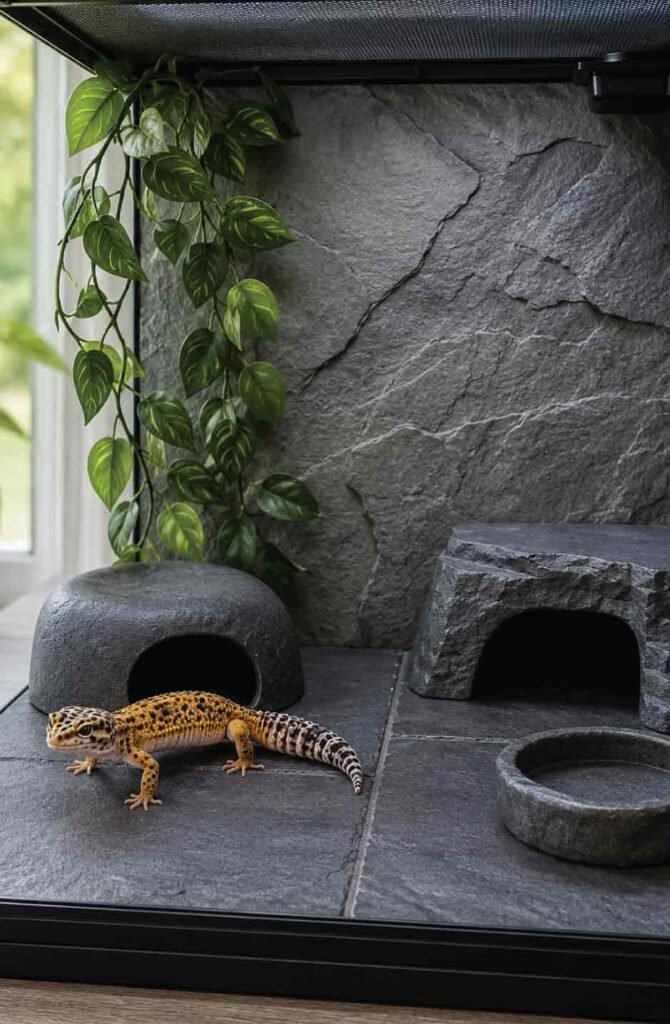
Beginner-Friendly Low-Maintenance Setup
- The Terrarium Look: Clean, modern, highly functional elegance that makes deep-cleaning days an absolute breeze.
- Key Elements: Unglazed ceramic or slate floor tiles, heavy non-porous resin hides that can be scrubbed down instantly, and simple, high-quality artificial vines that don’t trap water or bacteria.
- Scannable Tip: Avoid synthetic reptile carpets entirely. The reptile community widely agrees that reptile carpets are unsafe because they harbor dangerous amounts of bacteria that are impossible to wash out completely, and their looped fibers can easily snag and tear your pet’s small claws or teeth. Use paper towels for quarantine, or transition to beautiful, sanitizable slate tiles instead.
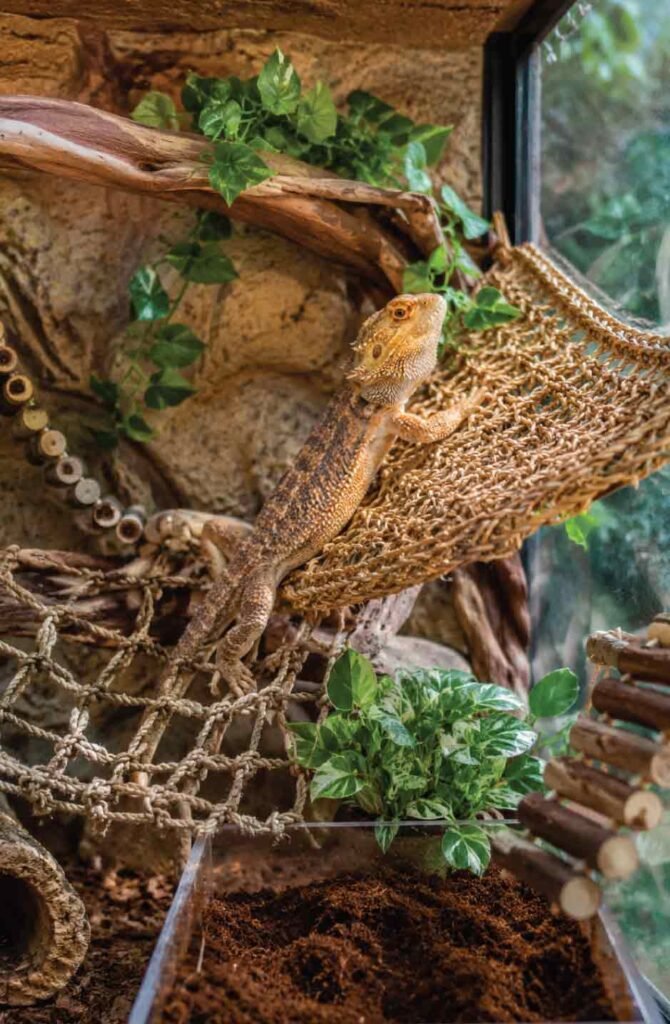
Cute Reptile Enrichment Corner
- The Terrarium Look: An interactive, playful “jungle gym” zone designed specifically to stimulate your pet’s mind and body.
- Key Elements: Woven seagrass hammocks, natural bridge ladders, safe multi-texture climbing networks, and temporary safe “dig boxes” filled with coconut coir or organic topsoil for burrowing enrichment.
- Scannable Tip: Reptiles easily get bored if their environment never changes. Every few months during a deep clean, mirror the wild by slightly rearranging their enrichment pieces or swapping out a climbing branch for a new texture to keep their brains active. For more creative ideas, check out our guide on 5 DIY Reptile Toys & Enrichment Ideas to Cure Boredom.
Part 4: The Reality Check
Designing a gorgeous terrarium is incredibly rewarding, but a single simple mistake can lead to an expensive emergency vet visit. Use this quick reference table to double-check your design choices before you place your scaly friend into their new home.
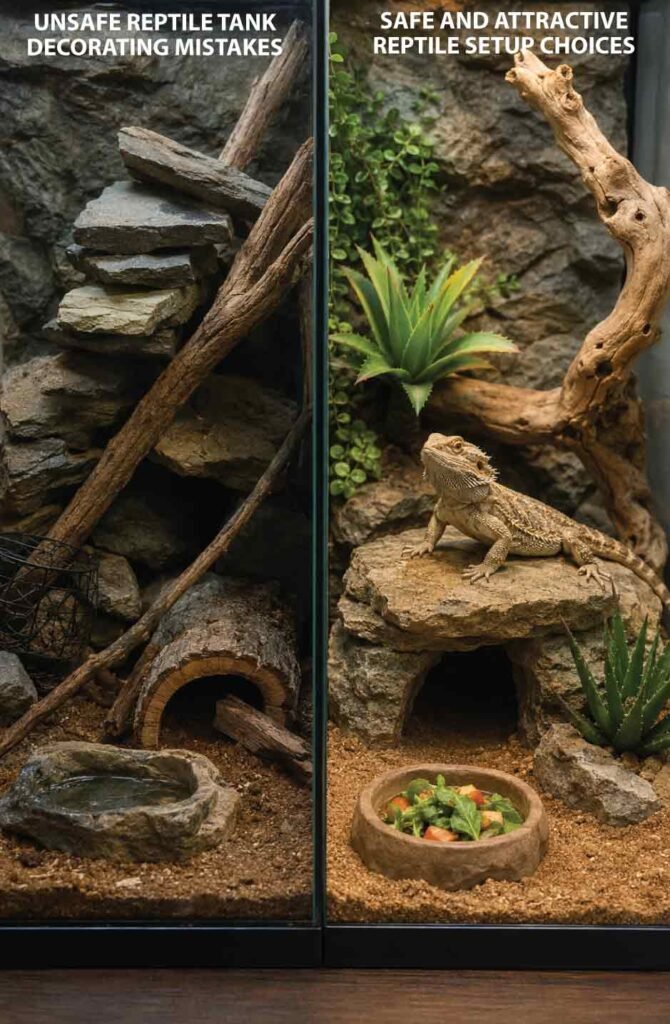
Mistakes to Avoid When Decorating a Reptile Tank
| Common Decor Mistake | Why It's Dangerous to Your Pet | The Safe, Aesthetic Alternative |
|---|---|---|
| Placing heavy rocks on top of loose substrate | Reptiles love to burrow. If they dig under a heavy rock, the structure will collapse, causing severe crushing injuries or death. | Anchor rocks directly to the bare floor of the tank before adding any dirt or sand around them. |
| Using tape, Velcro, or exposed adhesives inside the tank | Even heavy-duty tape will eventually fail in warm, humid tanks. Exposed adhesive will stick to a reptile’s skin or scales, causing catastrophic tearing injuries. | Use aquarium-safe silicone, mechanical suction cups, or hot glue (fully cooled and cured) to secure wires, vines, and thermometers. |
| Leaning tall branches loosely against glass walls | Heavy-bodied snakes or active lizards will easily tip over unsecured logs, potentially cracking the glass enclosure or injuring themselves. | Wedge branches tightly between walls or secure them safely using heavy-duty stainless steel screws or silicone joints. |
| Using random wood or rocks found outside without sanitizing | Wild materials harbor hidden snake mites, harmful parasites, dangerous bacteria, and wild fungal spores. | Bake rocks and wood in the oven at 250°F (120°C) for 30–60 minutes, or boil them in water for 30 minutes before introduction. Never bake wet rocks as they can explode. |
| Buying wood from aromatic trees (Pine, Cedar, Eucalyptus) | These specific woods release volatile aromatic oils (phenols) that cause rapid, severe respiratory tract infections and neurological damage in reptiles. | Stick strictly to cork bark, mopani wood, ghost wood, grapevines, or sandblasted manzanita. |
For a complete checklist of foundational setup rules before you begin your aesthetic transformation, don’t miss our comprehensive roadmap: Reptile Habitat Setup: Essentials Every Pet Owner Needs.
Frequently Asked Questions about Reptile Enclosure Ideas
No, you should always keep a new pet in a simple, sterile quarantine setup for at least 30 to 90 days before moving them into an elaborate aesthetic enclosure. Using a basic quarantine tank lined with paper towels allows you to easily monitor their stool for internal parasites, check for external snake mites, and ensure they are eating properly without them hiding inside complex rockwork or deep substrate.
Always use veterinary-grade disinfectants like F10SC, Chlorhexidine, or a simple 1:1 warm water and white vinegar solution to clean your enclosure. Never use standard household cleaners, scented bleach, or bathroom sprays, as toxic chemical residues can permanently absorb into porous wood, resin, and slate, leading to fatal respiratory poisoning or skin burns.
New wood introduced to a humid tank often experiences a temporary, harmless "new tank syndrome" bloom of white saprophytic mold as it settles into the environment. While it looks unsightly, you can easily remove it by scrubbing the wood with hot water, increasing the tank's ventilation, or introducing springtails, tiny beneficial insects that will happily eat the mold as a free food source!
For the vast majority of popular beginner reptiles, such as Bearded Dragons, Leopard Geckos, Crested Geckos, and Ball Pythons, you should never cohabitate them in the same enclosure. These species are strictly solitary and territorial; forcing them to share a space will cause chronic stress, resource guarding, severe physical fighting, and potentially death, no matter how large or beautifully decorated the tank is.
Your choice of enclosure material should depend entirely on your pet's specific humidity and airflow requirements. Screen mesh terrariums are strictly for species that require high airflow and low humidity (like Chameleons), standard glass tanks are great for moderate desert species, and solid PVC enclosures are the absolute best choice for tropical species that require trapped, high ambient humidity (like Ball Pythons or Rainbow Boas).
You should provide your reptile with a consistent 12-hour day and 12-hour night photoperiod by plugging all basking bulbs, LEDs, and UVB lamps into an automated smart timer. Never leave lights on 24/7 just to illuminate your room, as continuous light severely disrupts a reptile's circadian rhythm, immune system, and natural sleeping habits; for nighttime heating, use lightless heat sources like Ceramic Heat Emitters (CHEs) or Deep Heat Projectors (DHPs).
Prefer Audio? Listen to Reptile Enclosure Ideas
Wrapping It Up: Safety Meets Style
Creating a stunning reptile habitat is the ultimate way to blend your passion for your scaly pet with your love for interior design. Remember, the most beautiful enclosure on Pinterest is always the one where the reptile inside is thriving, healthy, and stress-free.
By starting with a rock-solid foundation of proper heating, correct humidity, and safe, non-toxic materials, you can confidently style a miniature slice of nature that serves as a gorgeous centerpiece for your home.
Which of these 15 styles are you planning to build for your pet? Let us know in the comments below, and don’t forget to save this post to your Pinterest boards so you can reference it during your next tank makeover!