

Quick Guide Free-Roam Bunny Setup
- Baseboard Shields: Use clear acrylic wall guards or matching wooden furring strips to protect wood trim without compromising room aesthetics.
- Concealed Electronics: Route power cords through heavy-duty split-loom tubing or hide them inside decorative minimalist cable management boxes.
- Furniture-Style Litter Stations: Swap out plastic trays for neutral wooden litter box enclosures featuring built-in hay racks to keep spaces immaculate.
- Washable Low-Pile Rugs: Layer high-traffic zones with durable, machine-washable rugs to stop destructive digging while preserving your home decor.
You want your rabbit to enjoy the freedom of a cage-free life, but you also want a living room that looks like an intentional home, not a chaotic petting zoo. Transitioning to a free-roam bunny setup shouldn’t mean sacrificing your personal interior style or watching your expensive baseboards get chewed to pieces. Many standard pet guides recommend ugly wire utility panels and bright plastic cages that completely clash with a modern home aesthetic. This guide gives you highly actionable, design-forward strategies to bunny-proof your home beautifully. Whether you are still weighing the pros and cons of having rabbits as pets or you are already living with a tiny, fluffy demolition crew, you will learn how to balance top-tier rabbit care with a clean, sophisticated space.
Elegant Protection Strategies for Creative Living Spaces
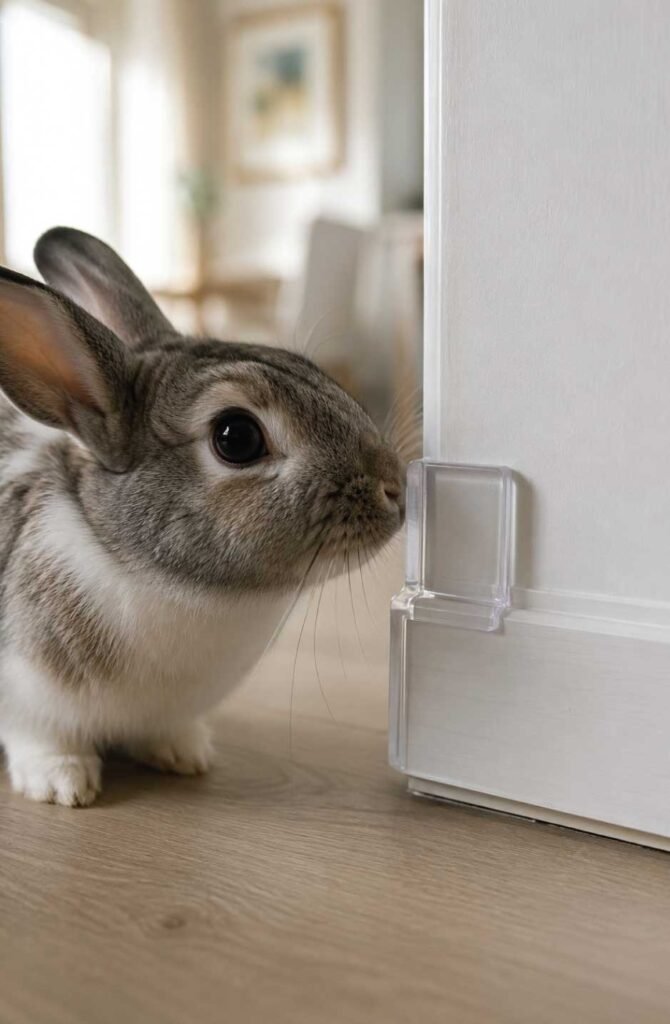
Invisible Armor for Wood Trim and Baseboards
Rabbits possess an innate evolutionary urge to chew on wood to keep their continuously growing teeth worn down, making your gorgeous baseboards prime real estate. Protecting your woodwork does not require wrapping your room in industrial metal wire or industrial plastic barriers. By using clear materials or matching painted sacrificial wood pieces, you can create a highly effective physical barrier that completely blends into your existing walls.
- Install clear plastic adhesive corner guards or clear acrylic sheets cut to size along high-risk perimeter walls.
- Safe wood options can be found in our comprehensive resource on caring for small mammals made easy if you want to understand safe materials.
- Secure simple, paint-matched wooden furring strips directly over your actual baseboards to serve as a legal, replaceable chewing surface.
- Monitor corner sections closely, as rabbits prefer starting their chewing projects where two walls intersect.
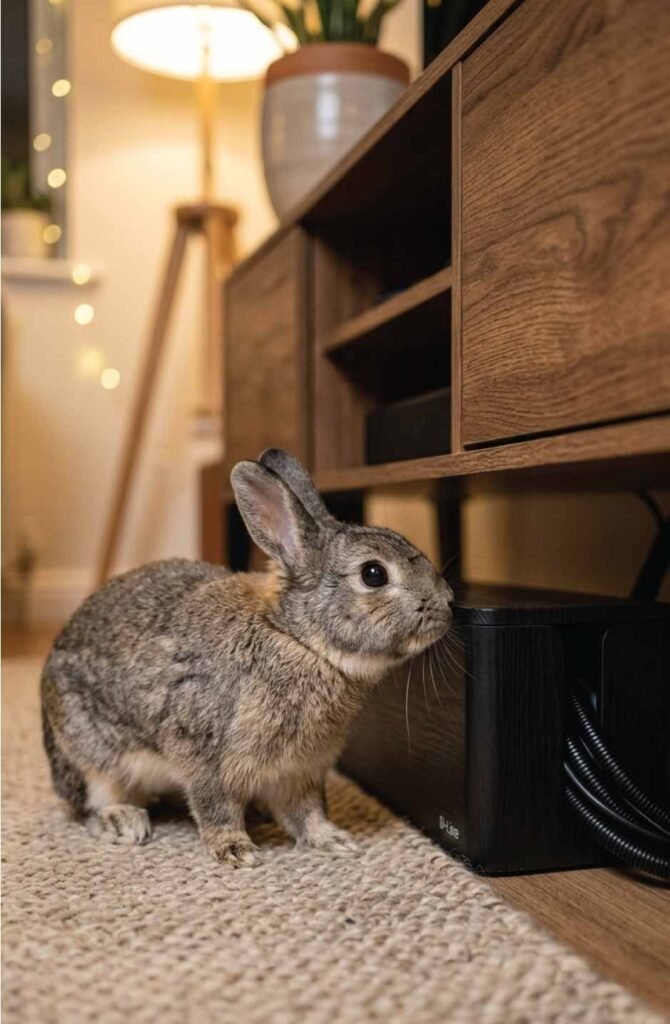
Sleek Cord Concealment for High-Voltage Safety
To an inquisitive rabbit, an exposed electrical wire looks exactly like a delicious, intrusive tree root that needs to be cleared out of their path. Leaving chargers, floor lamps, and appliance cords uncovered is the single most dangerous mistake a free-roam rabbit owner can make. Modern cable management tools allow you to eliminate this severe safety hazard while cleaning up visual clutter at the exact same time.
- Encase every single accessible wire in heavy-duty, split-loom pet wire protectors or rigid plastic cord channels.
- Mount power strips to the undersides of desks, TV stands, and media consoles using strong adhesive strips or brackets.
- Utilize decorative, minimalist cable management boxes in neutral tones to completely hide charging bricks and excess cord lengths.

The Design-Forward Litter and Feeding Station
Traditional plastic litter pans belong in a hidden utility closet, not in the center of your beautifully curated living space. Your bunny’s primary bathroom and dining area can look like a piece of custom furniture rather than a messy eyesore. Because rabbits love to eat fresh hay while using the bathroom, combining these functions into a single wooden unit keeps messes contained and coordinates beautifully with your existing furniture.
- Invest in a neutral wooden enclosure or a chic wooden litter box combo that features an integrated hay feeder rack.
- Opt for high-sided trays beneath the hay rack to prevent loose strands from scattering across your clean floors.
- Line the area directly beneath the station with a stylish silicone mat that catches stray pellets and protects your underlying flooring.
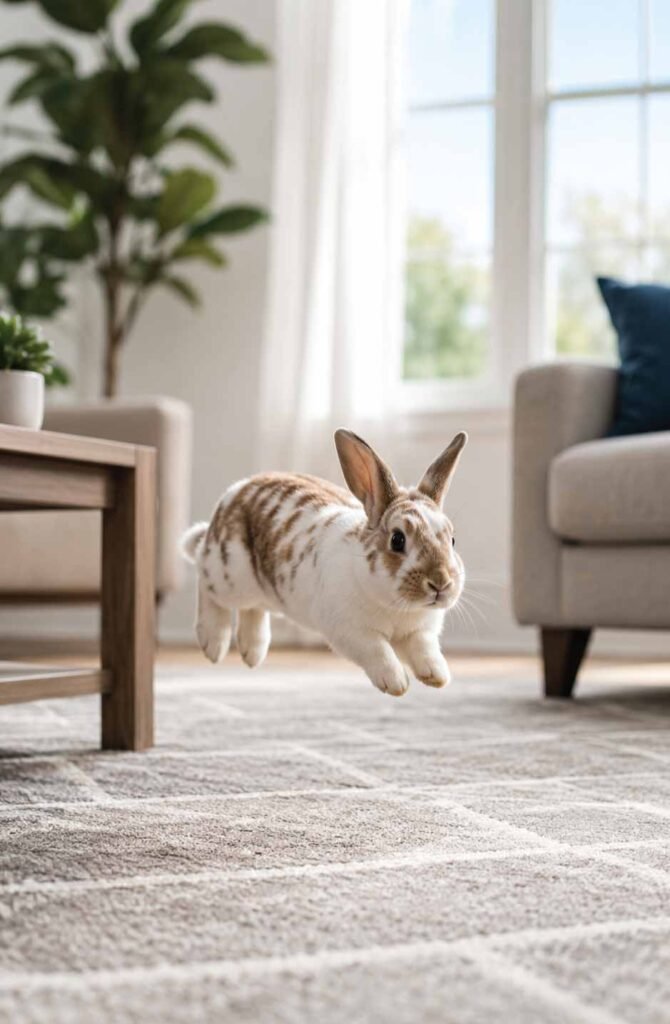
Low-Pile Washable Rugs for Dig-Proof Flooring
Rabbits need excellent traction to binky and run safely, but traditional plush carpets often trigger their deep-seated instinct to dig up loose fibers. Swapping out delicate or high-pile carpets for low-pile, machine-washable rugs protect your flooring without sacrificing your room’s comfort. These modern textile solutions let you maintain a chic home environment while ensuring your rabbit does not ingest dangerous synthetic carpet strings.
- Select durable, flat-woven, or low-pile rugs with a non-slip rubber backing that stays securely anchored during daily zoomies.
- Choose modern, neutral geometric patterns that easily mask any stray rabbit fur between your daily vacuuming sessions.
- Machine-wash the rugs on a cold, gentle cycle using pet-safe, scent-free detergent to strip out deep-seated pet dander.
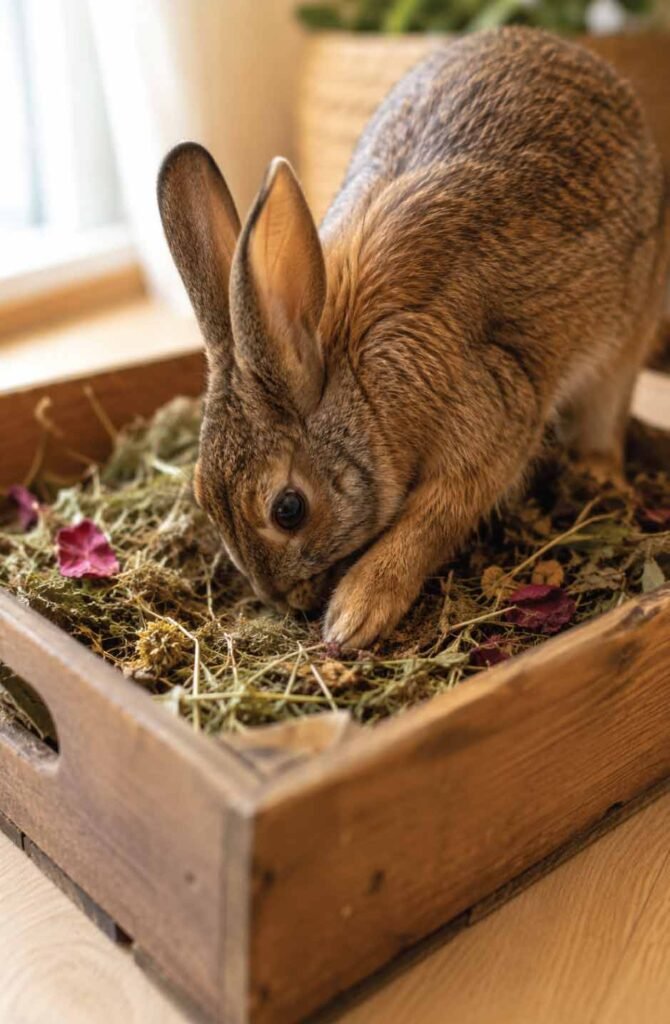
Satiating the Instinct with Modern Foraging Boxes
You cannot completely train away a rabbit’s natural urge to burrow and forage, so your best strategy is to redirect that energy away from your furniture. Introducing an intentional, aesthetically pleasing foraging box provides critical mental enrichment while saving your expensive rugs from destruction. This simple DIY project satisfies their sensory needs by mimicking the natural woodland behaviors that keep small mammals genuinely happy.
- Repurpose a clean, unprinted cardboard box or a shallow wooden crate as your dedicated living room foraging zone.
- Fill the container with a rich mix of safe orchard grass, botanical herbs, dried rose petals, and healthy treats.
- Place the foraging box directly over the specific spot on the floor where your rabbit previously tried to dig or chew.
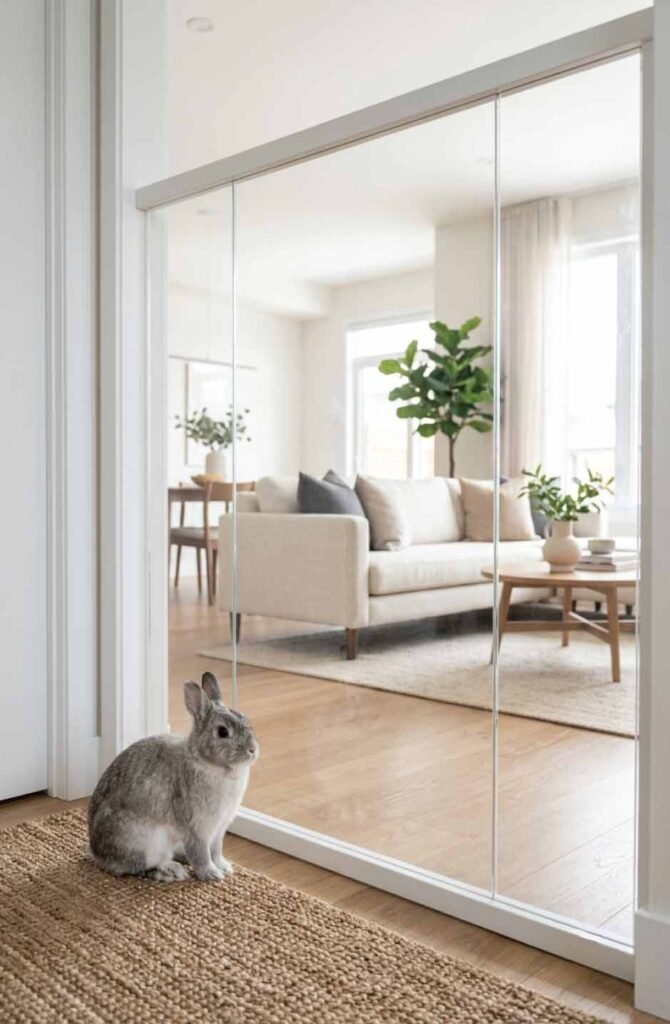
Clear Acrylic Room Dividers for Elegant Boundaries
Even the most well-behaved free-roaming rabbits occasionally need to be restricted from certain zones, like a home office or a guest bedroom. Ugly metal wire puppy playpens completely ruin the visual flow of an open-concept apartment or modern home. Utilizing crystal-clear acrylic partitions lets you establish firm, unbreakable boundaries while keeping your living space looking open, bright, and perfectly cohesive.
- Choose modular, clear acrylic pet gates that clip together seamlessly without requiring permanent wall drilling.
- Ensure the acrylic panels are at least 36 inches tall to prevent athletic rabbit breeds from clearing the top.
- Wipe down the clear panels weekly with a microfiber cloth and diluted white vinegar to eliminate nose smudges.

The Secret Sauce
The Hidden Strategic Furniture Shield
Placing clear plastic couch guards or custom-cut acrylic panels underneath low-clearance furniture stops rabbits from nesting under your sofa. Rabbits love dark, enclosed spaces, but they often chew up the thin fabric lining beneath box springs and couches. Sliding smooth barriers under these pieces completely removes the temptation.
Strategic Distraction with Applewood Bundles
Anchoring a bundle of organic applewood sticks directly to the corners of your furniture diverts chewing away from the actual legs. Rabbits always choose the path of least resistance when looking for something to gnaw on. Providing a tastier, legal wood source right next to your table legs keeps your furniture pristine.
The Double-Layered Corner Mat Trick
Placing small, heavy ceramic tiles or woven seagrass mats directly into the corners of a carpeted room completely stops localized corner digging. Rabbits almost exclusively target corners when trying to dig their way out of a space. Weighting down these specific zones protects the underlying carpet fibers permanently.
Frequently Asked Questions about Free-Roam Bunny Setup
Rabbits are natural herbivores that will happily sample your indoor jungle, but many common household plants like pothos, lilies, and philodendrons are highly toxic to them. The safest approach is to remove floor-level foliage entirely and transition to hanging ceiling planters, high floating shelves, or tall plant stands that are impossible to jump onto. Always double-check that dropping leaves or blossoms cannot fall directly onto the floor where your bunny explores.
Attempting to free-roam an intact rabbit usually leads to intense frustration due to hormonal territorial behaviors like urine spraying and stubborn scattering of droppings. You should wait until your rabbit is fully spayed or neutered and reliably litter-box trained in a smaller playpen before granting them full run of your home. This simple sequence saves your carpets and makes the transition to cage-free living completely seamless.
While fully trusted adult rabbits can roam 24/7 without issues, younger or newly adopted bunnies often get into trouble while their owners are fast asleep. During the initial transition period, it is best to secure your rabbit in a spacious, puppy-proofed home base or a dedicated safe room overnight until they prove their nighttime reliability. This ensures your peace of mind while preventing unsupervised midnight demolition projects.
Rabbits live down at floor level, which means they are directly exposed to drafts from air conditioning vents and drying blasts from heating registers. You must ensure your rabbit's resting areas and litter stations are positioned well away from active floor vents, as direct airflow can cause respiratory irritation and dangerous temperature spikes. Rabbits are prone to heatstroke at temperatures above 77°F (25°C), so maintaining a cool, ambient room temperature is critical for their health.
Even gentle dogs and cats retain natural predator instincts that can trigger fatal stress or accidental injuries in a cage-free rabbit. Never leave a free-roaming rabbit unsupervised with another house pet, and use sturdy, tall pet gates to establish strictly segregated zones in your home when you are away. You can also provide elevated, rabbit-only hideouts that larger pets cannot physically access to give your bunny an instant safe haven.
Rabbits living exclusively indoors can easily become deficient in Vitamin D, which is essential for calcium absorption and maintaining strong dental health. Your free-roam space should provide access to natural daylight through windows, without exposing the rabbit to direct, overheating sunlight, or utilize a specialized, low-output UVB pet lamp. Maintaining a consistent day-and-night light cycle also helps keep your rabbit's natural sleep and shedding rhythms perfectly balanced.
Listen to the Podcast: Free-Roam Bunny Setup
Bringing the Space Together
Creating a beautiful, cohesive free-roam bunny setup is a highly rewarding journey that completely transforms the relationship you share with your pet. Shifting away from restrictive cages allows your rabbit’s true personality to shine through while keeping your home looking like an interior design magazine feature. When bunnies are granted the freedom to explore an organized, safely proofed environment, they become significantly more interactive, affectionate, and relaxed. You will quickly begin to notice unique behaviors, deep expressions of trust, and joyful daily routines that simply cannot occur within the walls of a standard pet shop cage.
Implementing these stylish updates does not have to happen overnight. Start by tackling the most critical safety hazards first, like shielding your electrical cords and securing the immediate perimeter around your primary living room furniture. Once the safety baseline is firmly established, you can focus on upgrading the visual elements, such as sourcing a beautiful wooden litter station and finding the perfect machine-washable rug to match your current room palette. Taking this measured, design-first approach prevents you from feeling overwhelmed while ensuring your home remains a peaceful sanctuary for both you and your rabbit.
As your bunny settles into their new layout, you will find immense joy in watching them freely navigate the space as a true member of the family. If you are still in the planning phases of your pet journey and want to make sure you select a rabbit variety that thrives in an indoor environment, take a look at our guide on the top 10 best rabbit breeds for beginners. For those curious about the underlying science of how rabbits connect with their human caretakers in a shared living space, check out our deep dive on do rabbits recognize their owners. For more professional advice on supporting small animals in your home, explore the expert care guidelines on the House Rabbit Society and review the comprehensive welfare standards on the PDSA website to guarantee your setup meets every behavioral benchmark.
Pin this for later to ensure you can easily reference these design hacks the next time you redecorating your living room!