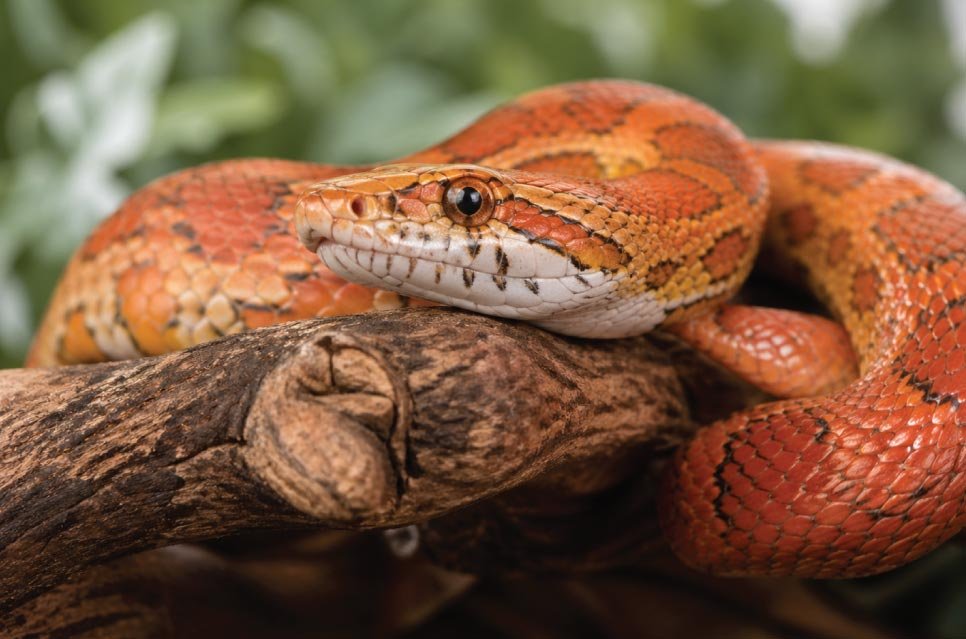
Quick Guide: Corn Snake Care Guide for Beginners
• Space Requirements: An adult corn snake needs a minimum enclosure of 4’x2’x2′ (120 gallons) to fully stretch out.
• Diet & Feeding: They are obligate carnivores that should eat frozen-thawed mice (sized 1-1.5x the snake’s width) every 10–14 days as adults.
• Lifespan Commitment: With proper husbandry, these “Golden Retrievers of the reptile world” can live 15 to 25 years.
• Social Life: Corn snakes are strictly solitary; housing them together causes significant stress and risk of injury.
Thinking about adopting and bringing home your first corn snake? You’ve made an excellent choice because corn snakes are widely considered the ideal “starter” snake due to their docile nature and hardiness. If you are still exploring your options, you might want to read more about what is the best reptile to have as a pet before making your final decision. While they are “beginner-friendly” it doesn’t mean “zero maintenance,” and there is a lot of outdated advice floating around that can lead to health issues like respiratory infections or obesity.
This guide provide actionable, vet-backed solutions for setting up your new scaly friend’s habitat and keeping them thriving for decades. We will cover everything from preventing daring escapes to mastering the perfect temperature gradient, ensuring you start your journey with total confidence.

Enclosure Essentials: From 40-Gallon Starters to Forever Vivariums
While you might see hatchlings in small “shoebox” setups, adult corn snakes require significant room to move, climb, and explore. Professional standards now emphasize that the enclosure must be at least as long as the snake itself. For a standard 4-to-5-foot adult, a 4’x2’x2′ (120-gallon) enclosure is the absolute minimum requirement to prevent musculoskeletal issues. To ensure you have everything you need for a successful start, check out this checklist for reptile habitat setup essentials.
Practical Tips for Your Setup:
- Secure the Perimeter: Corn snakes are legendary escape artists capable of pushing through unsecured lids or squeezing through tiny cable ports. Always use a locking lid or sliding doors with a dedicated reptile lock.
- Prioritize Material: Wooden vivaria offer superior thermal insulation, while PVC is lightweight and exceptional at retaining humidity. Glass terrariums are popular but lose heat quickly and may need three sides covered to help your snake feel secure.
- Vertical Space Matters: Don’t ignore the height; corn snakes are semi-arboreal and will utilize every inch of climbing space you provide via branches and ledges.
Precision Heating: Why Your Thermostat is Non-Negotiable
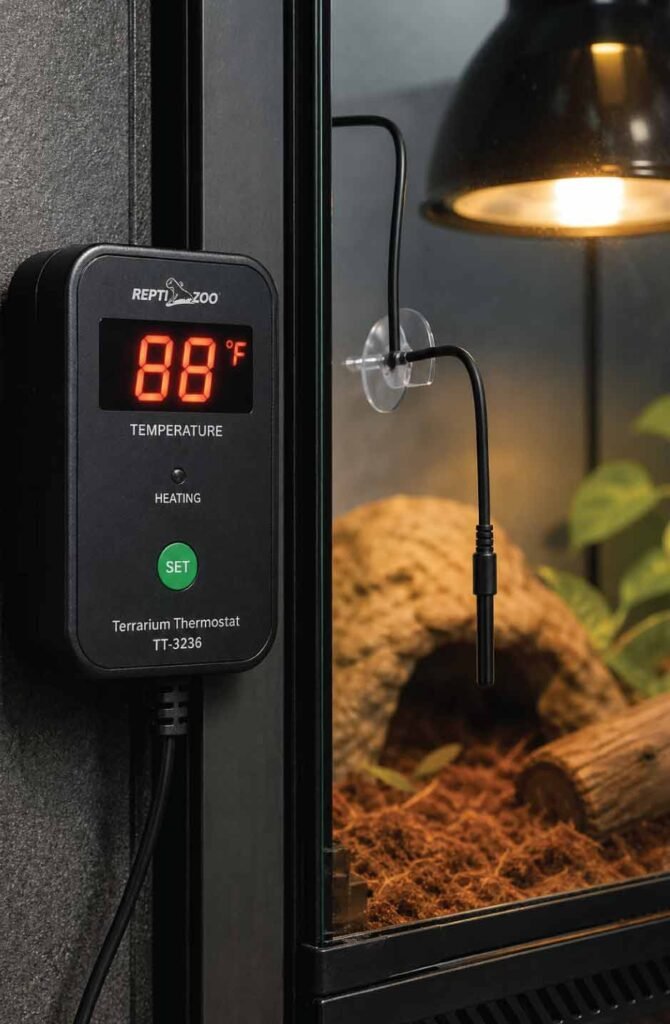
As ectotherms, corn snakes cannot produce their own body heat and rely entirely on your setup to regulate their metabolism and digestion. You must create a thermal gradient, allowing the snake to move between a warm basking zone and a cooler retreat. The basking surface should reach 88°F–90°F (31°C–32°C), while the cool side should stay around 75°F (24°C).
What to Do and Avoid:
- Use Overhead Heat: Halogen flood lamps or Deep Heat Projectors (DHP) are superior to heat mats because they emit Infrared-A and B, which penetrate deep into muscle tissue.
- Always Use a Thermostat: Never plug a heat source directly into a wall; unregulated heaters can cause horrific thermal burns or even death. Use a dimming thermostat for lamps and an on/off thermostat for mats or ceramic heaters.
- Monitor Night Temps: It is safe for temperatures to drop to 68°F–72°F (20°C–22°C) at night, mimicking natural cycles.
Common Pitfalls: To avoid these and other setup errors, review our guide on top reptile habitat mistakes beginners make
UVB Lighting: The Secret to Thriving (Not Just Surviving)
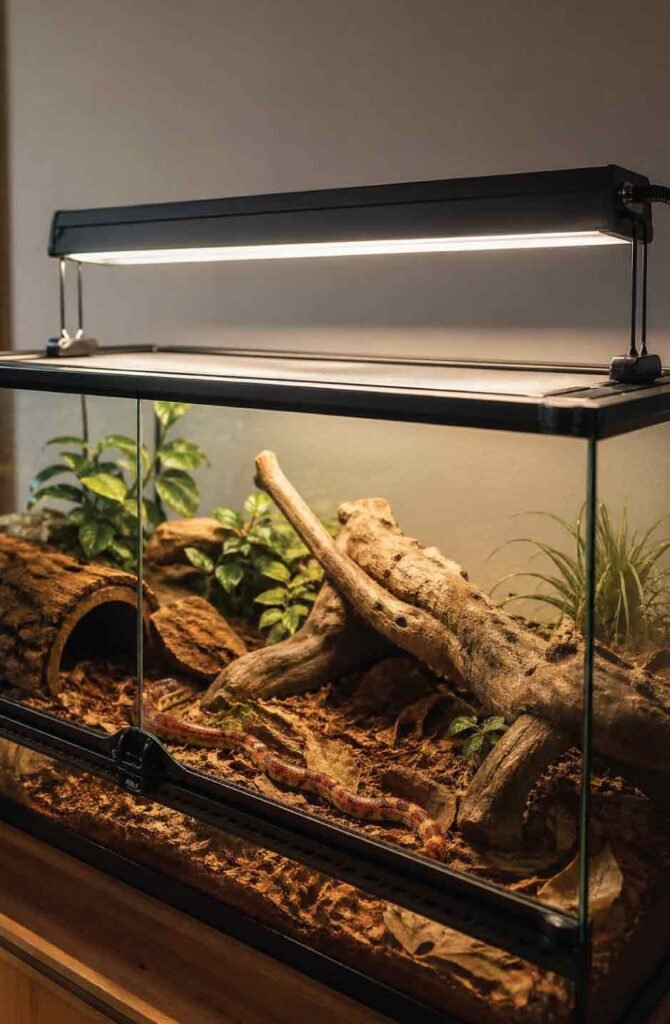
Old school guides often claim corn snakes don’t need light, but modern research shows that UVB radiation significantly improves immune function and skin health. Corn snakes are “Zone 2” baskers, meaning they benefit from partial sunlight. Providing a low-output T5 linear UVB bulb (5%–6%) allows them to synthesize Vitamin D3 naturally, which is essential for calcium absorption.
Actionable Lighting Steps:
- Measure the Distance: The strength of UVB depends on the distance from the bulb; aim for a UV Index (UVI) of 1.1 to 3.0 at the basking site.
- Follow the 12-Hour Rule: Keep lights on for 12 hours during the day and completely off at night, snakes can see “night lights” (red or blue), and they will disrupt their sleep cycle.
- Replace Regularly: UVB output fades long before the bulb stops glowing; replace linear T5 bulbs every 12 months.
The Humidity Balance: Preventing Bad Sheds and Scale Rot
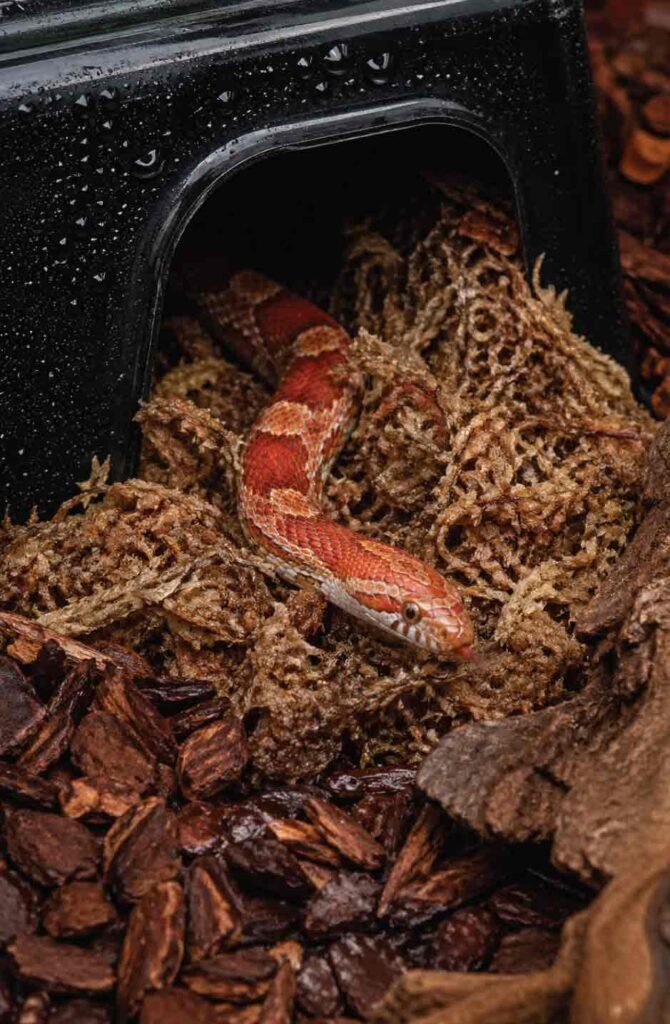
Corn snakes need moderate humidity levels, typically between 40% and 60%. If the air is too dry, your snake may suffer from dysecdysis (retained shed), particularly on the tail tip and eye caps. Conversely, waterlogged substrate can lead to “scale rot,” a painful bacterial dermatitis on the snake’s belly.
How to Manage Humidity:
- The Humid Hide Hack: Always provide a dedicated “humid hide” filled with damp sphagnum moss. This provides a micro-climate the snake can use during its shed cycle without making the entire enclosure too damp.
- Monitor Daily: Use a digital hygrometer rather than cheap analog dials, which are notoriously inaccurate.
- Ventilation is Key: Ensure good airflow to prevent stagnant, bacteria-heavy air.
Substrate Choices: Burrowing Without the Risk of Mold
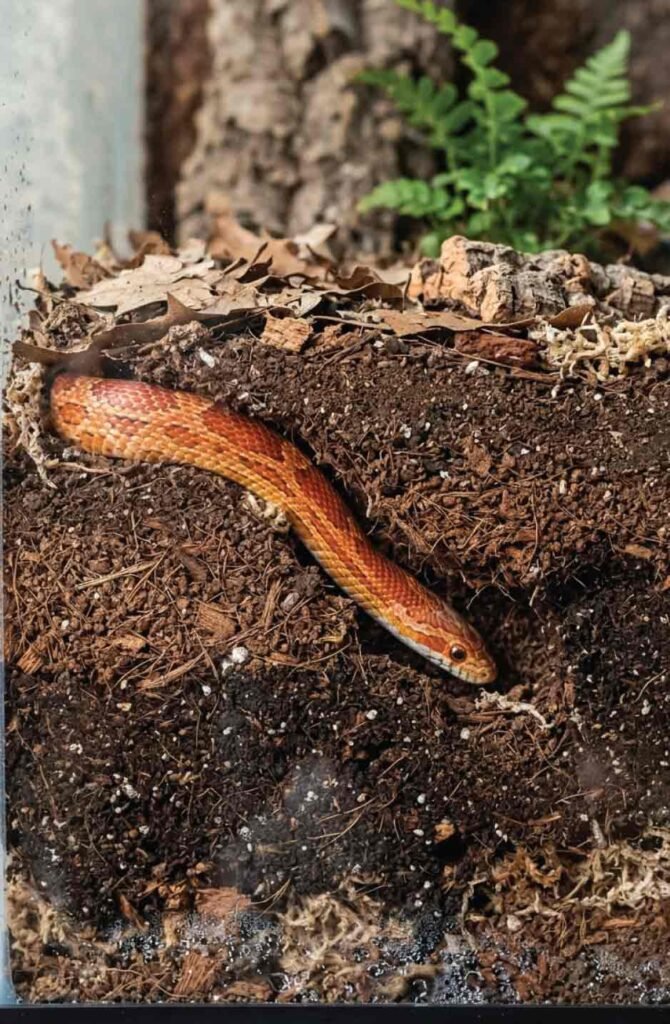
Your snake’s bedding serves as a waste absorber and a medium for their natural instinct to burrow. Aspen shavings are popular because they hold tunnels well and are easy to spot-clean, but they mold quickly if they get wet. A better long-term option is a DIY mix of 40% organic topsoil, 40% coconut fiber (or Reptisoil), and 20% play sand.
Practical Substrate Tips:
- Avoid Toxic Woods: Never use cedar or pine, as they contain resinous oils and phenols that are toxic to a snake’s respiratory system.
- Depth Matters: Provide at least 3 to 4 inches of substrate to encourage natural digging behaviors.
- Quarantine First: For the first 30–90 days with a new snake, use paper towels as substrate. This allows you to easily monitor for mites and check that their first few bowel movements look healthy.
The Feeding Protocol: Frozen-Thawed Success for Every Age
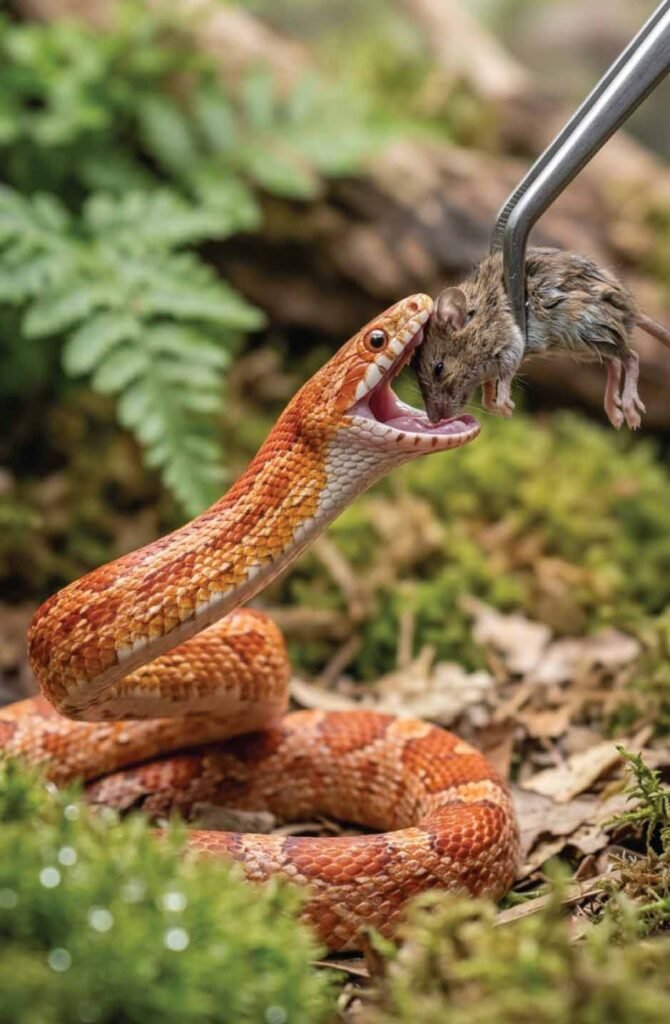
Feeding your corn snake is a highlight of ownership, but it must be done carefully to avoid obesity, a major health problem in captive snakes. As a rule of thumb, prey should be 1 to 1.5 times the width of the widest part of your snake’s body. Always feed frozen-thawed rodents; live prey can bite and severely injure or even kill your snake.
Actionable Feeding Guide:
- Schedule by Age: Hatchlings eat every 5–7 days, while healthy adults only need to eat every 10–14 days.
- The Thawing Process: Thaw rodents in the fridge overnight or in cold water. Before feeding, warm the mouse in a bag of hot water to about 100°F (38°C) to stimulate the snake’s hunting strike.
- The 48-Hour Rule: Never handle your snake for at least 48 hours after feeding. Handling too soon causes stress and can lead to regurgitation, which is a medical emergency that causes esophageal trauma.
Understanding Behavior: Is My Snake Happy or Stressed?
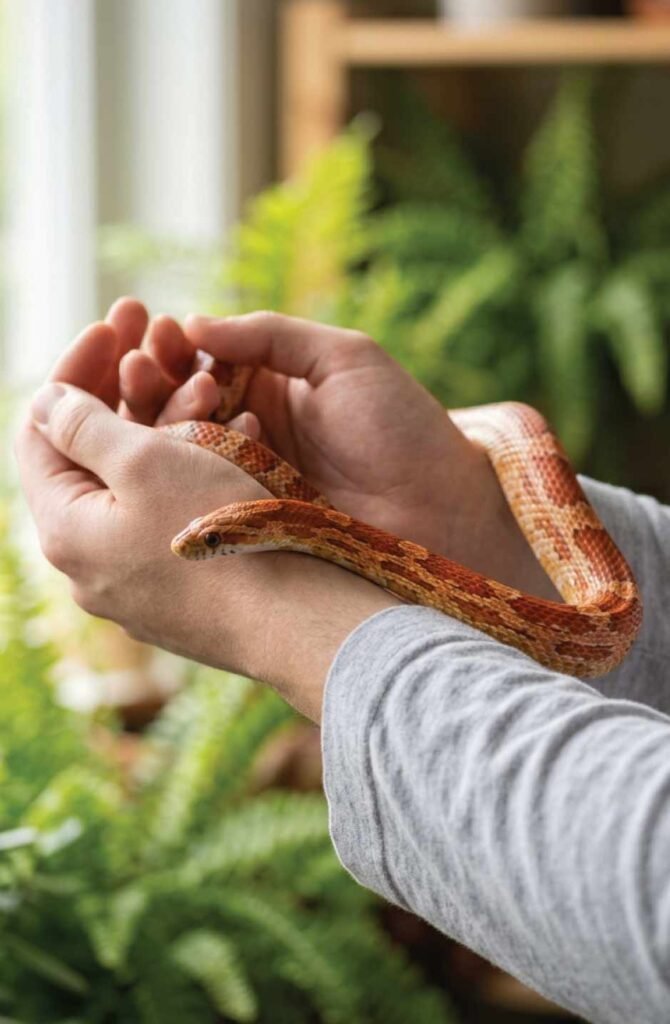
Learning to read your snake’s body language will help you build trust and avoid unnecessary nips. Corn snakes are generally docile, but they can be flighty as babies. If your snake vibrates its tail (buzzing) or pulls its neck into an ‘S-curve’, it is feeling threatened and should be left alone.
Handling Tips for Beginners:
- Approach from the Side: Never reach for a snake from directly above like a bird of prey would; instead, scoop them up gently from the side or underneath.
- Confidence is Key: Lift them with gentle confidence; hesitation can make the snake think you are a predator or prey, leading to a defensive bite.
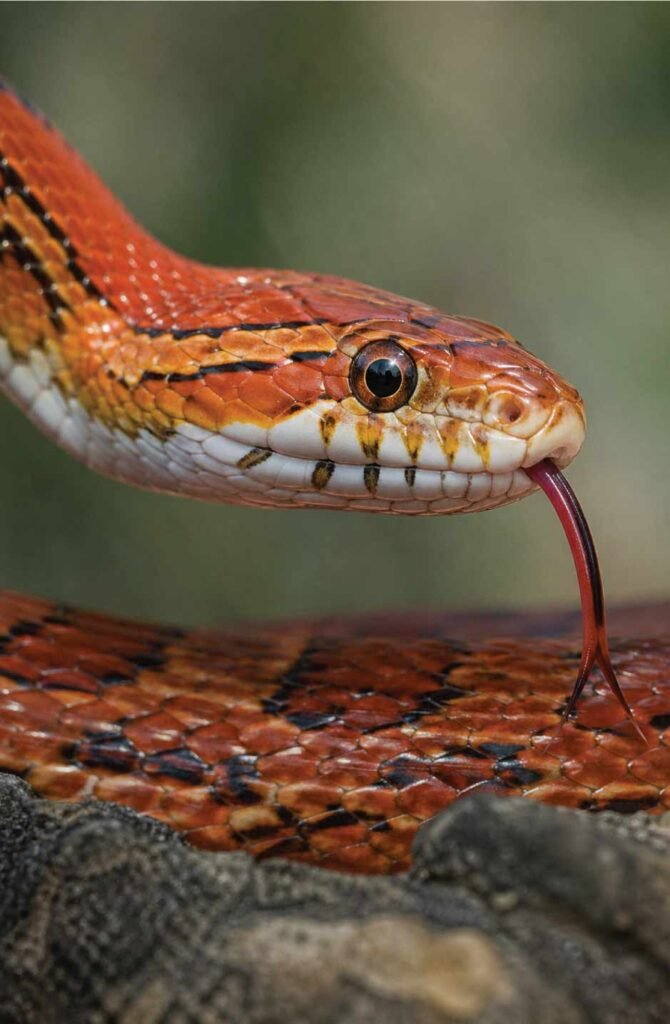
- Look for Tongue Flicks: Frequent, relaxed tongue flicking is a sign that your snake is curious and exploring its environment.
Red Flags: When to Visit an Exotic Vet
Most corn snake health issues are caused by husbandry errors, so regular monitoring is essential. You should find an RCVS-verified exotic vet (or your local equivalent) before an emergency happens. A healthy snake should have clear eyes, an alert tongue, and a “loaf-shaped” body, neither triangular (underweight) nor round with visible fat rolls (obese). For medical questions, always consult the Association of Reptilian and Amphibian Veterinarians.
Warning Signs to Monitor:
- Respiratory Distress: Wheezing, bubbles from the nose, or open-mouth breathing often indicate a respiratory infection caused by low temperatures or poor air quality.
- Mouth Rot: Red, swollen gums or a “cheesy” discharge in the mouth require immediate veterinary antibiotics.
- Stargazing: If your snake constantly looks upward or twirls its head, it may have a neurological disorder, sometimes linked to the “Sunkissed” morph.
“The Secret Sauce”: Expert Tips for Pro-Level Care
“Braining” for Picky Eaters
If you have a snake that is hesitant to eat, you can use a technique called “braining” to jumpstart their appetite. By making a tiny cut in the skull of a thawed mouse, you release the scent of brain matter, which often triggers a strong feeding response in a stubborn snake.
Enrichment through Puzzle Feeders
To reduce boredom and encourage natural behaviors, try incorporating puzzle feeders. Placing prey inside a cardboard tube or a small box forces the snake to forage. This type of mental stimulation has been shown to increase brain volume and keep your snake active. If you would like to know more about reptile enrichment explore 5 DIY Reptile Toys & Enrichment Ideas to Cure Boredom.
Mastering the “Perfect Shed”
While some keepers keep the enclosure damp constantly, you can master the “Perfect Shed” by adding a dedicated humid hide only when your snake’s eyes turn “blue” or milky. This provides the necessary localized humidity for a one-piece shed without the risks associated with constant dampness.
Frequently Asked Questions About Corn Snake Care
No, corn snakes are non-venomous and are widely considered ideal "starter" snakes due to their hardy and docile nature. While they can deliver a defensive bite if they feel threatened or if you hesitate during handling, they are generally very placid pets.
No, you should avoid using colored "night lights". Corn snakes can see these lights, and keeping them on at night will disrupt their natural sleep cycle; it is best to keep all lights completely off for 12 hours every night.
A healthy corn snake should have a "loaf-shaped" body. If your snake appears triangular, it is likely underweight, whereas a snake that looks round with visible fat rolls is considered obese.
This behavior is known as "stargazing" and can be a sign of a serious neurological disorder. This condition is sometimes linked to the "Sunkissed" morph and requires consultation with an exotic vet.
No, you must be very careful with your choice of substrate. You should never use cedar or pine shavings because they contain resinous oils and phenols that are toxic to a snake’s respiratory system.
No, you must wait at least 48 hours after feeding before handling your snake. Handling them too soon causes significant stress and can lead to regurgitation, which is a medical emergency that causes trauma to the snake's esophagus.
Prefer Audio? Listen Corn Snake Care Guide for Beginners
Conclusion
Corn snakes are truly the ultimate pet for any aspiring reptile keeper, offering a mix of stunning colors and a generally placid temperament. By providing a spacious 4-foot enclosure, a precise thermal gradient, and a varied diet of frozen-thawed prey, you are setting your snake up for a long, healthy life. Remember to always use a thermostat for every heat source and never handle your friend right after a meal. If you want to learn how to create a self-cleaning mini-wilderness check Building a Bioactive Corn Snake Setup