Quick Guide: Reptile Safe Terrarium Plants
- Always cross-check every single plant against a reputable database before letting it anywhere near your pet’s enclosure.
- This list features 10 road-tested, non-toxic plants suited for both tropical and arid reptile habitats.
- Never put a fresh nursery plant directly into your tank without a thorough wash and a 30-day quarantine to remove toxic fertilizers.
- Match your plant’s light and watering needs directly to the humidity and temperature requirements of your specific reptile.
Creating a lush, green terrarium shouldn’t feel like playing Russian roulette with your reptile’s health. You want your pet’s home to look like a slice of wild paradise, but staring at the garden center shelves usually just leads to sheer panic about accidental poisoning. The reality is that many popular houseplants are highly toxic to reptiles, causing everything from mild skin irritation to fatal organ failure. You do not have the time to memorize a botanical encyclopedia just to make your tank look nice.
This guide strips away the guesswork by giving you the absolute best, road-tested, 100% non-toxic plants that actually survive inside a reptile enclosure. Instead of vaguely telling you to “buy safe plants,” we are breaking down exactly which plants thrive in specific microclimates, why they work, and how to keep your pet from destroying them. By the end of this post, you will know exactly what to put in your cart to build a beautiful, stress-free environment.
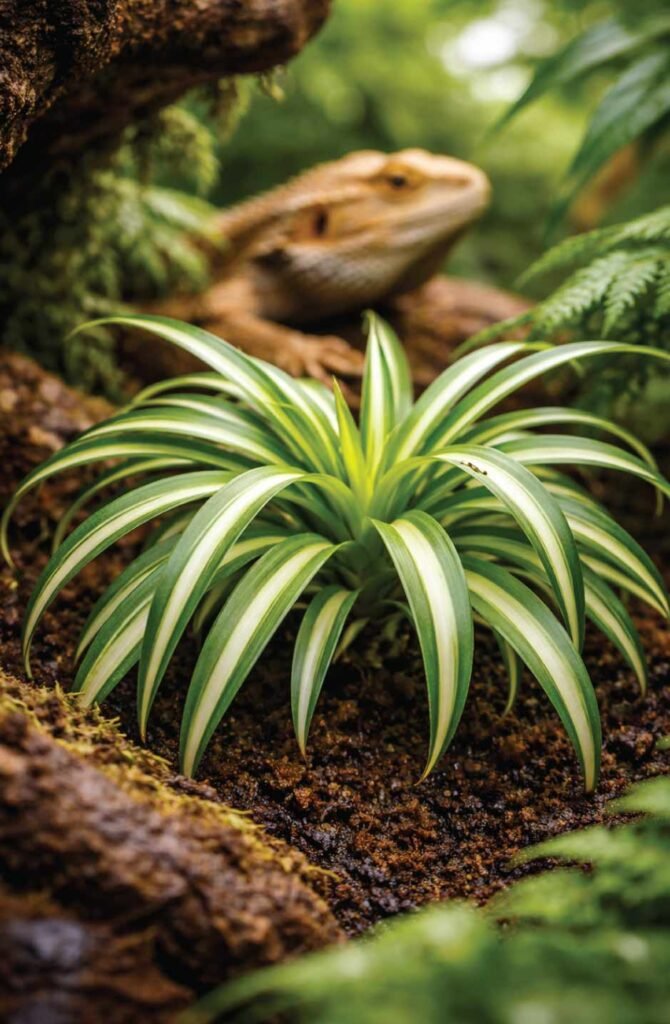
Spider Plants (Chlorophytum comosum): The Indestructible Humidity Lovers
Spider plants are the ultimate beginner-friendly greenery because they are incredibly forgiving, completely non-toxic, and practically thrive on neglect. When you are trying to balance the tricky microclimate of a terrarium, you need a plant that won’t instantly wilt if the humidity spikes or drops slightly. These plants are famous for their air-purifying qualities, but for reptile owners, their true value lies in their fast growth and cascading leaves.
- Natural Visual Barriers: The long, ribbon-like foliage helps reduce stress for shy reptiles who need to feel hidden.
- Space Management: Mounting them higher allows leaves to drape down, creating a canopy without wasting floor space.
- Humidity Match: They are an absolutely perfect addition if you are currently planning a Bioactive Reptile Tank Setup for Beginners.
To get the most out of a spider plant, make sure to plant them in well-draining soil. This ensures their roots do not sit in stagnant water, which can lead to rot even in the hardiest of plants.
Bromeliads (Bromeliaceae): The Tropical Showstoppers
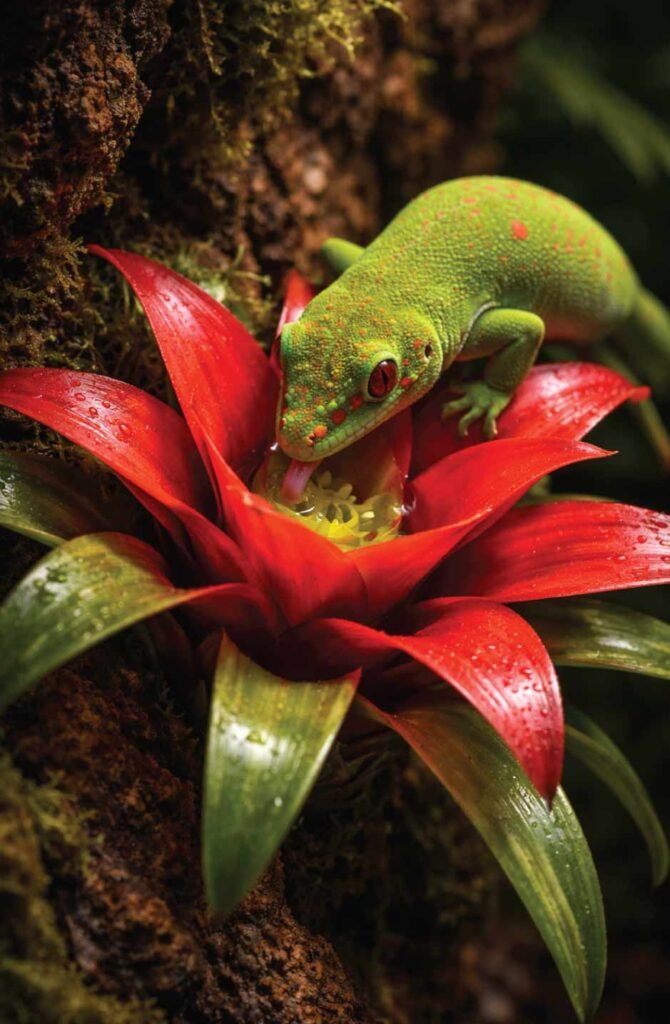
If you own a tropical or arboreal reptile, Bromeliads are the undisputed kings of the terrarium canopy. These striking, architectural plants are entirely safe if nibbled on, but their greatest feature is their unique physical structure. The secret to keeping Bromeliads alive is realizing that they do not want to be buried in deep, wet dirt.
- Natural Hydration: The rosette shape forms a “cup” in the center that catches water, creating tiny drinking pools for geckos and small snakes.
- Epiphytic Growth: In the wild, they grow on trees; wedge their bases into cork bark crevices or tie them to climbing branches using natural twine.
- Maintenance: You must flush out their central cups with fresh, dechlorinated water weekly to prevent bacterial growth.
They thrive under the bright, artificial lighting used for reptile enclosures, making them as functional as they are beautiful.
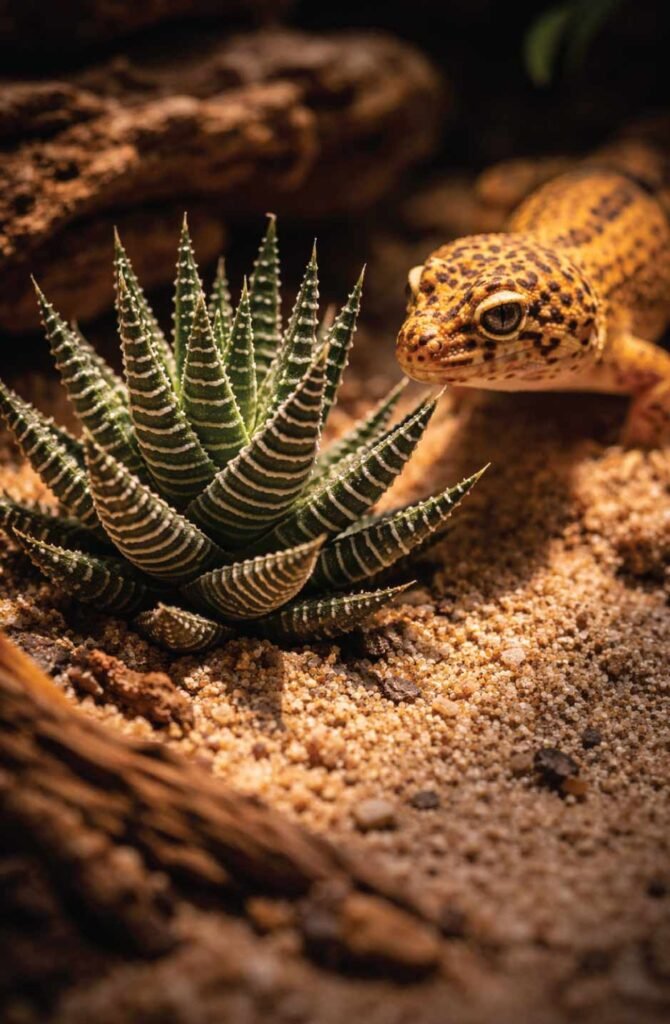
Haworthia (Haworthiopsis fasciata): The Arid Setup Survivor
Finding safe plants for desert-dwelling reptiles is notoriously difficult because most succulents are either toxic or armed with dangerous spikes. You might think an aloe plant looks great, but many aloe varieties can cause severe digestive distress. Haworthia, often called the Zebra Plant, is the perfect solution because it offers that classic, rugged desert aesthetic without a single spine.
- Safety First: Offers a desert look without any toxic compounds or sharp edges that could poke your pet’s eyes.
- Compact Size: They stay relatively small, making them ideal for arid setups where floor space is at a premium.
- Temperature Strategy: If you are wondering How Challenging are Bearded Dragons as Pets?, placing a sturdy Haworthia in the cooler end of their tank is a safe way to add life.
When planting Haworthia, drainage is the single most important factor. They require a sandy, gritty substrate that dries out completely between waterings to prevent root rot.
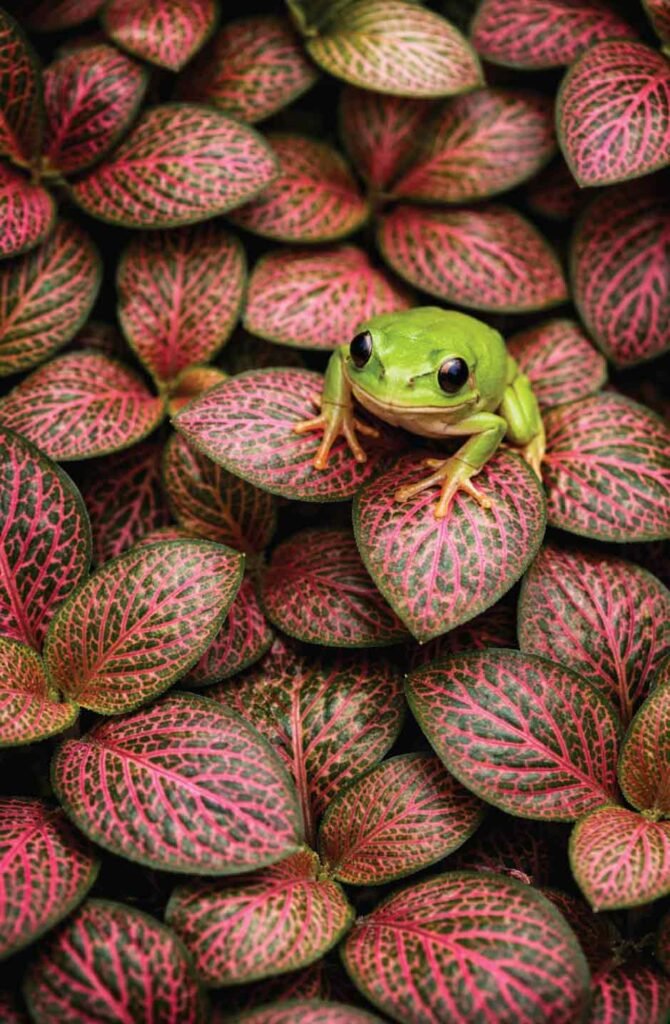
Nerve Plants (Fittonia): The Low-Light Terrarium Heroes
Nerve plants are the unsung heroes of the terrarium floor, providing vibrant splashes of color in the shady corners where other plants simply give up. Reptile enclosures often have highly concentrated light at the top, leaving the bottom of the tank relatively dim. Fittonia thrives in this exact environment, demanding low light and constant, high moisture.
- Color Variety: Provides pink, red, or white veins to brighten up dark corners of the enclosure.
- Low-Light Tolerance: Ideal for the “shady side” of the tank where your basking lights don’t reach.
- Placement Strategy: Because they are delicate, avoid placing them in the main walking path of heavy-bodied snakes who will easily crush them.
To keep Nerve Plants happy, you must commit to maintaining a consistently damp substrate. They are dramatic and will wilt quickly if they dry out even slightly.
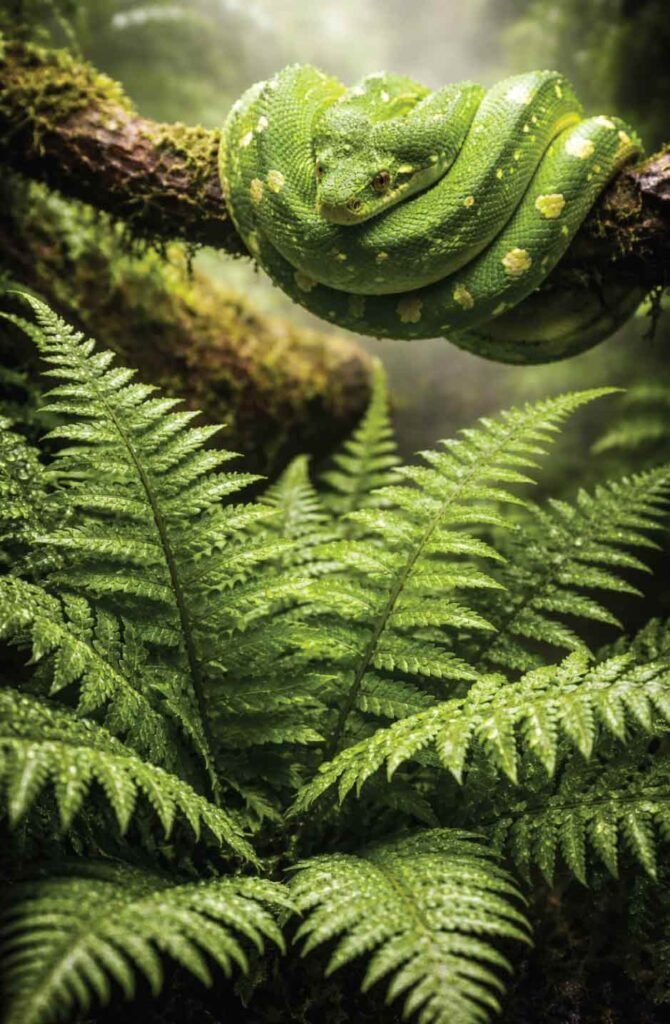
Boston Ferns (Nephrolepis exaltata): The Moisture Masters
Boston Ferns are powerhouses of humidity retention, acting like natural sponges that help keep your tropical terrarium’s climate perfectly balanced. Amphibians and tropical reptiles require specific, high-humidity environments to shed properly. The incredibly dense, feathery fronds of the Boston Fern trap water droplets from your daily misting.
- Microclimate Support: Slowly releases moisture back into the air throughout the day to keep humidity levels stable.
- Security: The massive surface area provides dozens of overlapping hiding spots, making your pet feel incredibly secure.
- Certification of Safety: You will find the Boston Fern consistently listed as non-toxic by the ASPCA Plant Database, making it a worry-free choice.
The practical takeaway for Boston Ferns is that they need deep, nutrient-rich soil. Give them a solid few inches of an organic, chemical-free dirt mix to anchor their vigorous root systems.
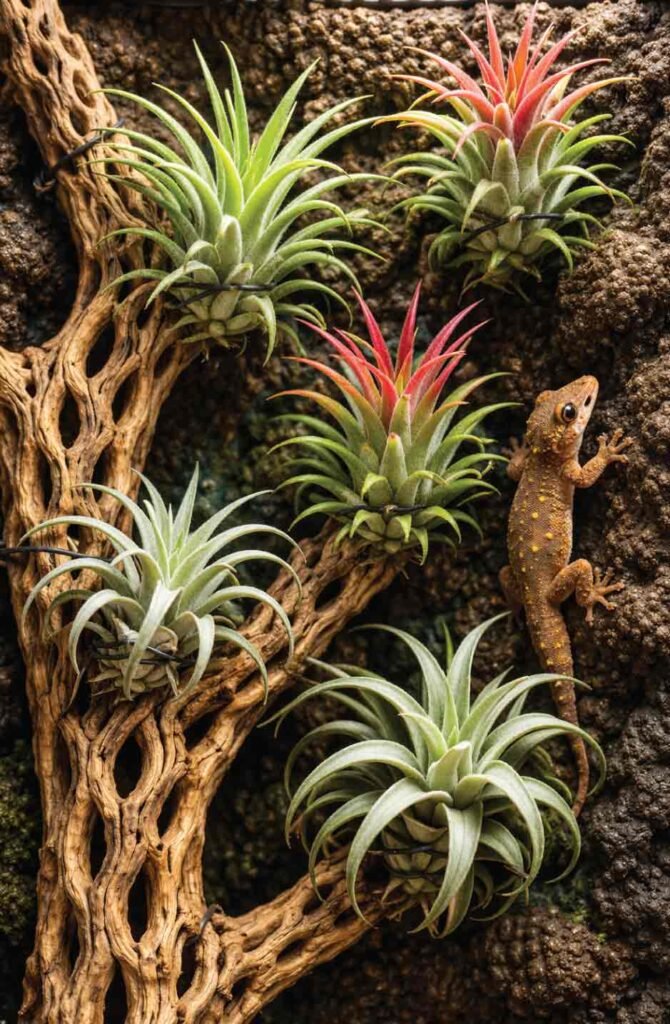
Air Plants (Tillandsia): The Zero-Soil Marvels
Air plants are the ultimate “cheat code” for terrarium decorating because they completely eliminate the need for soil or pots. One of the biggest fears for reptile owners is impaction, a deadly condition caused when a pet accidentally swallows dirt while hunting. Because Tillandsia absorb all their nutrients through their leaves, they never touch the substrate, entirely removing the impaction risk.
- Vertical Decor: Easily wedge them into cracks of background foam or tuck them into cholla wood.
- Simple Maintenance: Just heavily mist them a few times a week or give them a 10-minute soak in a bowl of water.
- Risk Mitigation: They are the safest option for owners worried about loose substrate, as they require zero dirt to thrive.
Just remember to never glue their bases down permanently; they need air circulation to dry properly after misting to prevent bottom-rot.
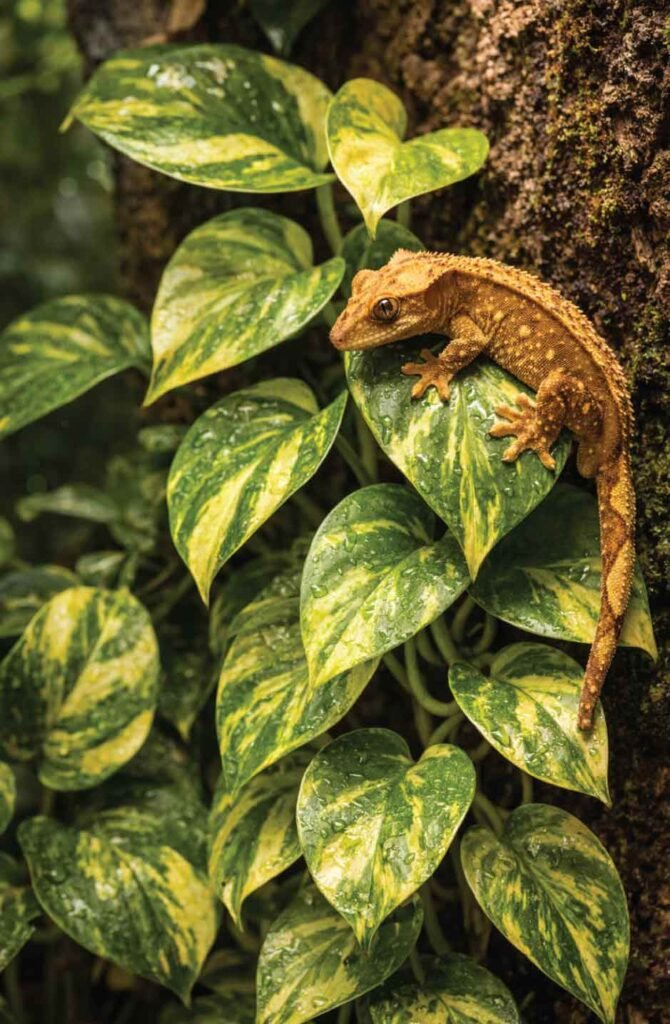
Golden Pothos (Epipremnum aureum): The Rapid Climber
The Golden Pothos is widely considered the “unkillable” houseplant, and it is a staple in the reptile community for its resilience and fast growth. It can grow in almost any lighting condition, from the dim floor of a tropical tank to the bright upper levels of a screen enclosure. Its thick leaves are sturdy enough to support the weight of small arboreal species like young Chameleons or Crested Geckos.
- Growth Pattern: It is a trailing vine; you can wrap it around branches to create a natural “jungle gym.”
- Ease of Propagating: Snip off a vine and grow a new plant in water, providing an endless supply of greenery.
- Toxin Alert: It is best suited for insectivorous reptiles who won’t treat it as a salad bar, as it can be mildly irritating if consumed in huge quantities.
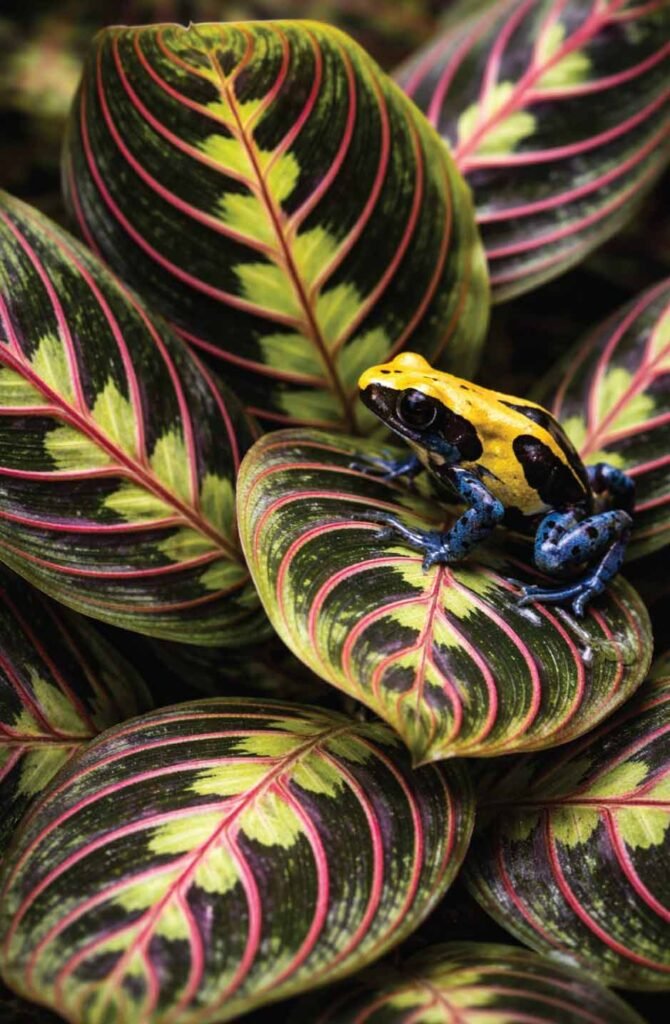
Prayer Plants (Maranta leuconeura): The “Moving” Enclosure Art
Prayer plants are famous for their unique “sleep movements,” where they fold their leaves upward at night like hands in prayer. For a Pinterest-savvy owner, these provide incredible visual interest because they are highly patterned with neon green and deep purple veins. They are 100% non-toxic and safe for all reptiles, making them a worry-free choice for even the most curious herbivores.
- Humidity Needs: They require high humidity (60%+) to prevent their leaf edges from turning brown and crispy.
- Soft Foliage: Best paired with smaller reptiles like frogs or geckos who won’t flatten the soft plant during their nightly patrols.
- Placement: Place them in the middle-ground of your terrarium where they can get dappled light and stay moist.
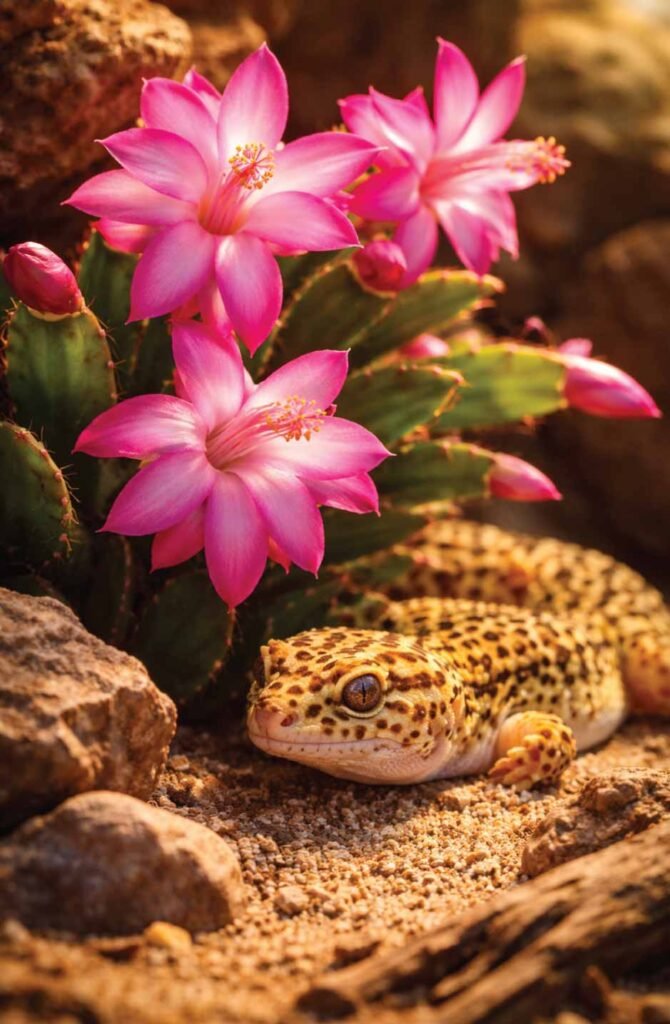
Christmas Cactus (Schlumbergera): The Colorful Arid Alternative
If you want a desert-style plant that isn’t just green and brown, the Christmas Cactus is a beautiful, safe way to introduce color into your tank. Unlike standard cacti, these have no spines or prickly hairs that can puncture a reptile’s delicate skin or eyes. They are surprisingly hardy and can survive in both semi-arid and tropical setups.
- Blooming Power: Under the right light cycles, they produce stunning pink or red flowers that are completely safe to eat.
- Durability: The thick, waxy segments can withstand the weight of medium-sized lizards like Leopard Gecko Care patients without breaking.
- Watering: They prefer slightly more water than a desert succulent but can handle dry spells, making them very forgiving.
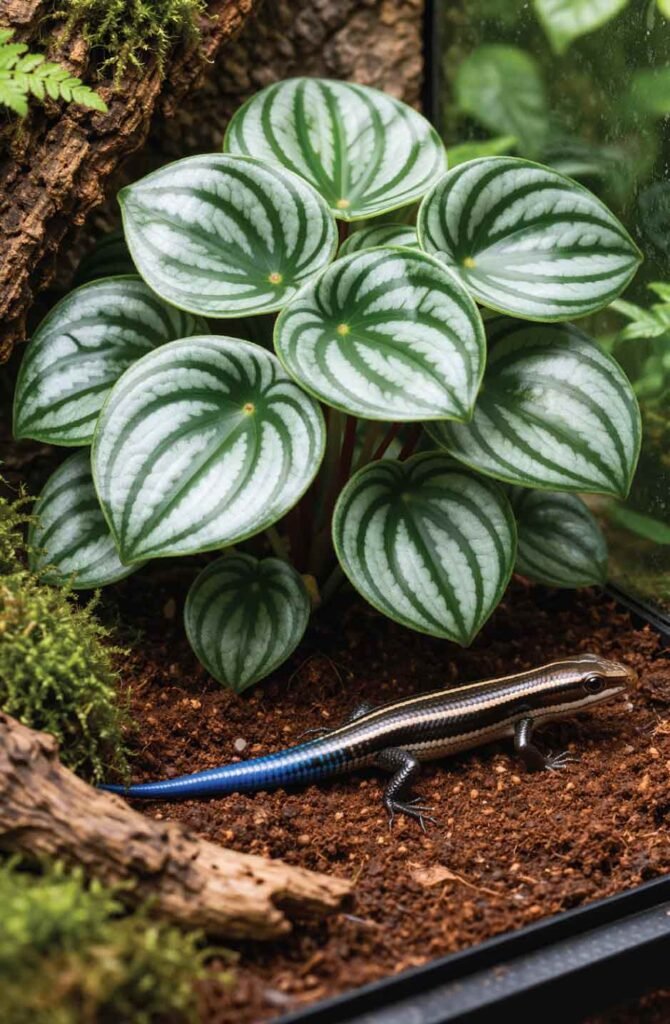
Peperomia (Peperomia spp.): The “Rubber” Leaf Wonder
Peperomia comes in dozens of varieties (like the Watermelon Peperomia), and they are all fantastic because of their rubbery leaves. These plants are compact and slow-growing, which means they won’t outgrow your tank in a single month. Their leaves are incredibly efficient at storing water, allowing them to bridge the gap between “tropical” and “temperate” environments.
- Sturdy Stems: Their thick, upright stems hold up well against “trampling” from ground-dwelling species.
- Small Footprint: They are the perfect “filler” plant to tuck into the corners of a setup to make it look more natural.
- Light Needs: They prefer bright, indirect light; keep them away from the direct heat of a basking bulb to avoid leaf burn.
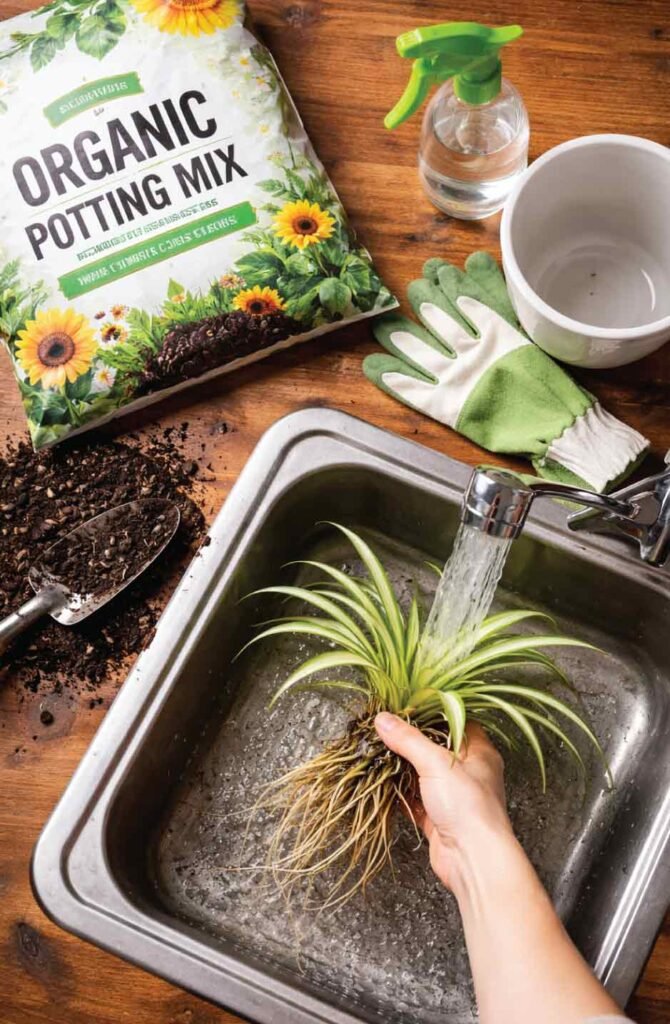
The Secret Sauce: 3 Expert Plant Rules You Must Know
Even the safest, most non-toxic plant can be deadly if you do not prepare it correctly before it enters your pet’s home. Many beginners buy a safe plant species but accidentally poison their reptile because they skipped the critical prep work. Here are three expert-level rules that separate a thriving terrarium from a dangerous, expensive mistake.
- The 30-Day Quarantine Rule: Commercial plants are routinely blasted with chemical pesticides. You must wash every single leaf and root under running water and quarantine the plant for 30 days before it touches your reptile’s tank.
- The Bare-Root Repotting Method: The soil your plant came in is often packed with toxic perlite and synthetic fertilizers. You must completely bare-root the plant and repot it using only 100% organic, fertilizer-free topsoil.
- The “Trample Test” Placement: Reptiles walk in straight lines regardless of what is in their way. Only plant delicate greenery in the “dead zones” of the tank and use heavy wood to block access to fragile roots.
Frequently Asked Questions About Reptile safe terrarium plants
No, you should never use standard "off-the-shelf" potting soil. Most commercial mixes contain perlite (those little white foam-like balls) which can cause fatal impaction if swallowed, plus synthetic fertilizers that can seep into your reptile’s skin. Always use a reptile-specific bioactive soil or a mix of organic topsoil, coco coir, and play sand.
While your reptile needs UVB for health, most plants actually prefer full-spectrum LED "grow lights." Standard basking bulbs provide heat but usually lack the specific light wavelengths plants need to photosynthesize. If your plants look leggy or pale, adding a small LED plant strip alongside your reptile's UVB bulb is the best way to keep the greenery thriving.
Don't panic and definitely don't reach for the bug spray. Pesticides are toxic to reptiles. Instead, utilize "The Secret Sauce" quarantine method mentioned above. If pests appear after planting, introducing "clean-up crew" insects like springtails and isopods can help manage organic waste and outcompete many common plant pests naturally.
Absolutely not. While these plants are non-toxic and safe for the occasional nibble, they are meant for decoration and enrichment, not as a primary food source. Species like Bearded Dragons still need their specific diet of greens and insects. Think of these plants as "furniture that happens to be edible," not the main course.
It depends on your local water quality, but generally, it is safer to use conditioned or distilled water. Tap water often contains chlorine and heavy metals that can irritate a reptile’s sensitive skin and leave unsightly white calcium deposits on your plant leaves and glass. Using a water conditioner (like ReptiSafe) protects both your pet and the longevity of your plants.
If your reptile is a "heavy-duty" bulldozer (like a large Blue Tongue Skink or a heavy Adult Ball Python), fake plants might be the more practical choice. If you find yourself replacing crushed plants every two weeks, it’s okay to pivot. You can still create a beautiful aesthetic using high-quality silk plants while saving the live greenery for smaller, lighter inhabitants like geckos or frogs.
Prefer Audio? Listen to Reptile Safe Terrarium Plants
Conclusion
Adding live plants to your terrarium is one of the most rewarding ways to enrich your reptile’s life, but safety must always be the foundation of your design. By sticking to proven winners like Spider Plants, Bromeliads, and Haworthia, you can create a stunning slice of nature right in your living room. Your pet gets a beautiful, stress-free environment to explore, and you get the peace of mind knowing they are completely safe. Pin this for later! If you are ready to upgrade your pet’s home but want to make sure you get the rest of the setup right, check out our guide on the Top Reptile Habitat Mistakes Beginners Make (and How to Avoid Them) before you buy anything else!