Quick Guide: DIY Reptile Toys
- Combat Captive Boredom: Enrichment prevents lethargy and promotes natural behaviors like foraging, climbing, and digging.
- Budget-Friendly DIYs: Use household items like PVC, cardboard, and Tupperware to create professional-grade vivarium upgrades.
- Safety is Non-Negotiable: Always prioritize non-toxic materials, easy-to-sanitize surfaces, and “swallow-safe” sizing.
- Species-Specific Fun: Tailor your DIY projects to your reptile’s specific lifestyle, whether they are arboreal, terrestrial, or fossorial.
Your Reptile Isn’t Lazy, They’re Bored
Let’s get one thing straight: your reptile isn’t a “pet rock,” even if they spend 12 hours a day staring at a wall. In the wild, these animals are constant problem-solvers navigating complex terrain, avoiding predators, and hunting for their next meal. When we put them in a glass box with a bowl of “lazy food,” their brains effectively go into standby mode. This isn’t just about “fun”; it’s about psychological health. Environmental enrichment is a core pillar of modern herpetology because it reduces stress and prevents stereotypical behaviors like glass surfing.
This guide is designed to snap your pet out of their funk using items you probably already have in your garage or kitchen. We are moving past the era of “surviving” and into the era of “thriving” by turning your vivarium into an interactive playground. Whether you have a tiny gecko or a massive tortoise, these ideas will bridge the gap between a sterile cage and a stimulating habitat. For more on the fundamentals of a good home, check out my guide on Reptile Habitat Setup: Essentials Every Pet Owner Needs.
The PVC “Sky-High” Climbing Gym
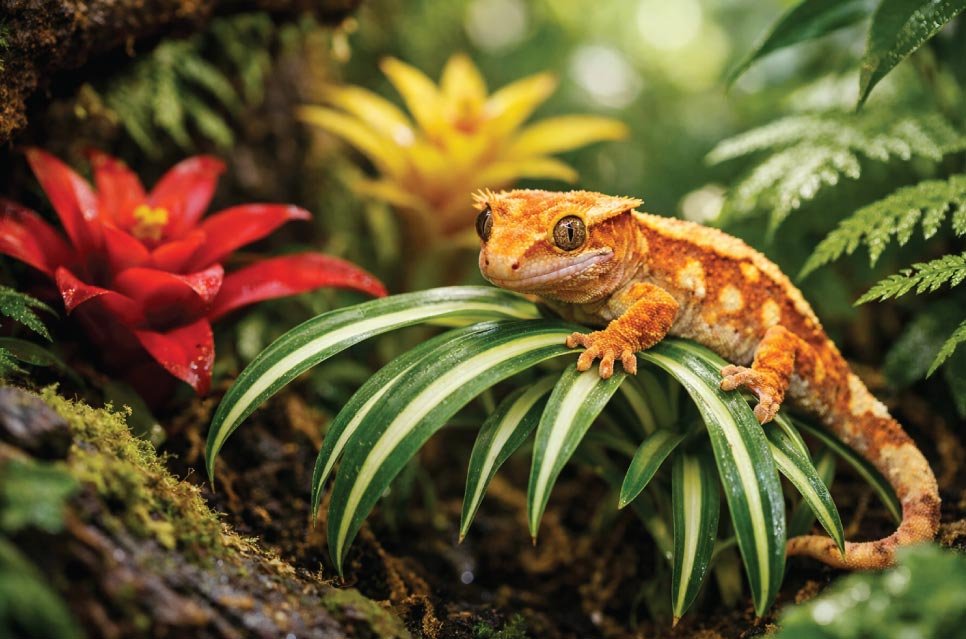
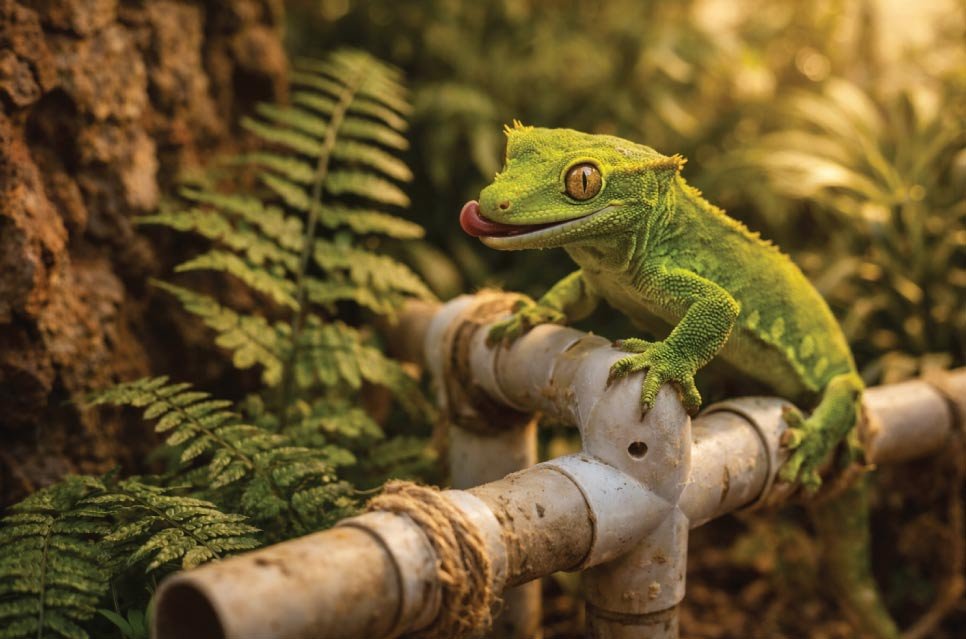
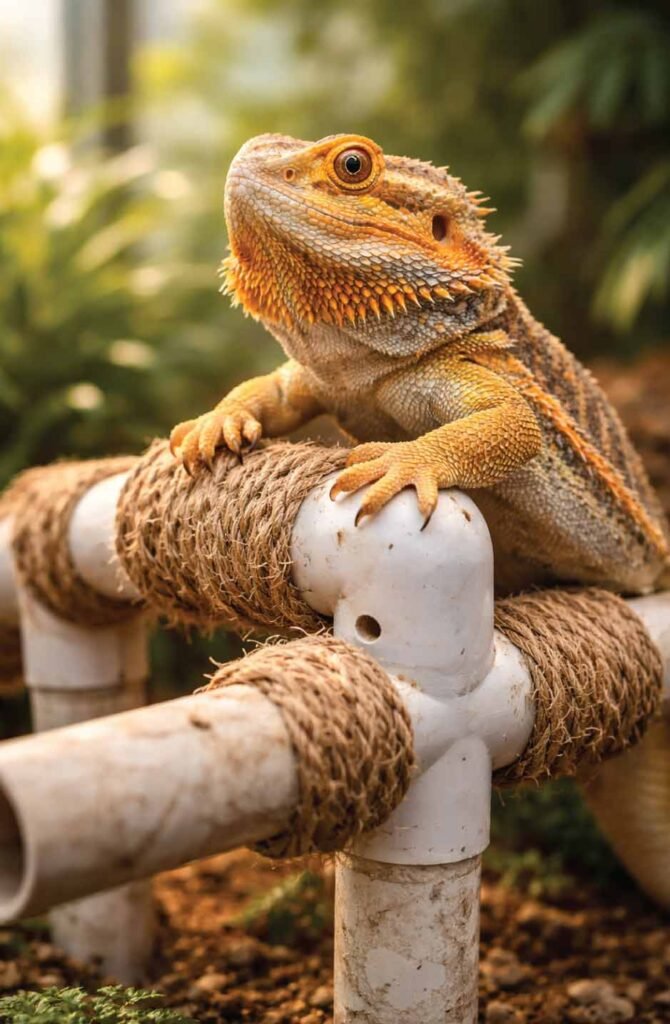
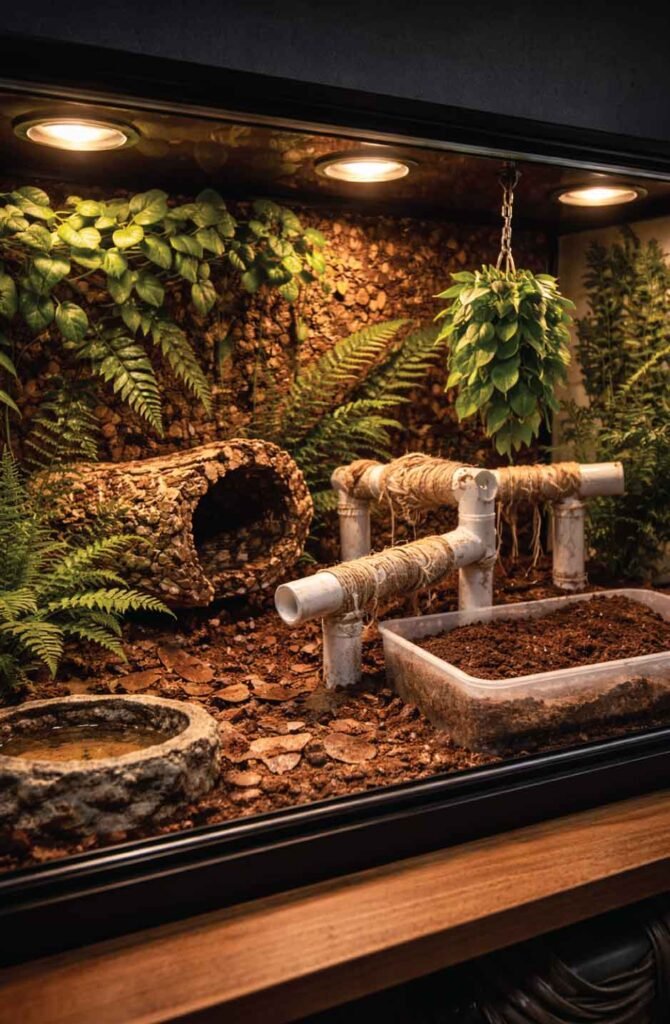
Vertical space is the most underutilized real estate in the average reptile enclosure. If you have a semi-arboreal or arboreal species like a Crested Gecko, a Carpet Python, or even a curious Bearded Dragon, a PVC gym is a game-changer. Standard wood branches are great, but they eventually rot, harbor mold, or are difficult to scrub; PVC is practically immortal and sanitizes in seconds.
Why it works for mental health
Reptiles feel a profound sense of security when they can choose their height and thermal gradient independently. By providing a network of “roads” at various levels, you encourage muscle engagement and cardiovascular health. Navigating a 3D grid forces their brains to map out paths, mimicking the complexity of a forest canopy or rock outcrop. According to the Association of Reptile and Amphibian Veterinarians (ARAV), physical activity is crucial for preventing obesity-related health issues in captive reptiles.
How to do it
- Gather Your Materials: Buy 1/2-inch or 1-inch PVC pipes and a variety of “T,” “L,” and “X” connectors from your local hardware store.
- The “Dry Fit” Method: Do not use PVC glue, as the chemical fumes are highly toxic to sensitive reptile lungs. Instead, simply press the pieces together firmly so you can disassemble them for deep cleaning or to change the layout.
- Texture is Key: Smooth PVC is slippery and dangerous for most lizards. Wrap the pipes in coconut fiber rope or use a high-grit sandpaper to roughen the surface so your pet can maintain a solid grip.
- Install: Place the gym in the enclosure, ensuring it is braced against the corners so it doesn’t tip over under the weight of a heavy-bodied reptile.
The “Veggie Kabob” Foraging Station
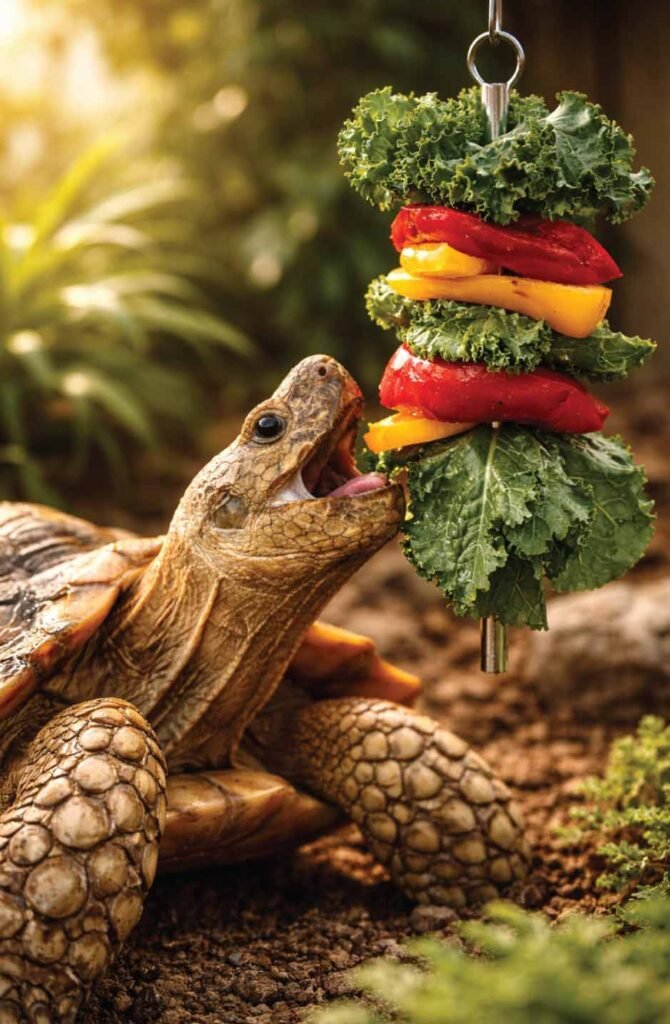
For herbivores like Tortoises, Uromastyx, and Green Iguanas, the bowl-feeding method is the ultimate boredom inducer. Imagine if your only task every day was to walk three inches to a plate of salad, you’d be bored too. The Veggie Kabob turns mealtime into a physical workout and a cognitive challenge by making the food “work” for the animal.
Why it works for mental health
In nature, herbivores spend the majority of their waking hours reaching, pulling, and tearing at vegetation rather than eating pre-chopped bits. This DIY toy stimulates the “foraging drive,” which reduces glass surfing and repetitive pacing. By making the food move or requiring the animal to reach for it, you are effectively turning lunch into a gym session. If you want to spice things up even more, you can pair this with some Homemade Treats for Your Reptile to keep their palate interested.
How to do it
- The Anchor: Use a bird-safe stainless steel skewer or a length of thick, natural hemp twine.
- String the Greens: Thread large leaves of kale, collard greens, or slices of bell pepper onto the line. Ensure there are no sharp metal points exposed that could poke an eye or a delicate mouth; blunt the ends of skewers if necessary.
- Hang it Up: Suspend the kabob from the screen top of the enclosure or a sturdy branch.
- Height Check: Position the food just high enough that the reptile has to stretch or stand on its hind legs to reach the best bits, but low enough that they don’t fall and injure themselves.
The TP Roll “Insect Puzzle Box”
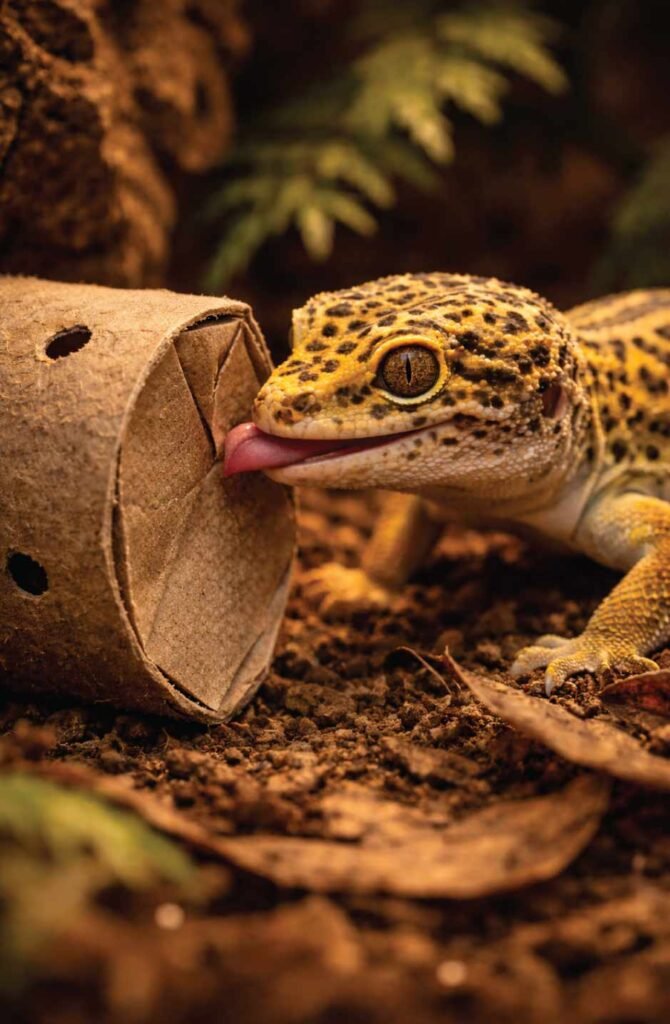
If you own a Leopard Gecko, Skink, or any insectivore, you know they are “visual hunters” who live for the chase. However, dumping 10 crickets into a tank often leads to the insects hiding where the lizard can’t find them, or worse, the insects biting the lizard while it sleeps. The TP Roll Puzzle Box keeps the “prey” in a localized area while forcing the lizard to figure out how to get them out.
Why it works for mental health
This DIY toy mimics the natural behavior of poking around in leaf litter or fallen logs for a snack. It provides a tactile experience where the lizard must use its nose, tongue, or feet to manipulate the object. Success provides an immediate dopamine hit (in the form of a mealworm), reinforcing the “problem-solving” loop that keeps their minds sharp. Science-based resources like ReptiFiles emphasize that “environmental complexity” is the key to preventing captive lethargy.
How to do it
- Prep the Tube: Take a clean, glue-free toilet paper or paper towel roll.
- Create Windows: Cut a few small holes into the sides. Make sure the holes are large enough for the lizard to see the movement inside, but small enough that the insects don’t just fall out instantly.
- Stuff and Fold: Place a few mealworms or Dubia roaches inside with a small piece of carrot (this keeps the bugs moving and “gut-loads” them simultaneously). Fold the ends of the tube shut so the lizard has to nudge the roll to make the bugs appear at the windows.
- Observe: Watch your reptile tackle the “log”, some will try to bite through the cardboard, while others will learn to flip it over to get the prize.
The Multi-Substrate “Dig Box”
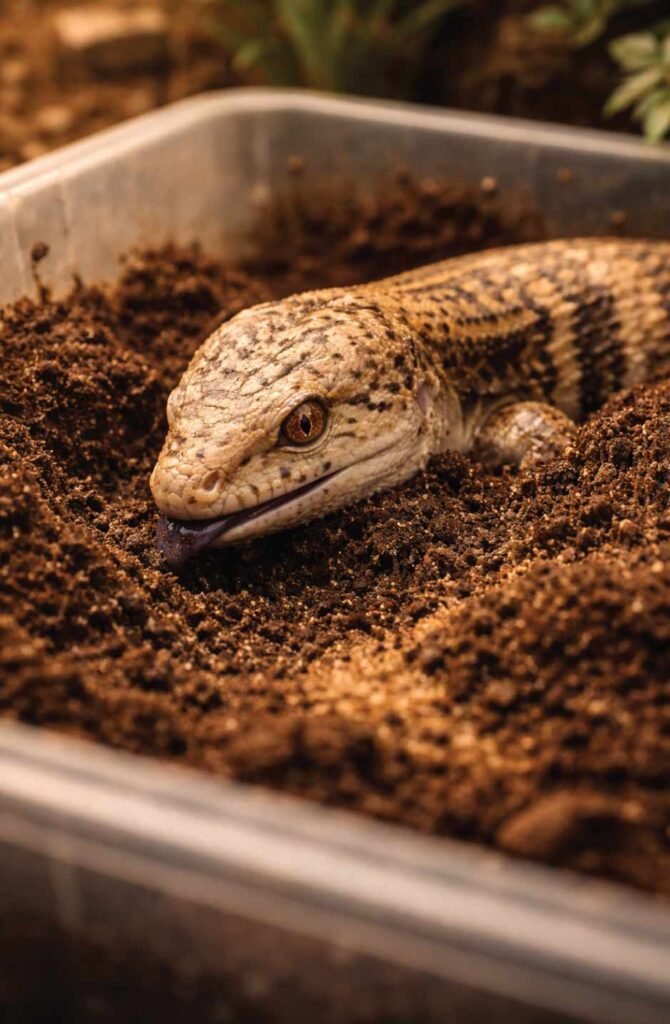
Many reptile owners use paper towels or tile for hygiene, but this robs burrowing species of their most basic biological instinct. Species like Bearded Dragons and Blue Tongue Skinks have a natural “itch” to dig that cannot be scratched on a hard ceramic floor. A DIY Dig Box provides a “sanitary compromise” that allows for natural behavior without making a mess of the entire enclosure or risking impaction across the whole floor.
Why it works for mental health
Digging is a high-energy activity that burns off “frustrated energy” and provides a sense of security. For female reptiles, having a place to dig is also essential for preventing egg-binding (dystocia), which can be a life-threatening emergency. The sensory input of different textures, cool soil vs. dry sand, is a massive form of environmental enrichment that simple tanks lack. For those looking to go all-in on a natural environment, read my Bioactive Reptile Tank Setup for Beginners.
How to do it
- The Container: Use a medium-sized Tupperware or plastic storage bin with high sides to keep the substrate contained.
- The Mix: Use a 70/30 mix of organic topsoil (strictly no fertilizers or perlite!) and play sand. Ensure the substrate is damp enough to hold its shape (like a sandcastle) but not so wet that it grows mold or bacteria.
- The Entry: Cut a hole in the lid or the side of the container large enough for your pet to enter comfortably. Smooth the edges of the cut plastic with a lighter or sandpaper to prevent any scrapes or sharp edges.
- Buried Treasure: Occasionally hide a few “safe” items like a flat rock or a piece of cork bark inside the dirt to give them something to “discover.”
Magnetic “Sky-Ledges” and Hides
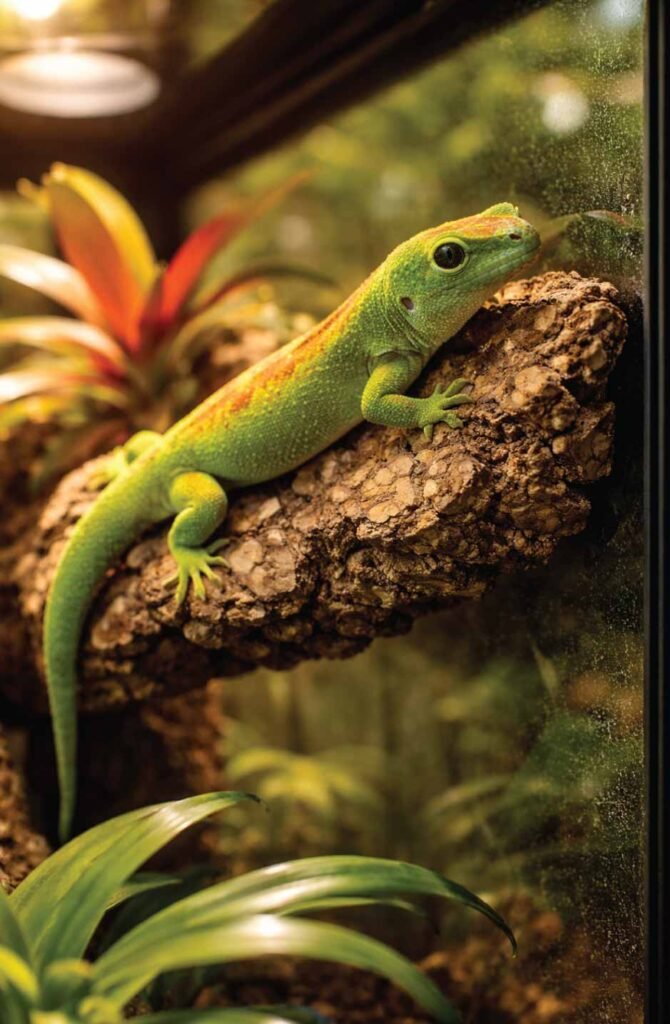
Reptiles are obsessed with the “high ground” because it offers the best vantage point to survey their kingdom for predators. In a standard glass tank, the vertical walls are usually just “dead space.” Magnetic ledges allow you to create a modular environment that you can change every week to keep your pet’s brain engaged with a shifting landscape.
Why it works for mental health
Constantly changing the “topography” of the enclosure prevents the animal from becoming habituated and bored with their surroundings. When you move a ledge from the left side to the right side, the reptile treats it like a brand-new territory to explore. This 360-degree use of the vivarium reduces the feeling of confinement found in small glass boxes and maximizes the square footage of the habitat.
How to do it
- Source Strong Magnets: Use high-strength Neodymium magnets (be careful, these are powerful enough to shatter glass if you aren’t gentle).
- Seal the Magnets: Waterproof your magnets by dipping them in food-grade silicone or encasing them in small plastic baggies to prevent rust from humidity.
- Attach the Ledge: Glue one magnet to a piece of lightweight cork bark or even a plastic deli cup lid using aquarium-safe silicone.
- The Snap: Place the ledge inside the tank and the second magnet on the outside of the glass. Slide the ledge to different heights to create new basking spots or “lookout towers” throughout the week.
The Secret Sauce: 3 Pro-Tips for Advanced Enrichment
The Power of “Scent Trails”
Most reptiles have a Jacobson’s organ (the “vomeronasal” system) that is far more sensitive than their eyes. Once a week, take a “foreign” scent, like a leaf from a (safe) outdoor hibiscus plant or a tiny drop of diluted peppermint oil, and rub it on a rock in the corner. Your reptile will spend hours “tasting the air” and investigating the new smell, which is the reptilian equivalent of humans watching a 4K movie.
The 20% Rotation Rule
Do not put all these toys in the tank at once; you will overstimulate your pet and take up too much floor space. Instead, keep a “toy box” in your closet. Every time you do a deep clean (usually once a month), swap out 20% of the decor for something “new” to restart their curiosity and exploration drive.
Visual “TV”
If your reptile’s tank is in a quiet room, they are missing out on vital visual stimulation. Try placing a bird feeder outside the window near their tank or even playing a “cat game” video of moving insects on a tablet held against the glass. Just keep it brief (15-20 minutes); you want to pique their interest, not stress them out with a “prey” item they can never actually catch.
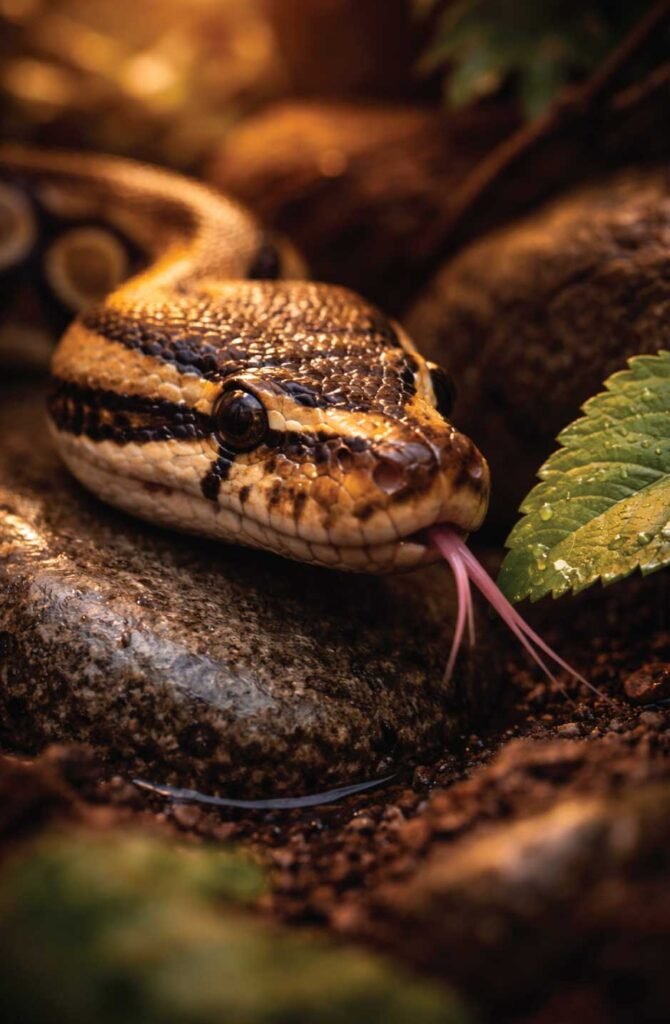
Safety First (Read This!)
Before you drop your DIY masterpiece into the vivarium, run through this final safety checklist to ensure no harm comes to your pet. * Non-toxic everything: Never use cedar, pine, or “treated” lumber from a hardware store, as the aromatic oils and chemicals can be fatal.
- Sanitization: If you can’t soak it in a 10% bleach solution or a specialized veterinary disinfectant like F10, it doesn’t belong in the tank.
- The Swallow Test: If a piece of your DIY toy is smaller than the space between your reptile’s eyes, they might try to eat it, and that leads to a very expensive vet bill for impaction.
Frequently Asked Questions About DIY Reptile Toys
You can use specific glues, but you must be extremely cautious about fumes and ingestion. Cyanoacrylate-based super glues (like original Gorilla Glue) are generally safe once fully cured, as are high-temperature hot glue sticks. However, never place a glued item in the tank until the "vinegar smell" or chemical odor is 100% gone. For anything submerged in water or near high heat, aquarium-safe silicone is always the gold standard for safety.
Reptiles don't "play" like dogs; instead, look for "investigative tongue-flicking," relaxed climbing, and focused hunting. If your reptile is glass surfing (running against the walls), hiding 24/7, or breathing heavily (panting), the new toy might be overwhelming. Introduce one new item at a time so they have a "safe zone" to retreat to if they feel the new addition is a "threat" rather than a toy.
Yes, but only if you properly sanitize them to kill parasites and bacteria. You must bake wood at 250°F ($120°C$) for 30–60 minutes or boil rocks for 20 minutes (though never bake rocks, as they can explode). Avoid any wood from fruit trees, cedar, or pine, as these contain phenols and resins that are toxic to reptile respiratory systems.
Absolutely, because "environmental complexity" benefits them even when they are sleeping. While a Leopard Gecko might not use a gym at noon, they will utilize the different textures and micro-climates created by those DIY items during their active night hours. Think of enrichment for nocturnal species as "habitat architecture" rather than "active toys", they appreciate the new hiding spots and scent trails you leave behind.
Food enrichment focuses on the how of eating, while environmental enrichment focuses on the where of living. Food enrichment (like the Veggie Kabob) prevents the "laziness" of bowl-feeding. Environmental enrichment (like the Magnetic Ledge) encourages natural movement. For the best results, you should use a combination of both to ensure your pet is using both their brain and their muscles.
A good rule of thumb is to change the layout or swap a toy every 4 to 6 weeks. If you change things too often (like every day), it can actually stress the reptile out because they feel like their "territory" is unstable. By rotating toys once a month during your deep clean, you provide just enough "newness" to trigger curiosity without causing an anxiety spike.
Prefer Audio? Listen to DIY Reptile Toys & Enrichment Ideas to Cure Boredom
Conclusion
Enrichment isn’t a luxury; it’s a fundamental requirement for a healthy, long-lived reptile. By spending 20 minutes on a PVC gym or a simple dig box, you are drastically improving your pet’s quality of life and observing behaviors you never knew they had. A busy lizard is a happy lizard (and a much more interesting one to watch!).
Pin this post for your next DIY weekend!
Looking to level up your care even further? Check out my guide on Reptile Health: Tips for Maintaining their Best Care to ensure your pet is in peak physical condition!