Quick Guide: Lovebirds as Pets
- Commitment Level: Lovebirds live 15–20 years; they are “big parrots in small bodies” requiring high social interaction.
- Social Needs: You don’t need a pair, but a single bird requires several hours of daily interaction to avoid neurotic behaviors.
- Dietary Gold Standard: Avoid all-seed diets; aim for 60-70% high-quality pellets supplemented with fresh “bird chop.”
- The Silent Killer: Teflon/non-stick cookware fumes are fatal; keep cages far from the kitchen and avoid aerosol sprays.
Prefer watching instead of reading? Watch the full explanation below or continue reading for more details.
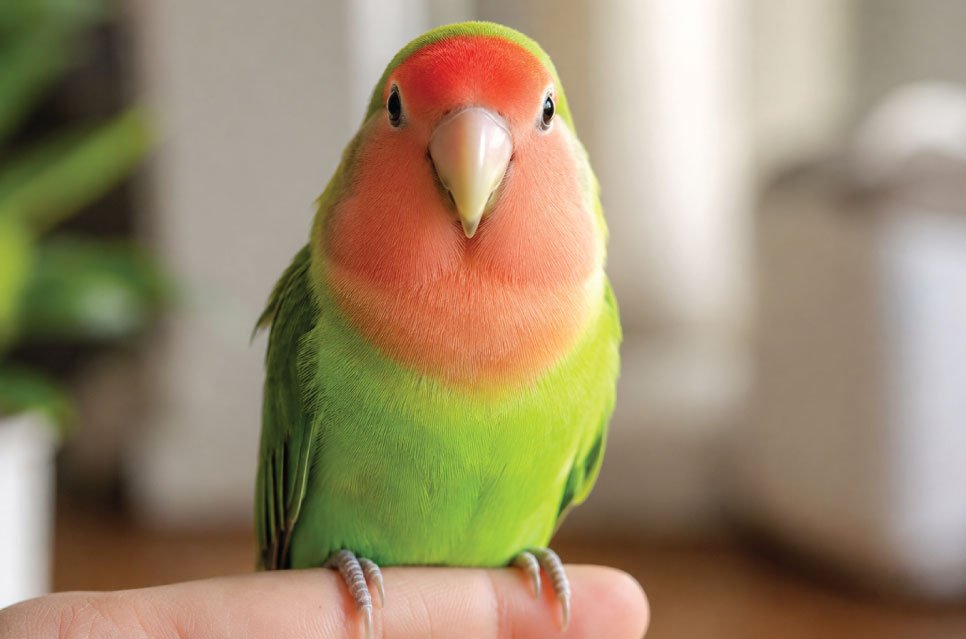
Thinking about bringing home a lovebird because they’re “small and easy”? You’ve likely been lured in by their toy-like appearance and sweet-sounding name, but these birds are far more complex than a standard goldfish and require a significant lifestyle shift. I’ve seen countless new owners struggle when their “love” bird turns into a feisty, nippy roommate that shrieks at the TV. This post is designed to move you past the myths and into practical, expert-level care. We’re skipping the generic “birds are pretty” intros and getting straight to the actionable advice you need to decide if an Agapornis is your perfect match or a 20-year mistake. Lovebirds may be small, but they are highly active, social, and often very opinionated companions that demand your respect and time.
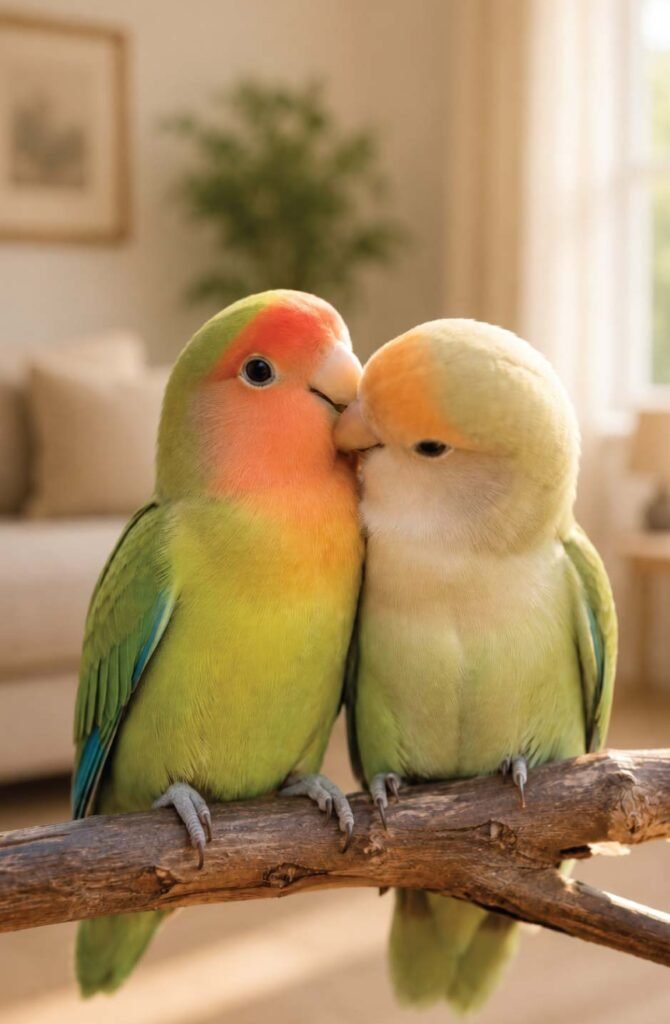
The Social Dilemma: Single vs. Pair
There is a persistent myth in the bird world that a single lovebird will die of a broken heart without a mate. In reality, a single lovebird can thrive, and will often bond much more deeply with you, as long as you are prepared to be their entire “flock” for several hours every day. If you work a 9-to-5 and aren’t home much, a pair is non-negotiable for their mental health, though you must accept they may become less interested in snuggling with you.
Choosing Your “Flock” Dynamics
Deciding between one bird or two isn’t just about the bird’s happiness; it’s about what kind of relationship you want.
- The Single Lovebird: They will view you as their mate/partner. This means more affection and easier training, but higher risk of separation anxiety and screaming when you leave the room.
- The Pair: They will provide their own social stimulation. This is much easier for busy owners, but they may become territorial over each other and view your hand as an intruder.
If you want a true “soulmate” bird that rides on your shoulder, get a single, hand-fed bird and commit to an intense social schedule.
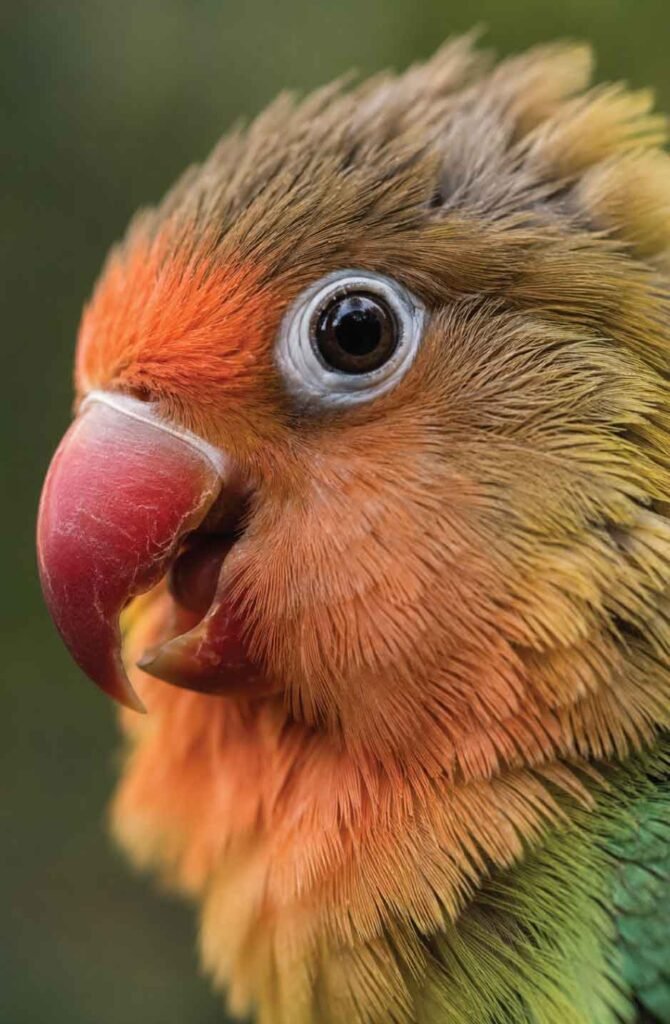
The “Tiny Dinosaur” Personality
Lovebirds are often described as having the personality of a Macaw packed into a 50-gram body. Expect a bird that is bold, inquisitive, and occasionally aggressive, especially females, who are notoriously territorial over their cages. While males are generally considered more “docile,” both sexes can deliver a bite that easily draws blood if they feel their space is being invaded.
Reading Body Language to Prevent Nips
The practical takeaway here is to study Pet Bird Body Language so you can recognize the warning signs before a bite happens.
Pinned Pupils: Their irises will rapidly shrink and grow; this means they are overstimulated or angry.
Tail Fanning: A sign of aggression or intense excitement.
Puffed Feathers + Beak Clicking: This is a clear “back off” signal. Never “force” a bird to step up if they are displaying territorial warnings, as this only reinforces their need to bite to defend their “nest.”
The Honest Pros and Cons of Having a Lovebird
Lovebirds can be magical little companions, but they are not the right pet for everyone. Their biggest strength is also their biggest challenge: they are intensely social, emotional, curious, and full of opinions. For the right owner, this creates a hilarious, affectionate, deeply bonded bird that feels like a tiny feathered best friend. For the wrong owner, it can become a noisy, nippy, jealous roommate with a talent for destroying paper, furniture, and your patience.
The key is not asking, “Are lovebirds good pets?” The better question is: “Are lovebirds good pets for my lifestyle?”
Pros of Having a Lovebird
1. They Have Huge Personalities in Tiny Bodies
Lovebirds are bold, playful, and surprisingly confident for their size.
They are not passive cage decorations. A well-socialized lovebird may:
- Follow you around
- Investigate everything you touch
- Chatter when you talk
- Try to be involved in your daily routine
- Act like they are the most important member of the household
If you enjoy interactive pets with a lot of attitude, this can be one of their most charming traits.
2. They Can Form Very Strong Bonds
A hand-raised or well-socialized lovebird can become deeply attached to their person.
Many owners describe lovebirds as:
- Clingy
- Affectionate
- Loyal
- Curious
- Eager to be included in daily life
They may enjoy:
- Sitting on your shoulder
- Preening your hair
- Taking treats from your hand
- Staying near you while you work or relax
This strong bond is one of the reasons people fall in love with them.
3. They Are Intelligent and Trainable
Lovebirds are smart birds that can learn routines, tricks, and basic training.
They can often learn:
- Step-up training
- Target training
- Simple tricks
- Household routines
- Positive associations with hands and treats
But their intelligence also means they need mental stimulation.
That makes the following essential, not optional:
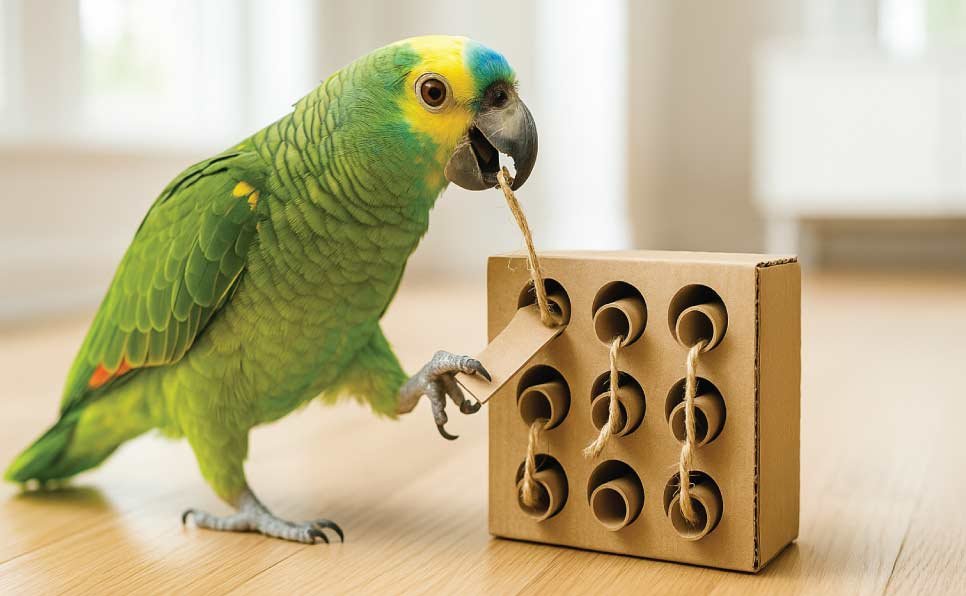
- Puzzle toys
- Foraging activities
- Safe shredding materials
- Regular interaction
- Positive reinforcement training
A bored lovebird will usually find its own entertainment — and you may not like what they choose.
4. They Are Smaller Than Many Parrots
Compared with larger parrots, lovebirds are easier to house in a normal home or apartment.
Their smaller size can make them feel more manageable than birds like:
- Cockatoos
- Macaws
- Amazon parrots
- Larger conures
However, this is important:
Smaller does not mean low maintenance.
Lovebirds are still parrots. Their care needs are serious, and they require time, patience, enrichment, and daily attention.
5. They Are Entertaining Every Day
A happy lovebird is rarely boring.
They may spend the day:
- Climbing
- Chewing
- Exploring
- Bathing
- Chattering
- Playing
- Inventing their own little games
Watching a bonded pair can also be extremely rewarding. They may:
- Preen each other
- Play together
- Communicate with soft calls
- Sleep close to each other
- Show sweet pair-bonded behavior
This daily entertainment is one of the biggest joys of keeping lovebirds.
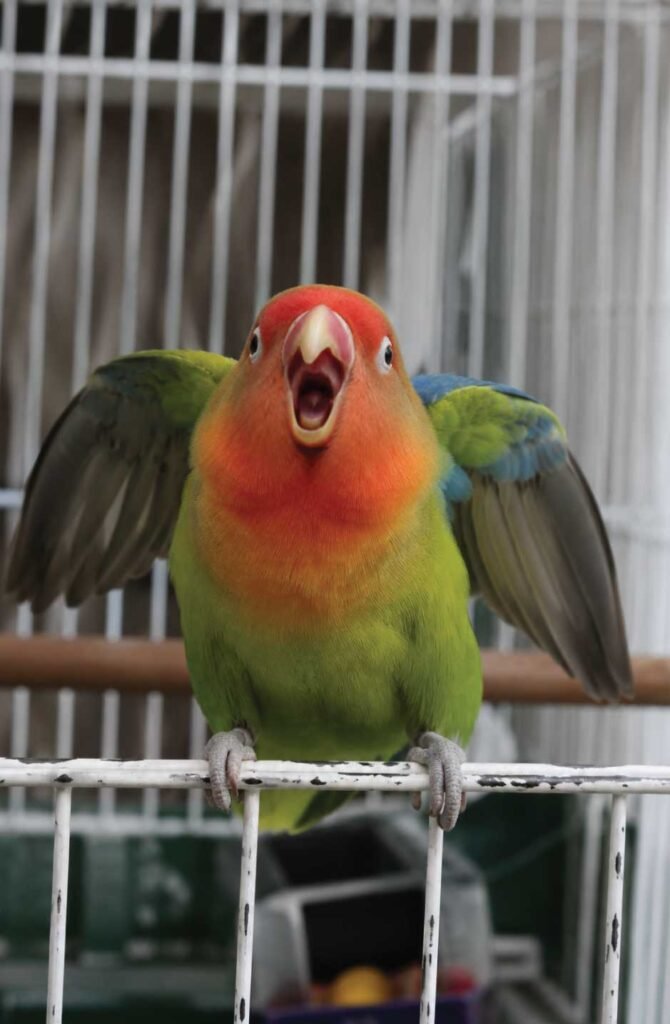
Cons of Having a Lovebird
1. They Can Bite Hard
Do not let their size fool you. A lovebird bite can hurt.
A bite may:
- Break skin
- Cause bleeding
- Become a repeated behavior
- Make handling stressful
Biting often becomes worse when owners:
- Ignore body language
- Force handling
- Reach into the cage too often
- Punish instead of training
- Trigger hormonal or territorial behavior
A lovebird is not being “mean” for no reason. Usually, biting is communication.
The goal is to learn what your bird is trying to say before the bite happens.
2. They Can Be Territorial
Many lovebirds become protective of their space, favorite person, toys, or mate.
They may guard:
- Their cage
- A favorite perch
- A toy
- A nest-like corner
- Their chosen human
- Their bird partner
This is why some owners describe them as “tiny dinosaurs.”
A lovebird may be sweet on your shoulder but defensive when your hand enters the cage.
This does not make the bird bad. It means you need:
- Clear boundaries
- Respectful handling
- Positive training
- Patience
- An understanding of bird body language
3. They Are Noisy for Their Size
Lovebirds are not silent pets.
They are usually not as loud as some larger parrots, but their calls can be:
- Sharp
- Repetitive
- High-pitched
- Difficult to ignore
A lovebird may call loudly when they are:
- Lonely
- Bored
- Hormonal
- Overstimulated
- Looking for attention
- Responding to household noise
- Calling for their human or bird companion
This does not mean every lovebird screams all day, but you should not expect a quiet pet.
4. They Are Messy and Destructive
Lovebirds create more mess than many beginners expect.
Daily mess may include:
- Seed hulls
- Pellet crumbs
- Vegetable pieces
- Shredded toys
- Feathers
- Droppings
- Water splashes from bathing
They also love to chew. Without safe alternatives, they may target:
- Books
- Paper
- Wooden furniture
- Keyboards
- Houseplants
- Cables
- Wallpaper
- Anything you are currently holding
This is why supervised out-of-cage time and safe chewing toys are so important.
5. They Need Daily Social Time
A lovebird is not a pet you can leave in a cage and simply admire from across the room.
A single lovebird especially needs:
- Daily interaction
- Training
- Enrichment
- Companionship
- Time outside the cage
- A predictable routine
Without enough attention, a lovebird may develop problems such as:
- Screaming
- Biting
- Fearfulness
- Stress
- Feather damage
- Destructive behavior
- Overdependence on one person
If you want a lovebird, you need to be part of their daily life.
6. Hormones Can Change Their Behavior
A sweet young lovebird may become more intense after sexual maturity.
Hormonal behavior can include:
- Biting
- Cage aggression
- Nesting behavior
- Shredding
- Possessiveness
- Regurgitation
- Mood swings
- Chronic egg-laying in females
This is one reason some owners feel surprised when their cuddly baby bird becomes more defensive or unpredictable later.
Long-term hormone management may include:
- Providing 12 hours of darkness
- Avoiding nest-like spaces
- Limiting petting to the head and neck
- Managing diet
- Avoiding excessive stimulation
- Removing nesting materials when needed
Hormonal behavior is not always completely avoidable, but it can often be reduced with proper care.
7. They May Not Mix Safely With Other Birds
Lovebirds are brave, fast, and sometimes confrontational.
Even though they are small, they may challenge larger birds such as:
- Conures
- Cockatiels
- Budgies
- Quakers
- Other parrots
This can be dangerous because fights between birds can lead to serious injuries, including damage to:
- Toes
- Feet
- Beaks
- Eyes
- Wings
The safest approach is usually:
- Separate cages
- Separate feeding areas
- Separate out-of-cage time
- Careful supervision
- Slow introductions only when appropriate
Never assume a lovebird will automatically get along with another bird just because they are small.
The Real Verdict
Lovebirds can be wonderful pets for the right person.
They are best suited for someone who wants an active, social, intelligent bird and is prepared for:
- Training
- Noise
- Mess
- Chewing
- Daily care
- Strong boundaries
- Regular interaction
- Possible biting or hormonal behavior
They are not ideal for someone who wants:
- A quiet pet
- A low-effort pet
- A decorative cage bird
- A bird that never bites
- A pet that can be ignored most of the day
- A bird that will automatically get along with other pets
Lovebirds are not “easy birds.”
They are small parrots with big emotional lives. Respect that, and they can be incredible. Ignore it, and that sweet little bird can quickly become the boss of your house.

Mastering the Lovebird Diet
The biggest mistake beginners make is feeding a “wild bird” seed mix and assuming it’s enough for a long life. A seed-only diet is essentially “junk food” for lovebirds, leading to obesity, fatty liver disease, and vitamin A deficiencies that shorten their lives significantly. To keep your bird healthy for two decades, 60% to 70% of their intake must be high-quality, formulated pellets like those recommended by the Association of Avian Veterinarians.
Building the Ultimate “Bird Chop”
Transitioning a “seed-addict” to pellets takes patience, but adding fresh food is an easy win for their health.
- Daily Base: Finely diced kale, broccoli, and bell peppers (seeds included!).
- Vitamins: Grated carrots or sweet potato for essential Vitamin A.
- Avoid: Never feed chocolate, avocado, caffeine, or onion, as these are toxic.
Every morning, you should offer this “bird chop” to ensure they get the micro-nutrients seeds lack while keeping their foraging instincts sharp.
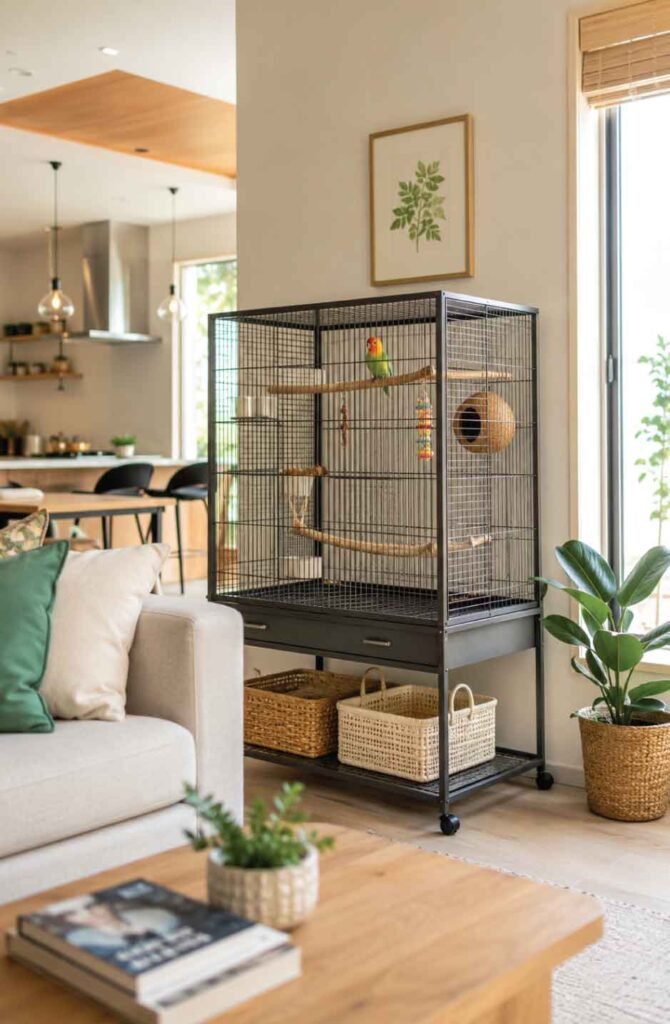
Building a Safe Haven
Lovebirds are incredibly active and need a cage that is a minimum of 18x18x24 inches, though bigger is always better for their wingspan. Placement is just as important as size; your bird needs to be in a high-traffic area to feel social, but kept strictly away from the kitchen. Overheated non-stick cookware (Teflon/PTFE) releases odorless fumes that can kill a bird in minutes, making the kitchen the deadliest room in your house.
Eliminating Invisible Airborne Dangers
Beyond cookware, you must audit your home for other airborne risks that human lungs can handle but bird lungs cannot.
- Aerosols: Stop using hairspray, perfume, or spray deodorant in the same room as the bird.
- Scented Products: You should check if Air Fresheners are Safe for Birds (spoiler: most aren’t) and avoid scented candles or wax melts.
- Drafts: Ensure the cage isn’t directly in front of an AC vent or a drafty window, which can lead to respiratory infections.
Always remember that a bird’s respiratory system is hyper-efficient, meaning what is a faint scent to you can be toxic to them.
Training Your “Big Parrot” Brain
Because lovebirds are highly intelligent, they require “jobs” to do, or they will find their own work, usually involving shredding your favorite books or furniture. Training is not just about showing off; it is a vital tool for building trust and preventing boredom-related neurosis like feather plucking.
The 3-Step “Step Up” Foundation
The most important trick is the “Step Up,” which allows you to move your bird safely.
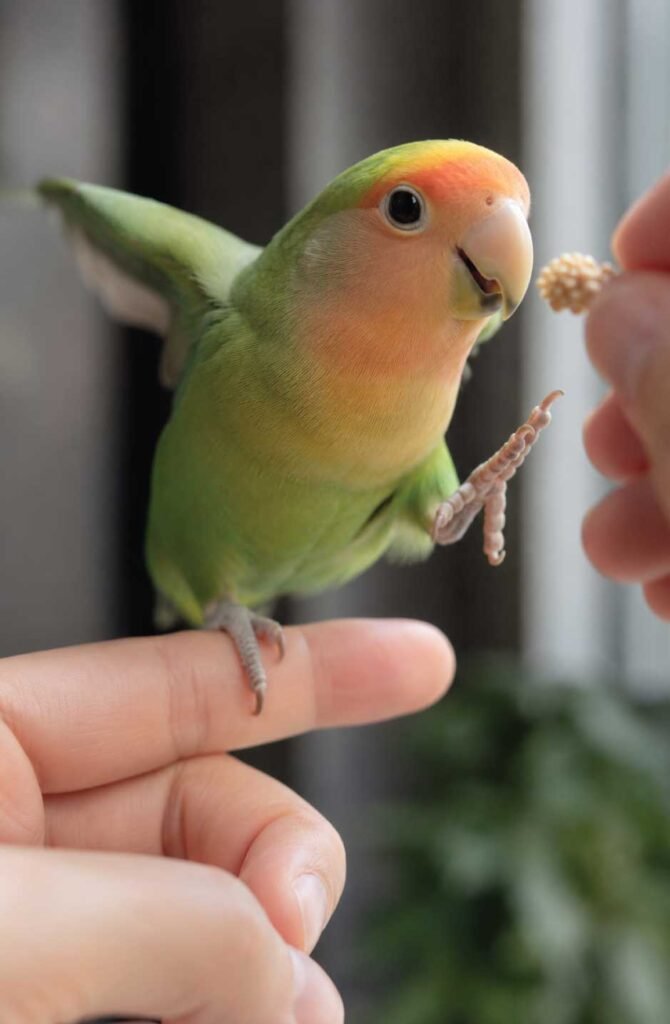
- Lure: Hold a piece of millet just out of reach so the bird has to step onto your finger to get it.
- Command: Say “Step Up” clearly as their feet touch your hand.
- Reward: Let them eat the treat immediately while on your hand to build a positive association.
Once they master the basics, move to advanced tricks like waving or spinning in a circle to keep their active minds engaged and prevent destructive behaviors. For more expert insights on temperament, check out Lafeber’s Lovebird Guide to see how their intelligence compares to other species.
Recognizing the “Masking” Behavior
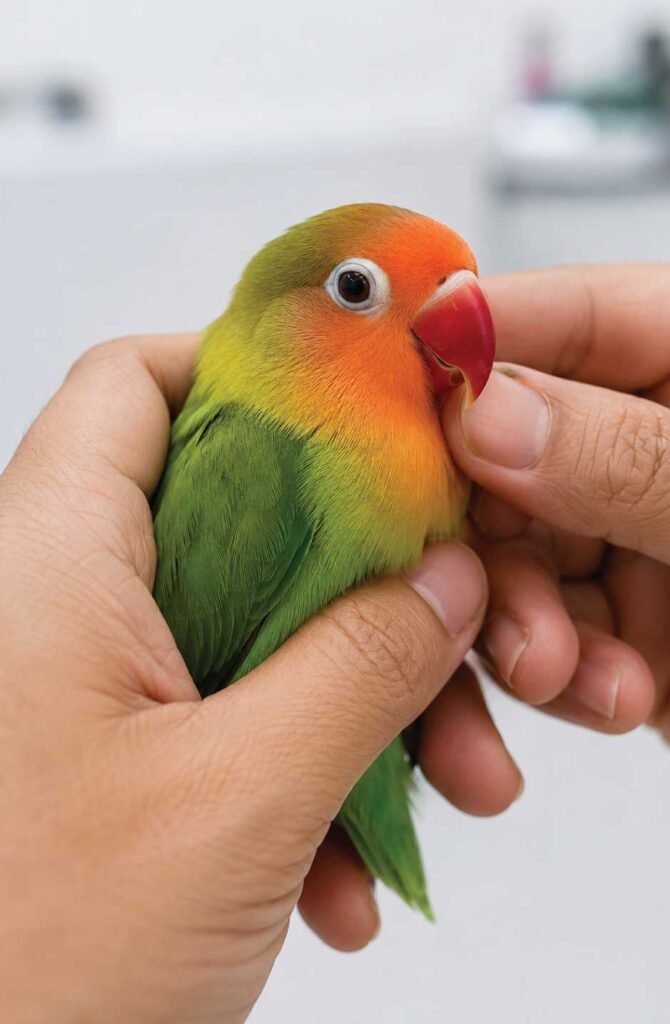
In the wild, a bird that shows signs of illness is an immediate target for predators, so lovebirds have evolved to hide sickness until they are critically ill. This means you have to be a “poop detective,” monitoring their weight and droppings every single day for even the most subtle changes.
Signs of Illness Every Owner Must Know
Never wait until the next day if you notice these immediate red flags:
- Change in Droppings: Watery, yellow, or bloody droppings are a crisis.
- Tail Bobbing: If their tail moves up and down significantly with every breath, they are struggling to breathe.
- Sleeping on the Floor: Healthy birds sleep on the highest perch; a bird on the floor is often too weak to grip.
Always have a “vet fund” of at least $500 ready and be familiar with Common Pet Bird Diseases so you know what to watch for.
The Secret Sauce
Desensitize with the “Two-Second Hand” Method
If you have a bird that is terrified of hands, don’t chase them around the cage, as this destroys their trust in you. Instead, rest your hand on the outside of the cage, far enough away that the bird doesn’t panic, for exactly two seconds, then walk away and give a treat. Repeat this multiple times a day, slowly increasing the time and moving closer over weeks. This teaches the bird that your hand is a neutral, non-threatening object.
Regulate Hormones with 12 Hours of Darkness
Lovebirds are sensitive to light cycles, and “long days” can trick their bodies into thinking it’s breeding season, leading to extreme aggression. To keep their hormones in check and their mood stable, ensure your bird gets 12 hours of uninterrupted, pitch-black sleep every night. Use a heavy blackout cover or a dedicated “sleep cage” in a quiet room to ensure they aren’t disturbed by household lights after bedtime.
Pet Only the “Safe Zones”
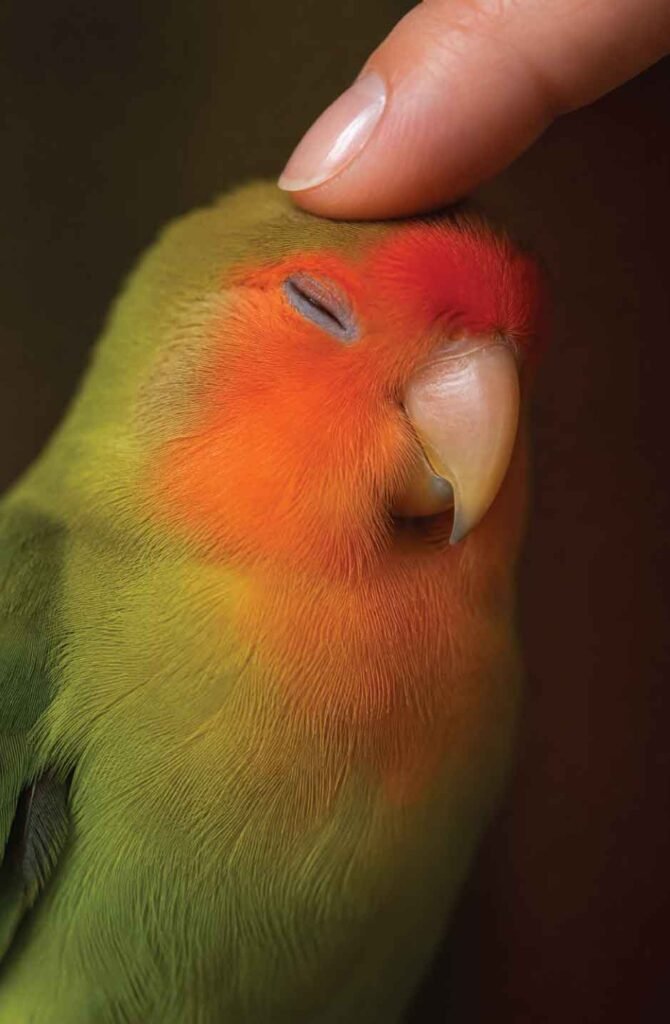
It is tempting to snuggle your lovebird by stroking their back or under their wings, but in the bird world, this is strictly “mating” behavior. Touching these areas can trigger sexual frustration, leading to increased biting, territoriality, and chronic egg-laying in females. To maintain a healthy, platonic bond, strictly limit your “scritches” to the bird’s head, neck, and feet. This keeps the relationship friendly rather than romantic.
Frequently Asked Questions About Lovebirds as Pets
Lovebirds are surprisingly loud for their size and possess a high-pitched, piercing shriek that can easily travel through apartment walls. While they don’t scream constantly like a large Macaw, their "contact calls" at dawn and dusk are intense and can be heard from several rooms away. If you live in a building with strict noise rules or very thin walls, the sharp frequency of their vocalizations may lead to neighbor complaints.
While they are technically parrots, lovebirds are not known for their talking ability and are much more likely to mimic whistles or household noises than human speech. Most lovebirds will never say a clear human word, though a very small percentage may learn a muffled "hello" or their own name. If your heart is set on a bird that can hold a "conversation," a lovebird will likely leave you disappointed.
You should never allow a lovebird to interact directly with predatory pets like dogs or cats, and they should be kept separate from other bird species like budgies or cockatiels. Lovebirds are notoriously "feisty" and will often pick fights with birds twice their size, which can result in serious injury. Additionally, even a "playful" swipe from a cat or dog can be fatal due to physical trauma or the bacteria found in their saliva.
Most lovebird species are monomorphic, meaning there are no visual differences between sexes; a DNA blood or feather test is the only 100% accurate way to know for sure. Some owners try to guess based on behavior (like females tucking nesting material in their feathers) or pelvic bone width, but these methods are notoriously unreliable. Knowing the sex is vital, as females require specific calcium monitoring to prevent life-threatening egg-binding.
Most lovebirds love water and should be offered a shallow bathing dish or a gentle misting from a spray bottle at least 3–4 times per week. Regular bathing is essential for feather health, as it helps remove dander and encourages proper preening. Just ensure your bird has enough time to fully dry off in a warm, draft-free area before the sun goes down and they head to bed.
Chewing is a natural, biological drive for lovebirds, so the goal is to redirect their energy toward "legal" destruction rather than trying to stop the behavior entirely. If your bird is shredding your molding or books, it’s a sign they lack enough "shredding toys" like bird-safe wood, cardboard, or seagrass mats. Keep a rotating variety of in their cage to keep their busy beaks occupied and away from your valuables.
Prefer Audio? Listen Lovebirds as Pets
Lovebirds are compact, feisty, and incredibly rewarding companions, but they aren’t “low maintenance” pets for someone looking for a quiet ornament. To succeed with an Agapornis, you must balance their high social needs with firm boundaries and a rock-solid nutritional foundation. If you can handle a little “spice” with your “sweet,” you’ll have a loyal, intelligent friend for nearly two decades.
Pin this for later!
If you’re still weighing your options on which small bird is right for your home, you should definitely read: Is a Cockatiel a Good Pet for Beginners?