Quick Guide: Bird Cage Mistakes
- Say No to Round Cages: Corners aren’t just for looks; they provide “Security by Position,” giving your bird a safe spot to press against so they don’t feel exposed to 360-degree threats.
- Evict the Kitchen Cage: Colorless, odorless fumes from non-stick (PTFE) pans can cause fatal lung hemorrhaging in minutes; never keep a bird near a stove.
- Ditch the Dowels: Uniform perches cause “Bumblefoot” (painful ulcers); swap them for natural, varied wood branches to save your bird’s joints and circulation.
- Stop Using Wood Chips: Particulate bedding (corncob, walnut shells) traps moisture and grows deadly Aspergillus mold, leading to silent, fatal respiratory infections.
Stop Making Your Bird’s Cage a “Pinterest-Pretty” Prison
You’ve seen the “aesthetic” bird cages on your feed, the sleek gold cylinders, the minimalist setups, and the perfectly curated placements. But here’s the cold, hard truth: many of those trending setups are actually a one-way ticket to a stressed, sick, or miserable bird.
Our feathered besties have evolved over millions of years as prey animals with highly specialized respiratory systems and complex psychological needs that a standard “pet store starter kit” simply doesn’t meet. If your bird is screaming, plucking, or acting lethargic, they aren’t “being a drama queen”, they are likely reacting to a critical failure in their environment.
This post is different because we aren’t just looking for what looks “cute” in your apartment; we’re diving into the avian science of biomechanics, toxicology, and ethology to fix the errors that make birds miserable. Let’s stop the guesswork and build a sanctuary that actually lets your bird thrive.
The “Aesthetic” Round Cage: A Psychological Nightmare
Why are round bird cages bad for parrots?
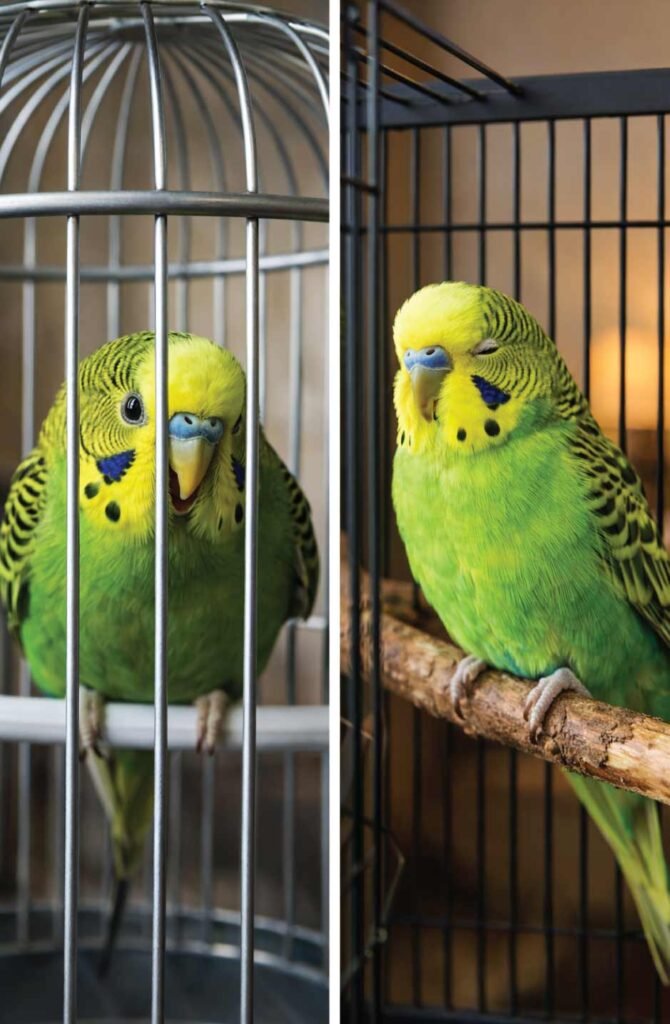
While they look great in a Victorian-inspired room, round cages are a psychological trap. In the wild, birds rely on “security by position,” which means they need at least one solid reference point, like a corner, to feel protected from potential predators. Without corners, birds experience chronic anxiety because they never feel truly hidden or safe. Beyond the stress, round cages are mechanical hazards; the bars converge at the top into “pinch points” that can easily trap a toe or a beak, leading to traumatic fractures.
Why It Works
Switching to a rectangular cage provides a clear “back” and “front” to the bird’s territory. Providing corners allows your bird to choose a “safe corner” for sleeping, which drastically lowers their cortisol levels and prevents “night frights.” It moves the bird from a state of constant 360-degree vigilance to a state of relaxed security.
How To Do It
- Ditch the cylinder and opt for a rectangular flight cage that is at least 1.5 to 2 times your bird’s full wingspan in width.
- Prioritize horizontal space over height for high-energy species like finches and parakeets, as they fly laterally rather than vertically.
- Tuck the cage into a corner of a family room so they have two solid walls of protection. If you’re still deciding which species is right for your lifestyle, check out our guide on the best pet birds for beginners to match cage size with your bird’s energy needs.

The “Death by Teflon” Mistake: Kitchen Placements
Is it safe to keep a bird cage in the kitchen?
The kitchen is the most dangerous room in your house for a bird, period. The primary threat is Polytetrafluoroethylene (PTFE), found in non-stick cookware (Teflon), which releases odorless gases that cause your bird’s lungs to literally fill with blood, leading to death in minutes. Because birds have ultra-efficient respiratory systems with air sacs, they receive a “double dose” of these airborne toxins that humans wouldn’t even notice. Even if you aren’t “burning” a pan, the normal heating of PTFE is enough to be terminal for a small parrot. The American Veterinary Medical Association confirms that PTFE toxicity is one of the leading causes of sudden death in companion birds, making kitchen safety non-negotiable.
Why It Works
Moving the cage to a “clean air zone” eliminates the #1 cause of sudden household bird death. By keeping your bird in a living area far from the kitchen, you protect their sensitive air sacs from cooking fumes, self-cleaning ovens, and aerosolized oils. This ensures their respiratory health remains robust for the long term.
How To Do It
- Relocate the cage to a social area like a living room where they can interact with the “human flock” safely.
- Ensure the spot is away from drafty windows and air conditioning vents that can cause rapid temperature swings.
Switch your own cookware to stainless steel or cast iron to make your entire home a bird-safe “Green Zone.”
The “Dowel Rod” Trap: Why Uniform Perches Ruin Feet
What are the best perches for bird feet health?
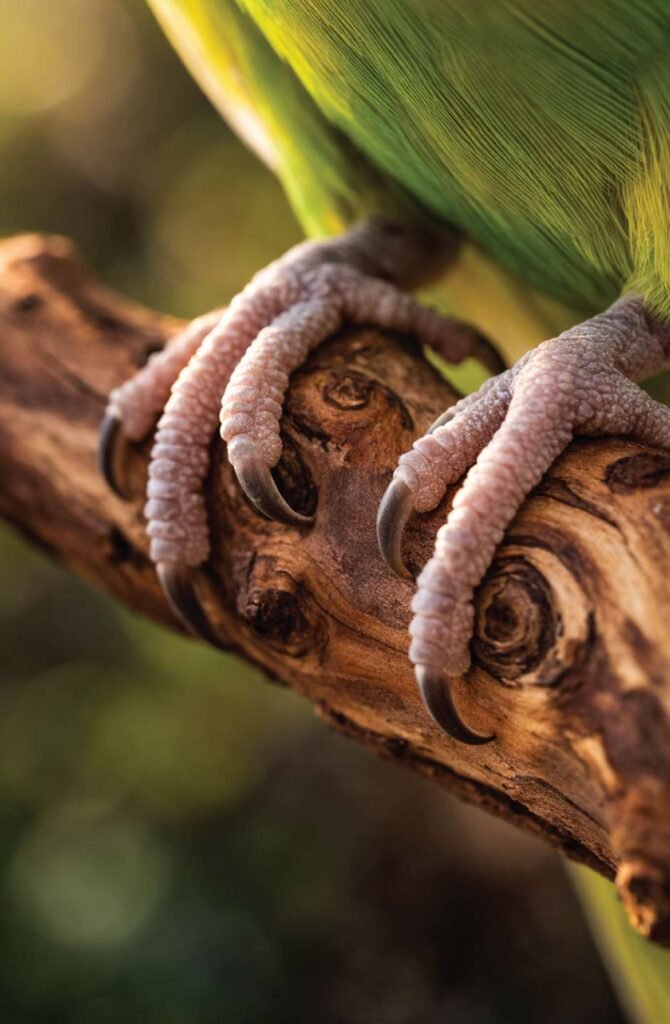
Most cages come with smooth, perfectly round wooden dowels, but using these as the primary perching surface is like a human being forced to walk on a tightrope 24/7. Uniform perches force a bird to apply pressure to the exact same spots on their feet constantly, leading to “Bumblefoot”, a painful bacterial infection that starts as a pressure sore. Abrasive “sandpaper” or “concrete” perches are even worse; they don’t trim nails effectively and instead act as sandpaper against the sensitive scales of the feet, causing bleeding.
Why It Works
Varied textures and diameters exercise the small muscles in a bird’s feet and naturally trim their nails through friction. Mimicking the uneven branches found in the wild allows the bird to shift their weight and prevents the formation of “hot spots” on the bottom of the feet. This variety keeps joints supple and prevents early-onset arthritis.
How To Do It
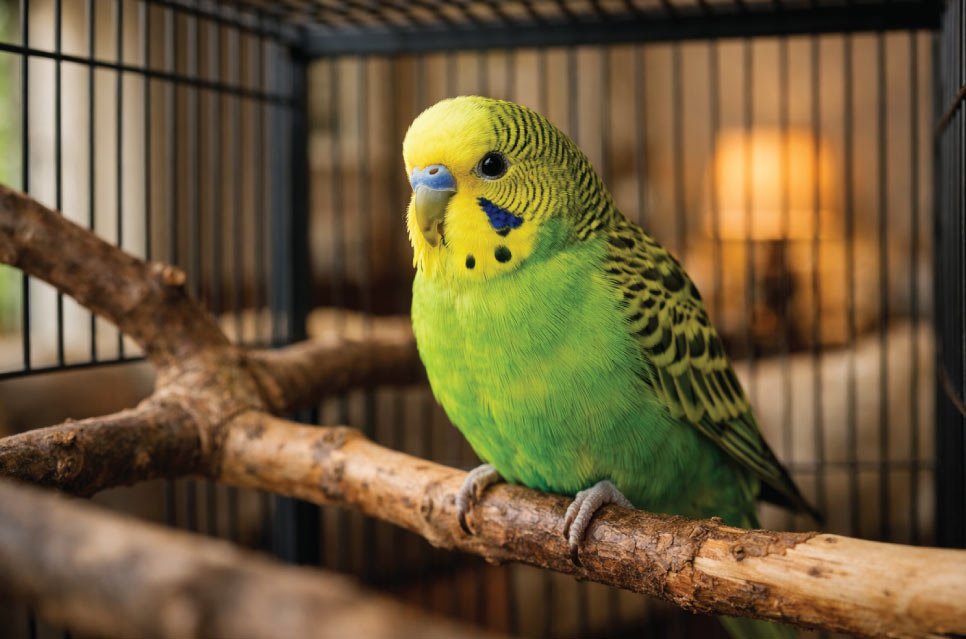
- Remove 80% of dowels and install natural wood perches like Manzanita, Apple, or Willow with irregular surfaces.
- Ensure your bird’s feet wrap approximately 75% of the way around the perch; if the toes overlap or can’t grip, the diameter is wrong.
- Add a “platform perch” in a high corner to give their feet a flat surface to rest on during sleep.
The “Toxic Toy” Mistake: Safety Over Aesthetics
How can I tell if bird toys are safe?
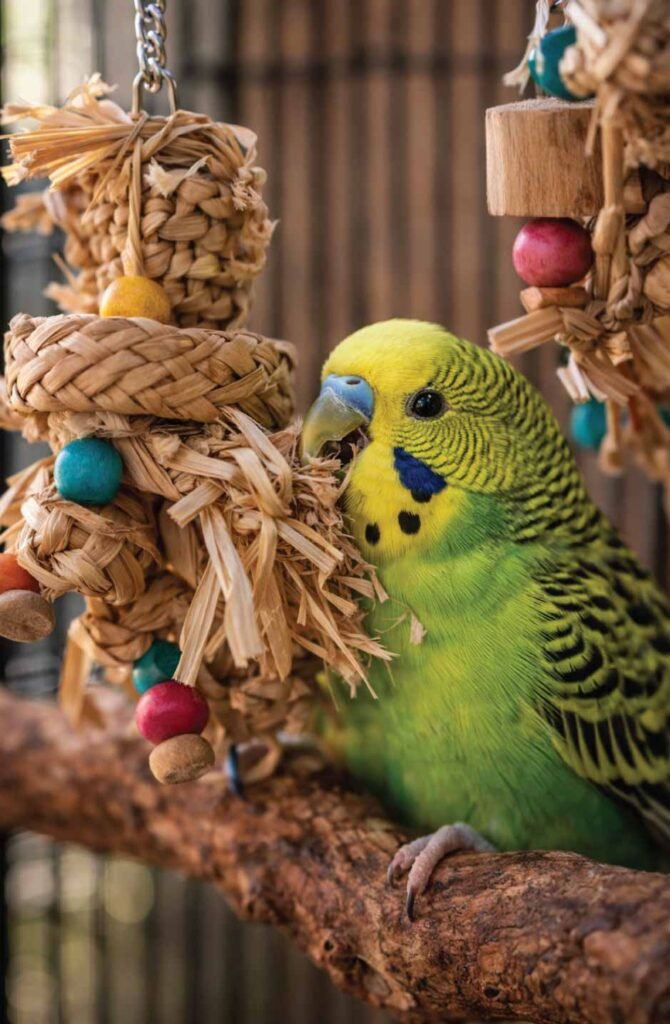
Many “cute” toys sold in big-box stores are made with cheap materials like lead-based paint, zinc-coated metal, or toxic glues. Birds are “exploratory chewers,” and ingesting even a microscopic shard of zinc from a bell clapper or a chain link can cause acute neurological failure. Furthermore, “jingle bells” with narrow slits are treacherous beak-traps that can snag a mandible, causing a bird to panic and injure themselves while you’re away. Want to skip the guesswork and make safe toys at home? Our DIY parrot toys guide shows you 20 budget-friendly enrichment ideas using materials you already own.
Why It Works
Prioritizing “destructible” natural toys satisfies the bird’s instinct to forage and groom without the risk of heavy metal poisoning. Using stainless steel hardware and vegetable-tanned leather ensures that even if your bird “destroys” their toy, they aren’t ingesting poison. This allows them to express their natural “beak-work” safely.
How To Do It
- Invest in toys made from 100% bird-safe materials like seagrass, palm leaves, and untreated wood.
- Swap dangerous jingle bells for tube-style or cowbell-style bells with welded clappers that can’t be removed.
- Avoid “cozy huts” or cotton ropes that can cause crop impaction if swallowed; stick to natural fibers like hemp or sisal.
Using “Mold-Prone” Bedding: The Silent Killer
What should I line the bottom of my bird’s cage with?
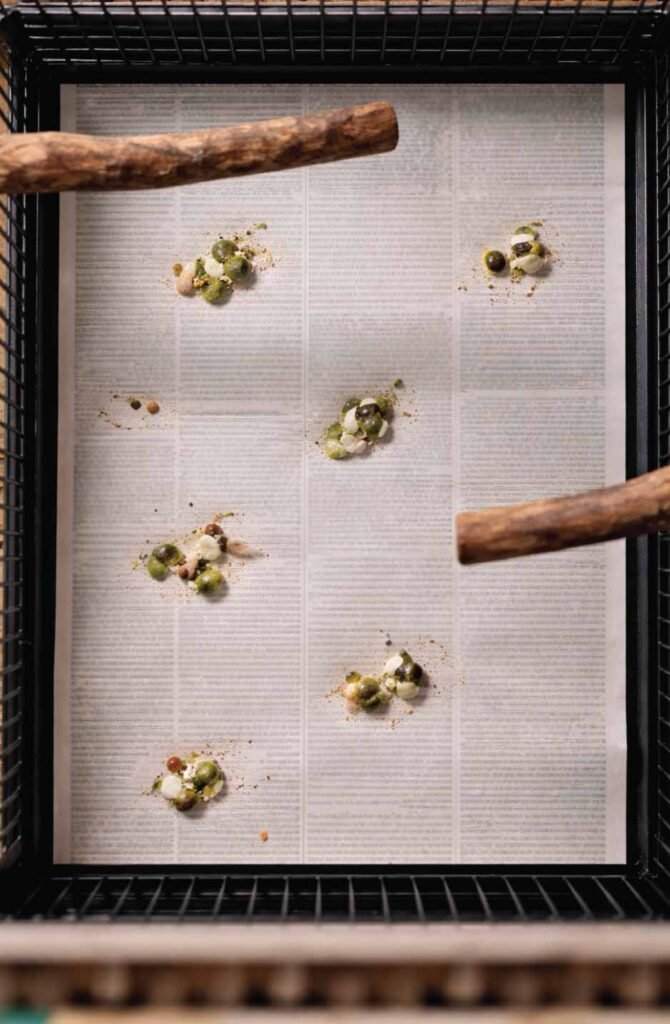
Wood chips, corncob bedding, and walnut shells might look “natural,” but they are a breeding ground for disaster. These particulate beddings trap moisture from bathing or spilled food, creating a perfect environment for Aspergillus mold spores which cause fatal respiratory infections when inhaled. Additionally, these beddings make it impossible to monitor your bird’s droppings, the “daily health report” that tells you if they are getting sick. According to research published by the Association of Avian Veterinarians, monitoring fecal changes is the single most important daily health check for early disease detection in captive birds.
Why It Works
Using a flat, clean surface allows you to catch early warning signs of illness (like changes in fecal consistency or color) before a condition becomes terminal. Switching to a non-particulate liner improves air quality and makes daily cleaning so easy that you’ll actually do it. This simple swap is the easiest way to prevent chronic respiratory distress.
How To Do It
- The gold standard for cage lining is plain, unprinted newspaper or paper towels.
- Change the paper every single morning to keep bacteria levels low and the air quality fresh.
- Avoid any “scented” liners, as birds have incredibly sensitive lungs that cannot handle artificial fragrances.
The Secret Sauce: 3 Advanced Tips for a Happy Bird
The “Contrafreeloading” Rule
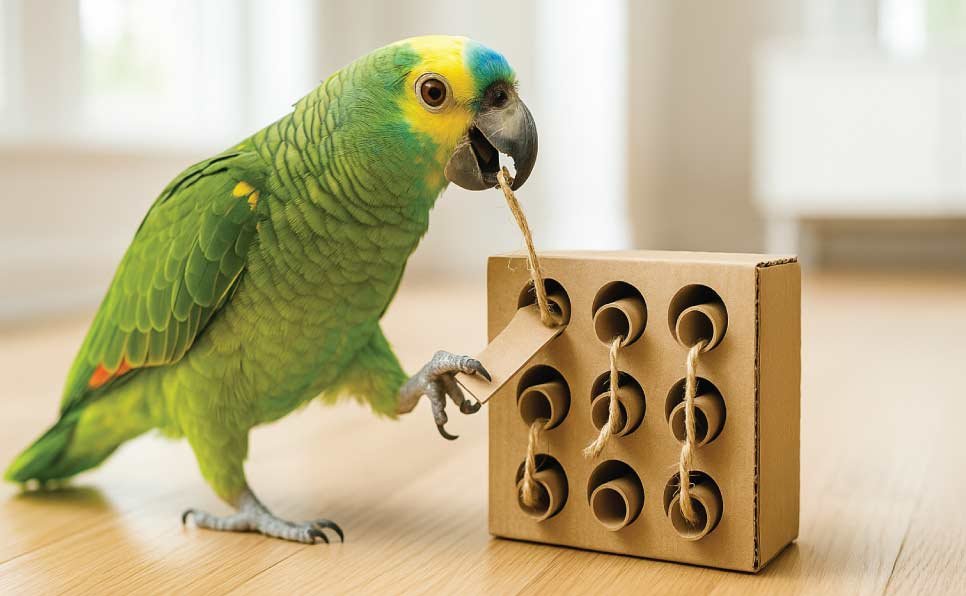
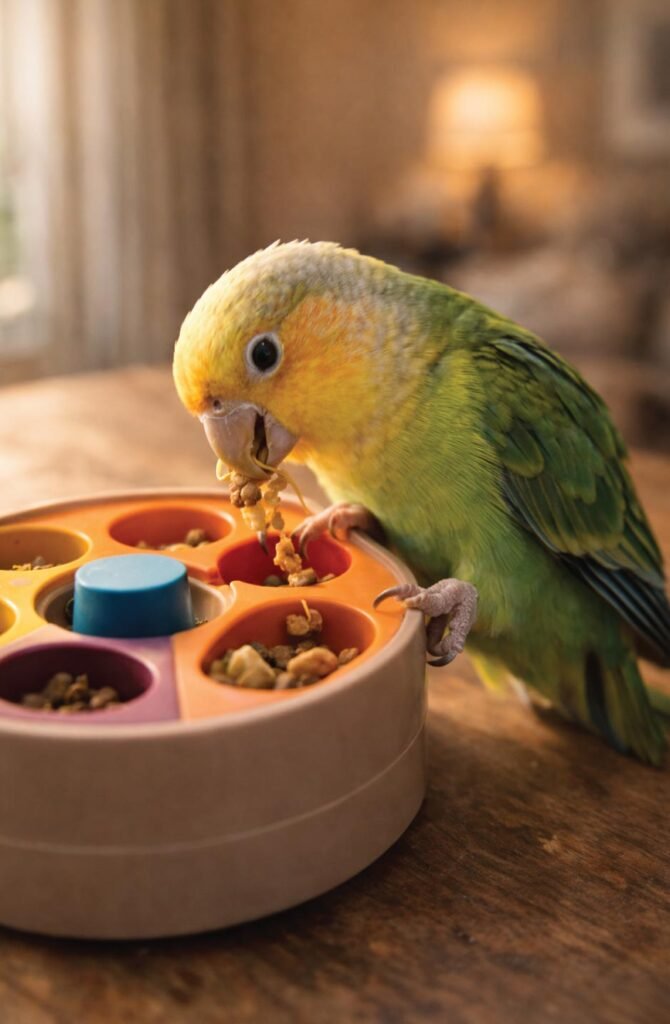
In the wild, parrots spend 70% of their day searching for food; in a cage, it takes them 5 minutes to eat from a bowl. End “food bowl boredom” by hiding treats in foraging puzzles or wrapping their pellets in plain paper so they have to “work” for their meal. This mental stimulation is the best cure for feather-plucking and screaming.
Mastering the 12-Hour Reset
Birds aren’t just “early risers”; they require 10–12 hours of dark, uninterrupted sleep to prevent hormonal meltdowns and irritability. Use a thick, blackout cage cover and ensure the room is completely quiet, as even the light from a TV can keep them on high alert. A well-rested bird is a much friendlier bird.
The “Bake and Scrub” DIY Method
If you harvest natural branches from your yard, they must be from a “safe wood” list (like Birch or Maple) and never sprayed with pesticides. Always scrub branches with a vinegar-water solution and bake them in the oven at 250°F (120°C) for two hours to kill off any mites or parasites. This gives your bird a “forest” experience without the vet bills.
Frequently Asked Questions About Bird Cage Mistakes
Most air fryers, self-cleaning ovens, and even some hair dryers are coated with the same toxic PTFE (Teflon) found in non-stick pans. Unless a manufacturer explicitly states the product is "PTFE and PFOA-free," you should assume it is dangerous for your bird’s sensitive respiratory system. If you can't find a bird-safe alternative, only use these appliances in a different room with a closed door and a running exhaust fan.
Birds are naturally neophobic (afraid of new things), so a sudden change to their environment can feel like a predator has moved in. Instead of a total cage makeover in one day, place the new perch or toy outside the cage where they can see it for 48 hours first. Once they realize the new item isn't a monster, move it inside and reward them with their favorite treat near the new perch to create a positive association.
You should never use bleach or harsh detergents on wood perches because the porous surface will soak up the toxins, which your bird then absorbs through their feet or beak. The gold standard for cleaning is a 50/50 mixture of white vinegar and water paired with a stiff scrub brush. For a deep sanitize, you can bake the cleaned branches in the oven at 250°F (120°C) for 30 minutes to kill any lingering bacteria or fungus.
While a dark room helps, a heavy blackout cage cover provides an extra layer of "psychological security" and blocks out light from hallway cracks or electronic standby lights. It acts as a "Do Not Disturb" sign, signaling to your bird that it is time for their 12-hour rest. Using a cover also helps muffle ambient household noises, ensuring your bird actually hits those deep REM sleep cycles they need for a stable mood.
While you should change the paper liner daily, the entire cage structure needs a "top-to-bottom" scrub once a week to prevent the buildup of dried droppings and food dust. This prevents the growth of harmful bacteria and mold that can thrive in the crevices of the cage bars. Once a month, consider taking the cage outside or into a shower to pressure-wash the frame and ensure no debris is hidden in the wheels or corner joints.
If you are limited on floor space, prioritize "out-of-cage" time to compensate for a smaller footprint. A smaller (but still rectangular!) cage is acceptable if it is primarily used for sleeping and eating, provided your bird gets at least 4–6 hours of flight time in a bird-proofed room. To maximize a small cage, use "external" feeders and perches to keep the interior as open and clutter-free as possible for stretching wings.
Prefer Audio? Listen to Bird Cage Mistakes
Conclusion: Build a Home, Not Just a Cage
Setting up a bird home is a journey of constant learning and observation. By avoiding these five major mistakes, you aren’t just decorating, you are becoming a steward of an intelligent, sensitive creature’s well-being. Your bird depends on you to be their advocate in a world of toxic cookware and poorly designed pet products.
Pin this for later! Save this to your “Pet Care” or “Parrot Life” board so you can check your setup during your next deep clean.