Quick Guide: How to Tame a Scared Small Pet
- Give them 48 hours of absolute peace. Let new pets settle into their cage without trying to touch, hold, or interact with them immediately.
- Use the “Tissue Trick” for scent introduction. Sleep with a plain tissue inside your pillowcase and place it in their hide so they associate your scent with safety.
- Master Bathtub Bonding for neutral territory. Sit in a dry, towel-lined bathtub with your pet and let them climb on you without the pressure of being grabbed.
- Never approach from above. Always lower yourself to their eye level and offer high-value treats from a flat palm to avoid triggering their predator-avoidance instincts.
Bringing home a new small pet is incredibly exciting, but the reality often involves a tiny, terrified furball hiding in a corner or nipping at your fingers. It is incredibly disheartening to set up a beautiful enclosure only to have your new best friend run away in sheer terror the moment you walk into the room. You want to cuddle them, but they see you as a giant, unpredictable predator.
This guide skips the vague advice and dives straight into the psychology of prey animals. By understanding their boundaries and using targeted, gentle techniques, you can rewire their fear into genuine affection. We are going to cover the exact steps to build trust fast, from decoding their body language to executing the highly effective “bathtub bonding” method.
Little Companions, Massive Hearts ✨ Celebrate your small mammal parenthood with our retro collection:
- Small Pet T-Shirts
Guinea Pig T-Shirt | Vintage Guinea Pig Graphic Tee | Round Loud Small Pet Lover Gift
$ 29,99 – $ 33,99Price range: $ 29,99 through $ 33,99 Select options This product has multiple variants. The options may be chosen on the product page - Small Pet T-Shirts
Holland Lop T-Shirt | Vintage Rabbit Graphic Tee | Soft Curious Bunny Lover Gift
$ 29,99 – $ 33,99Price range: $ 29,99 through $ 33,99 Select options This product has multiple variants. The options may be chosen on the product page


The First 48 Hours: Why Ignoring Them is the Best Strategy
It feels entirely counterintuitive to bring home a new pet and immediately ignore them, but this is the most crucial step in the taming process. When a small mammal enters a new environment, their sensory system is entirely overwhelmed by new smells, sounds, and lighting. Everything they previously knew is gone, and their survival instinct tells them to lay low until they are sure there are no predators nearby.
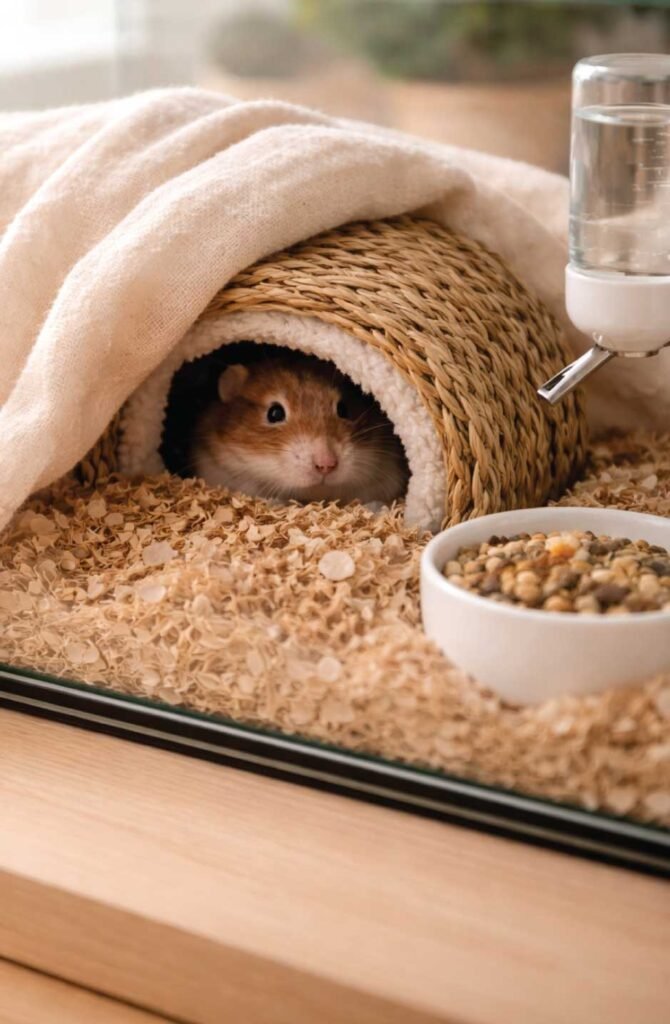
- Resist the urge to show them off to your friends or constantly rearrange their setup. The absolute best thing you can do during the first two days is cover half of their cage with a breathable blanket and only interact to change food and water.
- Keep your voice low and avoid sudden movements in the room. Laying a foundation of quiet consistency proves to your pet that their new home is safe, which perfectly aligns with basic small pet care practices for long-term health.
Decoding the Prey Animal Mindset: Reading Their Boundaries
Before you can build trust, you have to understand when you are accidentally breaking it. Small mammals are prey animals, meaning their entire evolutionary history is built around detecting threats and escaping them. They do not understand that your hand reaching into the cage is offering love; they only see a claw descending to grab them.
- You must learn to read their subtle signs of discomfort before they escalate to biting. A pet that is frozen completely still is not relaxed; they are paralyzed by fear and hoping you will not notice them.
- Other major red flags include teeth chattering in guinea pigs, thumping in rabbits, or a hamster rolling onto its back with its teeth bared. If you see any of these behaviors, as outlined by resources like the RSPCA’s guide to small animal welfare, you must immediately back away and give them space. Respecting their “no” is the fastest way to eventually get a “yes.”
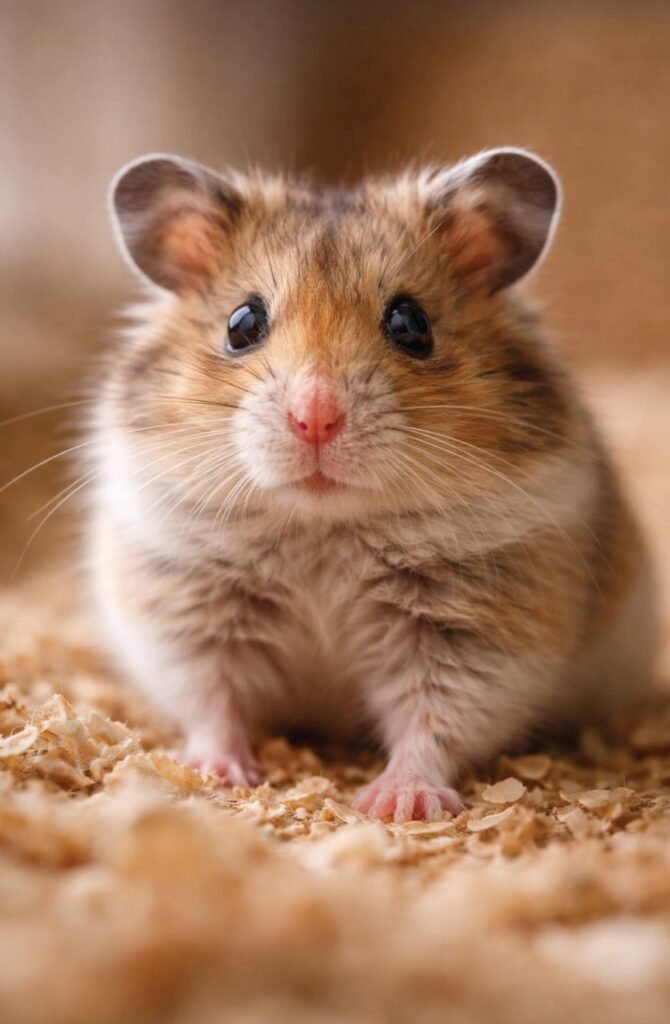
The Tissue Trick: Introducing Your Scent Passively
Because their eyesight is often poor, small mammals rely heavily on their sense of smell to navigate the world and identify friends versus foes. If you try to touch a new pet before they recognize your scent, you will trigger an immediate panic response. You need to introduce your unique smell in a way that feels completely non-threatening.
- This is where the famous “tissue trick” comes into play and works absolute wonders. Tuck a piece of plain, unscented toilet paper or a tissue inside your shirt or pillowcase for a few hours to absorb your scent.
- Once it smells like you, shred it slightly and place it directly into your pet’s favorite hideout or sleeping area. Because they will cuddle into this material while feeling safe and relaxed, their brain will begin to subconsciously associate your specific scent with comfort and security.

The Magic of Hand-Feeding to Rewire Their Brain
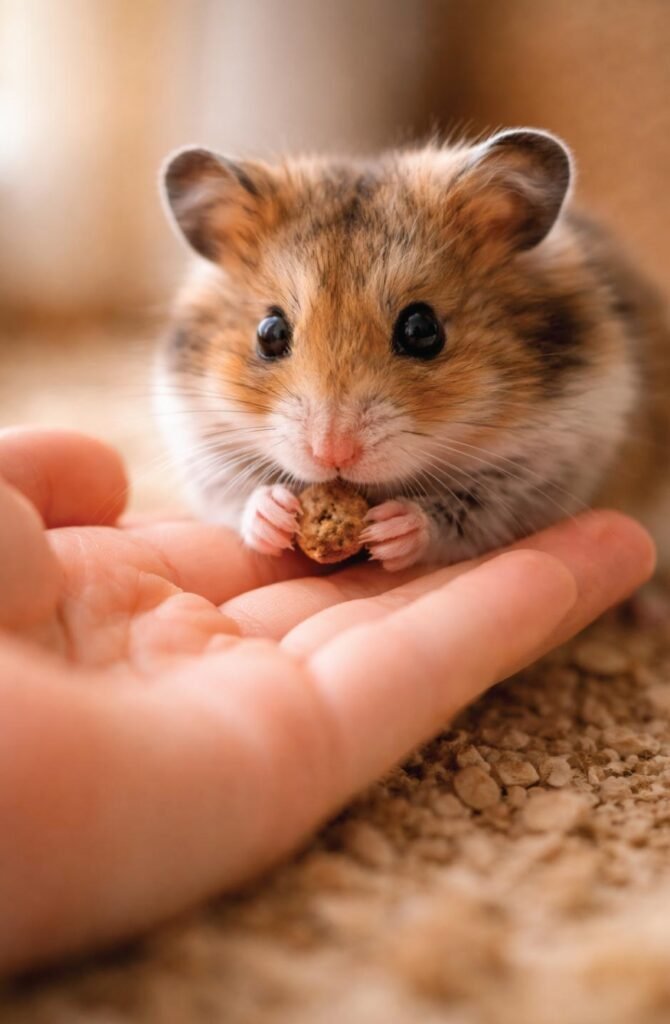
The quickest way to a small pet’s heart is, without a doubt, through their stomach. Hand-feeding is a powerful psychological tool because it forces your pet to link your terrifying giant hand with their absolute favorite experiences. However, you cannot just shove a carrot in their face and expect a miracle.
- Start by simply dropping a treat near them while they watch, then gradually progress to holding the treat at the tips of your fingers.
- Once they are comfortable taking food from your fingers, transition to placing the treat flat in the center of your palm, requiring them to step onto your hand to retrieve it. Using high-value, irresistible homemade treats that they only get when interacting with you will drastically accelerate this process.
Mastering the “Bathtub Bonding” Technique
Attempting to tame a pet while they are inside their cage often leads to territorial aggression, while letting them loose in a bedroom usually ends in a stressful game of hide-and-seek under the bed. Bathtub bonding provides a perfectly neutral, enclosed space where your pet cannot hide, but also does not feel cornered by cage bars. It levels the playing field and encourages natural curiosity.
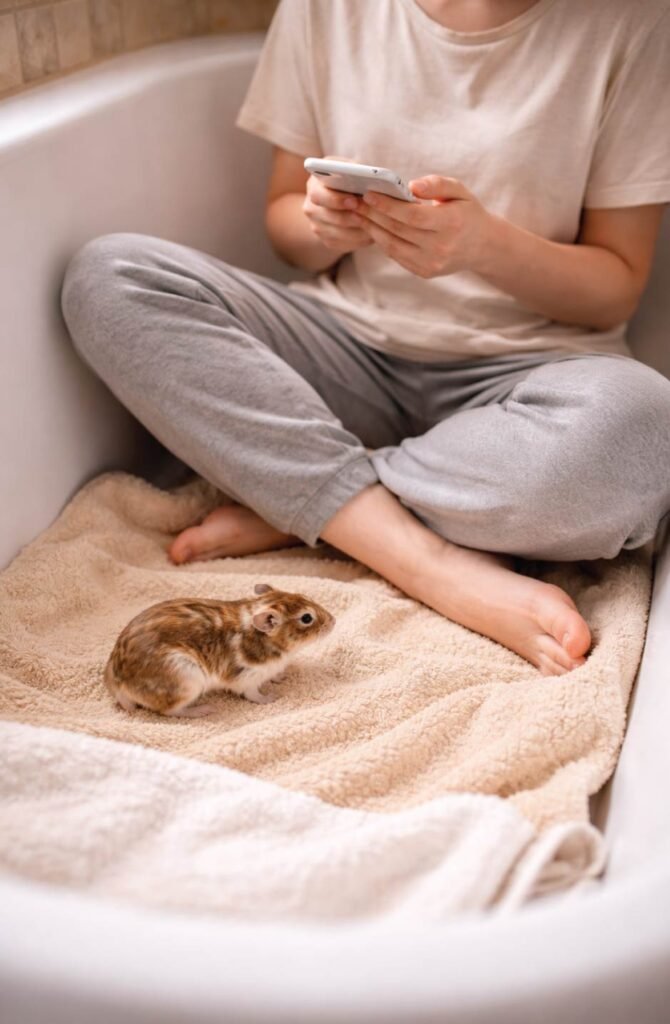
- To execute this properly, place a thick, comfortable blanket or towel at the bottom of a completely dry bathtub to provide traction and absorb any nervous accidents.
- Bring a book or your phone, sit crisscross inside the tub with your pet, and simply ignore them while scattering a few treats around your legs. Without the option to hide away, your pet will eventually realize you are not a threat and will begin to cautiously sniff your shoes, climb on your lap, and realize that you are actually a safe jungle gym.
Why Approaching from Above is a Massive Mistake
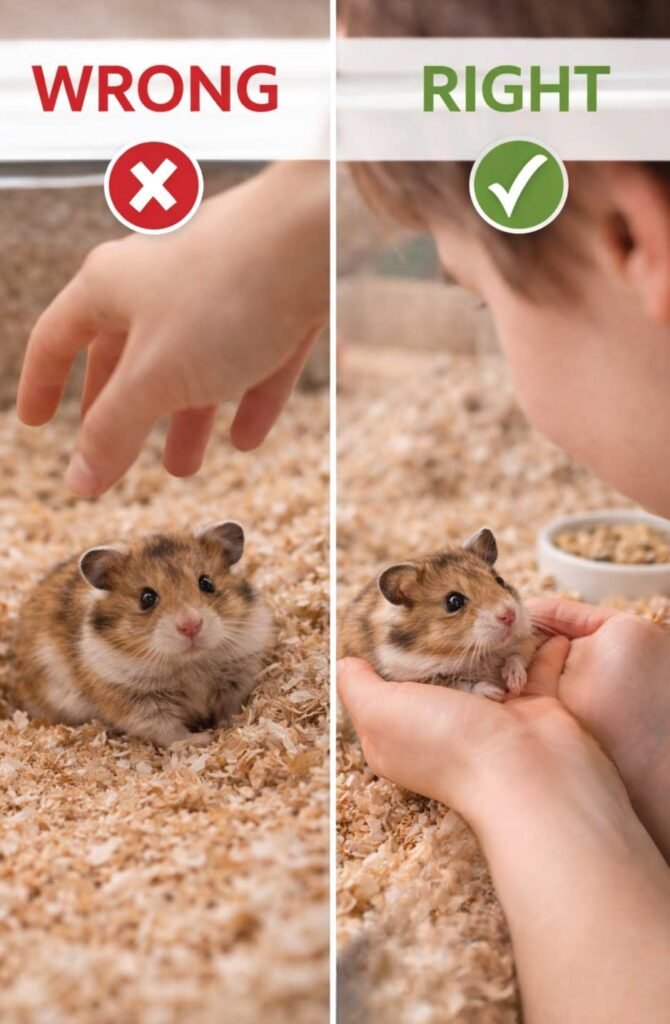
In the wild, the primary predators for rodents and small mammals are birds of prey swooping down from the sky. Every time you reach down from above to pick up your hamster or guinea pig, you are actively triggering their deepest genetic fear of being eaten by a hawk. This is why top-opening cages are notoriously difficult for taming.
- You must change your physical approach to appear as unthreatening as possible. Always lower your body to be at eye level with the enclosure, speak softly before opening the door, and approach from the front rather than the top.
- Veterinary behaviorists and experts at Oxbow Animal Health routinely highlight that creating front-access environments significantly reduces handling stress.
Scoop, Don’t Grab: The Right Way to Handle
When it is finally time to actually pick up your pet, the mechanics of how you lift them dictate whether they will trust you next time. Grabbing a small pet around their middle feels like a predator’s jaws closing around them, causing immediate panic and squirming. This often leads to the pet being accidentally dropped, which shatters any trust you have built.
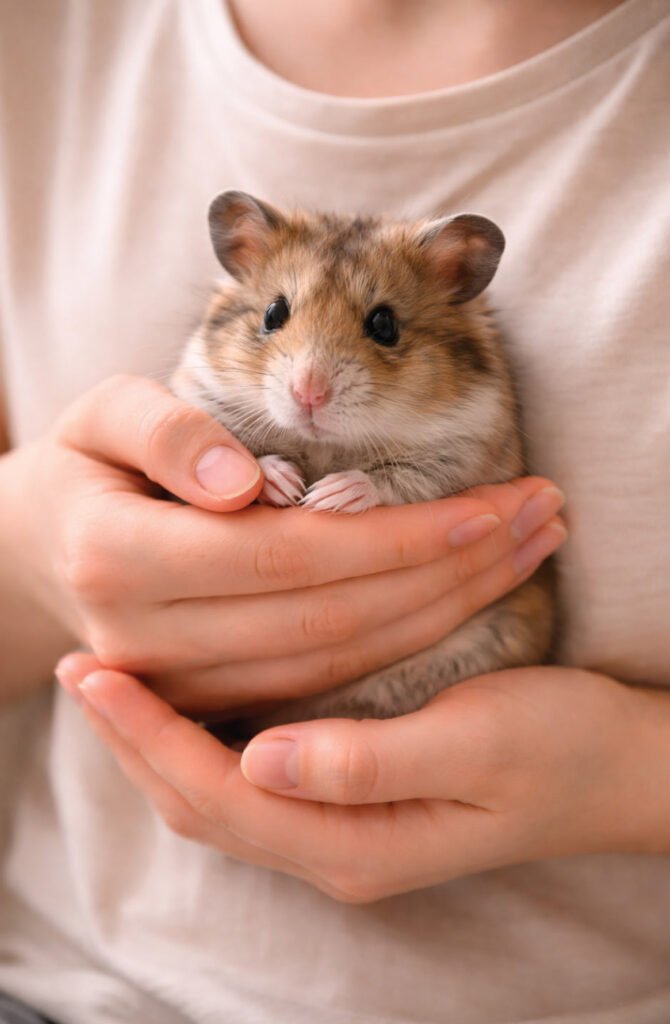
- Instead, you need to use the “scoop” method to provide total physical support. Gently corral the pet into a corner, use both hands to scoop them up from underneath their belly and back feet simultaneously, and immediately bring them close to your chest.
- Holding them securely against your torso makes them feel anchored and safe, drastically reducing the instinct to leap blindly out of your hands. Understanding the human-pet bond requires recognizing that physical security equals emotional security.
The Secret Sauce
If you want to take your taming skills to the absolute next level, try these lesser-known tricks used by seasoned small pet fosterers.
The Liquid Treat Spoon Trick
When you offer a solid treat, a scared pet will snatch it and run back to their hide to eat alone. By offering a liquid treat (like pureed pumpkin or plain meat baby food for omnivores) on a metal spoon, they are forced to stay right next to your hand to enjoy it. This significantly increases the duration of your positive interactions.
The Soft Blink
Just like cats, small mammals are highly sensitive to staring, which they interpret as a predator locking onto a target. If you catch your pet looking at you, intentionally soften your facial expression, slowly blink your eyes, and casually look away to signal that you are not hunting them.
The Toll Booth Method
During free-roam time, sit in the middle of the floor and use your legs to create a funnel. Gently encourage your pet to walk over your legs or step over your outstretched hand to get from one side of the room to the other. It normalizes physical contact in a low-pressure, passing manner.
Frequently Asked Questions About How to Tame a Scared Small Pet
Absolutely not, but you should take it as a sign to hit the "pause" button on physical contact. Biting is almost always a fear-based reaction or a "get away from me" signal rather than true aggression. If you pull your hand away quickly with a loud noise, you unintentionally teach the pet that biting is an effective way to make the scary giant disappear. Instead, wear thin fleece gloves for protection and go back to the "Hand-Feeding" stage until they stop lunging at your fingers.
While younger animals are generally more "plastic" in their brain development, older rescue pets can absolutely be tamed, though it often requires twice the patience. Rescues may have "learned helplessness" or past trauma from rough handling, meaning you have to work twice as hard to prove you aren't a threat. Focus heavily on the "Scent Intro" and "Passive Interaction" phases, as these pets need to learn that your presence equals safety, not just snacks.
If you have a pair (like guinea pigs or rats), it is actually best to do individual bonding sessions so the braver pet doesn't "gatekeep" the treats or the shy one doesn't feed off the other’s panic. While they feel safer together in their cage, they will focus more on you if they aren't distracted by their cage mate. Spend 10 minutes of one-on-one time with each pet daily to ensure you are building a unique bond with both.
There is no "magic number," as taming can take anywhere from three days to three months depending on the species and the individual pet's temperament. Hamsters might come around in a week, while a traumatized chinchilla might take months of consistent work. Consistency is more important than duration; five minutes of calm interaction every single day is better than an hour-long session once a week.
Yes, environment plays a massive role in their stress levels. If the cage is in a high-traffic area with loud TVs or barking dogs, your pet will remain in a state of high alert, making taming nearly impossible. Move the enclosure to a quieter corner of the house where they can observe the "flow" of the room from a distance without being startled by sudden vibrations or shadows.
It is important to manage your expectations: taming a scared small pet means they are comfortable and stress-free around you, but it doesn't guarantee they will enjoy being held. Some pets are "introverts" who prefer to climb on your shoulders or sit near you rather than being pet. True success is defined by your pet choosing to interact with you willingly, even if they prefer to keep all four paws on the ground.
Prefer Audio? Listen to How to Tame a Scare Small Pet
Wrap Up
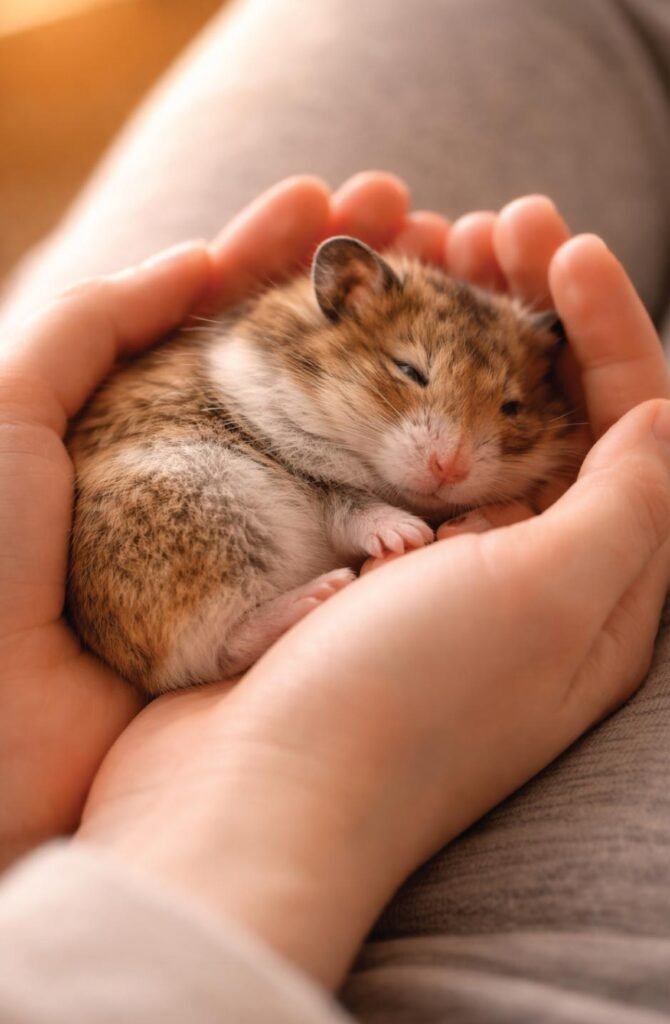
Taming a scared small pet is an exercise in extreme patience, empathy, and learning to speak their language. By respecting their prey-animal instincts, utilizing neutral spaces like the bathtub, and leveraging scent and high-value treats, you will transform a terrified critter into a confident companion. Remember that every pet moves at their own pace, so celebrate the tiny victories, whether that is a cautious sniff of your finger or them falling asleep on your lap.
Pin this for later!
Want to make sure your newly tamed friend has the absolute best setup possible? Check out our next post: The Complete Hamster Care Guide for Beginners