Birds communicate differently than dogs or cats. They lack the facial muscles mammals use to express emotions, so they communicate through eye movements, feather position, beak sounds, and body posture. Learning about Bird Body Language helps you build trust with your bird and recognize when they’re happy, stressed, or unwell.
This guide decodes the body language of pet birds, from budgies to macaws, with specific signals to watch for and what they mean. If you’re still getting to know different bird species and their personalities, this overview of best pet birds for beginners can help put those body language differences into context, especially for first-time bird parents. Bird body language operates on multiple channels simultaneously, visual signals through feathers and posture, auditory signals through beak sounds, and behavioral patterns that reveal emotional states and health status.
Learning to read these signals transforms the ownership experience from simply caring for a pet to engaging in meaningful two-way communication. Your bird constantly observes and responds to your behavior, making mutual understanding the foundation of a healthy relationship.
Understanding Bird Eyes and Facial Signals
What Does Eye Pinning Mean in Birds?
Eye pinning occurs when birds rapidly dilate and constrict their pupils to signal intense interest, excitement, or warning of aggression.
Unlike mammals, birds have voluntary control over their irises. This behavior, called “eye pinning” or “flashing,” indicates heightened arousal. The context determines whether it’s positive or negative:
- Positive eye pinning: Pupils rapidly changing size while your bird leans toward you with relaxed, fluffy feathers means they’re interested in a treat or toy.
- Warning eye pinning: Pinning paired with a rigid body, flared tail feathers, or open beak signals aggression. Back away to avoid a bite.
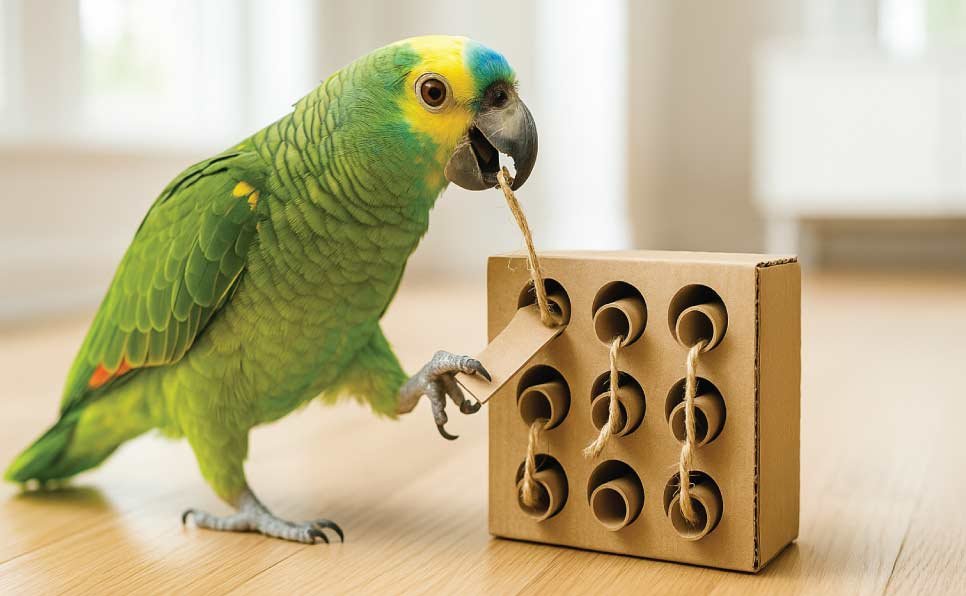
Panama Amazon parrots reportedly pin their eyes just before vocalizing, suggesting they may be “rehearsing” speech internally. Other species may pin their eyes when problem-solving or manipulating objects, indicating cognitive engagement. Context always determines whether eye pinning is positive excitement or negative arousal leading to aggression.

How Can I Tell If My Bird Is Happy?
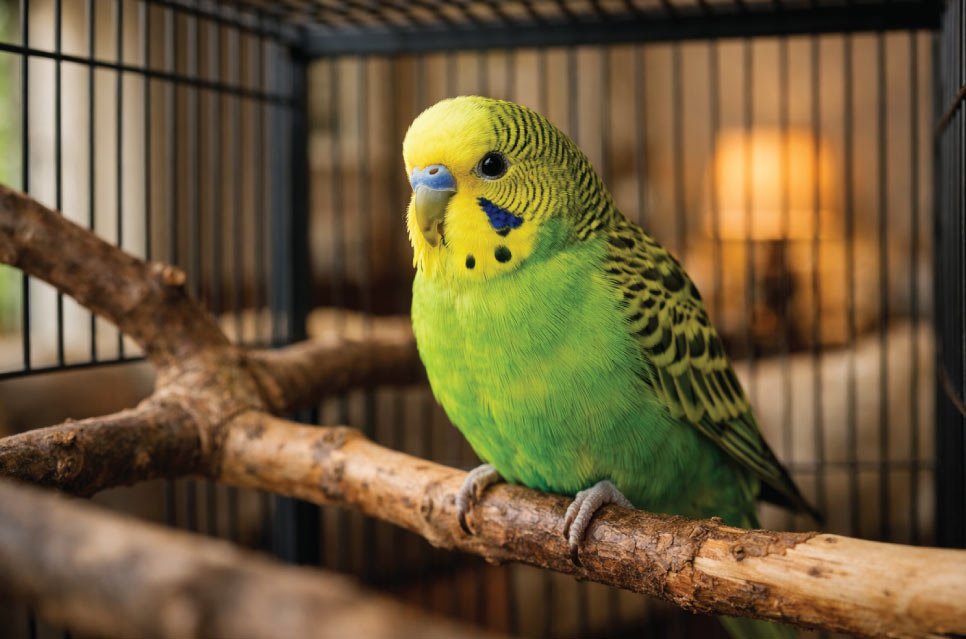
Happy birds display soft, slightly fluffed feathers, grind their beaks before sleep, wag tail feathers, and comfortably perch on one leg.
A content bird appears relaxed. Their feathers aren’t pressed tight against their body, instead, they look soft and slightly puffed. Key happiness indicators include:
- Beak grinding: A soft, rhythmic sound made by sliding upper and lower beaks together, typically heard when settling down for sleep. This is the bird equivalent of a satisfied sigh.
- Tail wagging: Quick side-to-side tail movements when they see you indicate excitement and affection.
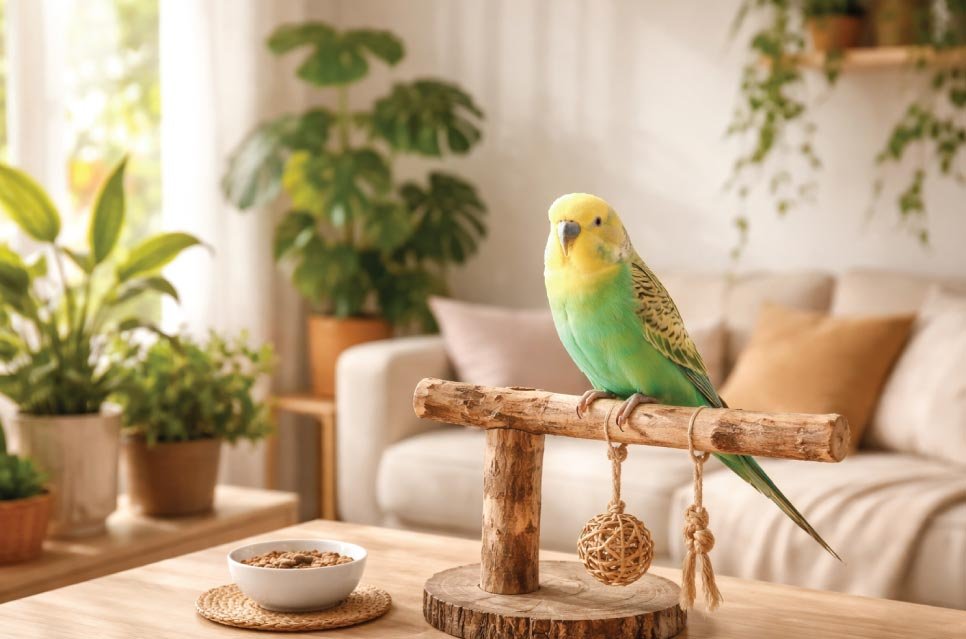
- One-legged perching: When your bird tucks one leg into their belly feathers, they feel safe enough to sacrifice stability for warmth.
- Singing and whistling: Vocalizations, especially in the morning, signal contentment.
If your bird hangs upside down or performs small dances, they’re enjoying their environment.

Beak Communication: Clicks, Grinds, and Wipes
Why Is My Bird Grinding Its Beak?
Beak grinding indicates contentment and relaxation, typically occurring when birds settle into their sleeping position.
The scraping sound of upper and lower mandibles sliding together may sound concerning to new bird owners, but it’s actually positive. This behavior serves two purposes:
- Emotional comfort: It signals your bird feels safe and relaxed enough to sleep.
- Beak maintenance: The grinding action files down the keratin edges, keeping the beak properly shaped.
If you hear steady grinding as lights go out, your bird trusts its environment.

What Do Different Beak Clicks Mean?
Sharp beak clicking warns of defensive aggression, while soft tongue clicking serves as a friendly greeting requesting attention or physical contact.
Birds use clicking sounds for different purposes:
- Defensive clicking: A sharp, snapping sound warns you to stay back. Reaching into the cage when you hear this will likely result in a bite.
- Friendly tongue clicking: Common in cockatiels and cockatoos, this softer clicking means “I’m friendly” and often requests petting or interaction.
Beak wiping usually indicates your bird is cleaning food residue. However, vigorous wiping can be a displacement behavior expressing frustration, such as when a jealous Amazon watches its owner interact with someone else.
Feather Position and Crest Signals
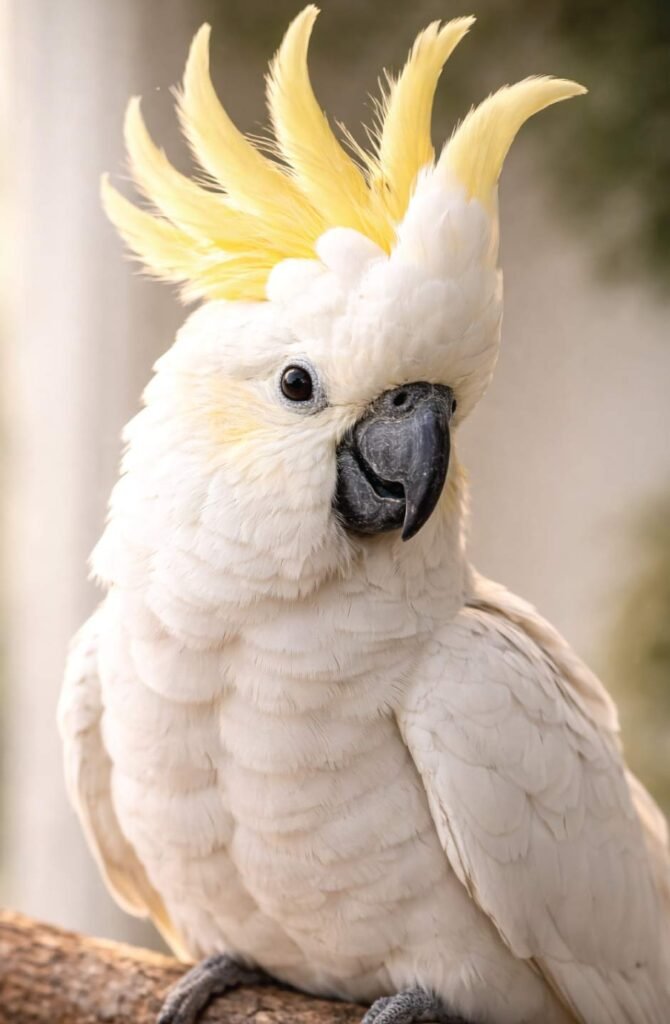
How Do I Read My Bird’s Crest Position?
A vertical crest signals high excitement or alarm, while a flattened crest indicates extreme fear, aggression, or warning of an imminent strike.
Cockatoos and cockatiels have a built-in mood indicator on their heads. Crest positions include:
- Relaxed/flat: Crest mostly down with just the tip slightly raised means your bird is calm and at ease.
- Moderately raised: A curved, partially raised crest shows interest or serves as a greeting.
- Fully vertical: High excitement, either positive (“I’m happy to see you!”) or alarmed (“What was that noise?”).
- Slicked tight against head: Combined with a crouched posture, this signals anger or terror. The bird may bite if approached.
Watch the crest position in combination with body language to interpret your bird’s emotional state accurately
Why Is My Bird Fluffing Its Feathers?
Birds fluff feathers to get comfortable, relieve tension, maintain warmth, or as part of regular preening and cleaning routines.
A quick, whole-body feather shake (the “rough out”) resets their plumage after preening or helps them release stress after an unsettling interaction.
- Important distinction: Temporary fluffing is normal. However, a bird that remains puffed up for hours, resembling a feather ball, is likely trying to conserve body heat due to illness.
- Emergency signs: If your bird stays fluffed, sits at the bottom of the cage, or appears lethargic, contact an avian veterinarian immediately.
Brief fluffing throughout the day is healthy; prolonged fluffing is a medical concern.

Tail and Leg Body Language
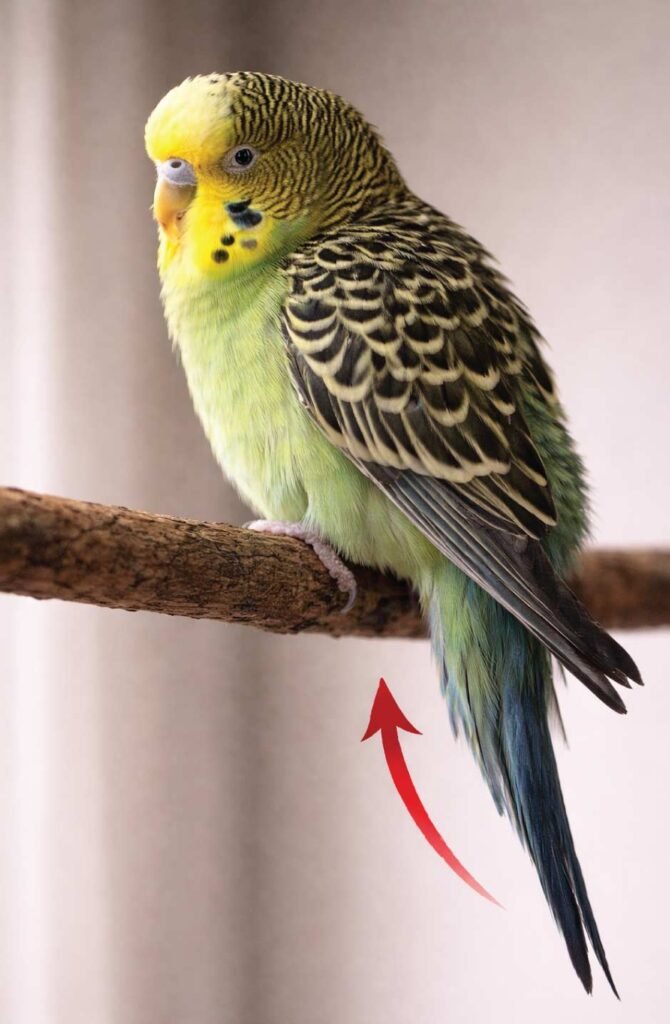
What Does Tail Bobbing Mean in Birds?
Rhythmic tail bobbing while at rest indicates serious respiratory distress, as birds use tail muscles to help expand their lungs when breathing is labored.
- This is critical to recognize. Birds lack a diaphragm and use muscles at the base of their tail to assist breathing.
- Normal tail bobbing: After vigorous activity like flying around the room, slight tail movement while catching their breath is expected.
- Emergency tail bobbing: If your bird sits still and its tail bobs up and down with each breath, this indicates respiratory infection or distress. The bird’s body is working overtime to obtain oxygen.
Tail bobbing at rest requires urgent veterinary attention.
Why Do Birds Stand on One Leg?
Birds stand on one leg to conserve body heat, as their unfeathered legs are primary sites for heat loss.
When your bird perches on one leg with the other tucked into belly feathers, they’re demonstrating trust and comfort. This posture indicates:
- Security: They feel safe enough to sacrifice stability.
- Temperature regulation: Tucking a leg into warm feathers prevents heat loss through unfeathered skin.
One-legged perching is a compliment to you and your bird’s environment.
What Is ‘Weak Leg’ Behavior in Parrots?
Weak leg behavior is typically a manipulation tactic where birds feign inability to perch when being returned to their cage to extend interaction time.
Many parrots learn that appearing unable to support themselves earns extra cuddle time when their owner tries to put them back in the cage. They go limp or “collapse” dramatically.
- Solution: Hold and pet your bird for another one to two minutes. Once they feel satisfied with the attention, their legs usually regain strength.
- Medical concern: If leg weakness persists when your bird isn’t avoiding the cage, consult an avian veterinarian. True weakness can indicate tumors or nutritional deficiencies.
Context determines whether this is behavioral manipulation or a health issue.
Health Surveillance: Detecting Hidden Illness
Why Do Pet Birds Hide Sickness?
As prey animals, birds instinctively mask weakness to avoid attracting predators; owners must monitor subtle changes in weight, appetite, and resting tail bobbing.
In the wild, visible illness attracts predators. Pet birds retain this survival instinct. By the time a bird appears obviously sick, sitting puffed at the cage bottom, they’ve likely been ill for days or weeks. Because many illnesses show up first as subtle behavior or posture changes, it can also help to be familiar with common pet bird diseases and how they tend to present in everyday life.
This masking behavior makes proactive health monitoring essential. Without regular observation, serious illness can progress unnoticed until treatment becomes difficult or impossible.
Essential monitoring techniques:
- Weekly weighing: Use a gram scale before breakfast once or twice per week. Sudden weight loss often appears before other symptoms.
- Daily droppings check: Observe color, consistency, and frequency. Healthy birds defecate every 20 to 30 minutes. Changes indicate digestive issues.
- Vocal pattern changes: If a typically chatty bird suddenly stops vocalizing, they may be unwell.
Regular monitoring catches illness early when treatment is most effective.
Emergency signs: If your bird stays fluffed, sits at the bottom of the cage, or appears lethargic, contact an avian veterinarian immediately. The Association of Avian Veterinarians can help you find a certified avian vet in your area.”
Species-Specific Body Language Differences
What Are the Differences Between Old World and New World Parrot Body Language?
Old World parrots from Africa, Asia, and Australia display subtle body language, while New World parrots from the Americas exhibit more dramatic, overt displays.
These geographical differences in communication styles have evolved over millions of years of separation, as documented by ornithological research.
Geographic origin influences communication style:
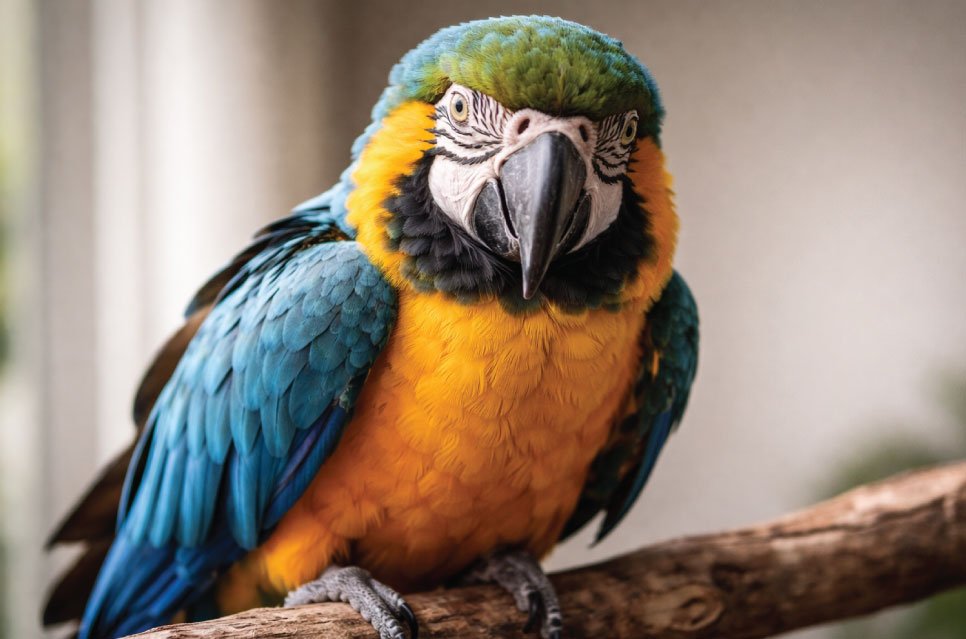
- New World parrots (Macaws, Amazons, Conures): These species communicate with obvious signals, blushing facial patches, dramatic tail fanning, and intense eye pinning. Their warnings are clear and loud.
- Old World parrots (African Greys, Cockatoos, Lovebirds): Their language is nuanced. An angry Amazon flares its tail and raises back feathers visibly. An equally angry African Grey might only slightly raise shoulder feathers and stare more intensely.
Learning these “species dialects” prevents misunderstanding signals and reduces unexpected bites.

What Are the Personality Differences Between Budgies, Cockatiels, and Lovebirds?
Budgies are high-energy, chatty birds excellent at trick-learning; cockatiels are affectionate socialites who enjoy physical contact; lovebirds are fiercely territorial with bold personalities.
Small bird species have distinct social needs:
- Budgies: Constant activity and chatter define these birds. They’re less cuddly than cockatiels but excel at learning tricks and mimicking speech.
- Cockatiels: Many cockatiels love prolonged petting sessions, especially neck scratches. They’re more physically affectionate than budgies but can be assertive, using distinctive hisses to communicate boundaries.
- Lovebirds: Despite their name, they can be feisty and territorial. They form intense bonds and may guard their cage or favorite person aggressively. Female lovebirds uniquely shred paper into strips and tuck them into feathers for nesting material.
Understanding species-specific traits helps set realistic behavioral expectations.

Reading Complex and Mixed Body Language
How Do I Recognize Stress Signals in My Bird?
Stressed birds display feather sleeking, rapid breathing, decreased vocalization, excessive preening, stereotypic pacing, and avoidance behaviors like retreating to cage corners.
Chronic stress damages your bird’s physical and mental health. Early recognition allows you to modify environmental factors before stress becomes severe.
Physical stress indicators:
- Feather sleeking: The bird pulls feathers extremely tight against their body, creating a streamlined, tense appearance different from normal relaxed posture.
- Rapid breathing: Increased respiratory rate without physical exertion, visible through chest movement.
- Excessive preening or feather destruction: Birds may over-preen to self-soothe, sometimes progressing to feather plucking if stress continues.
Behavioral stress indicators:
- Reduced vocalization: A normally vocal bird becoming quiet often indicates discomfort or illness.
- Stereotypic behaviors: Repetitive pacing along perches, constant head bobbing, or obsessive toy manipulation signal psychological distress.
- Avoidance and hiding: Retreating to cage corners, hiding behind objects, or turning away from you indicates fear or overwhelming stress.
Common stressors include environmental changes, loud noises, insufficient sleep, poor diet, lack of mental stimulation, and inconsistent routines. Address identified stressors promptly to restore your bird’s emotional equilibrium.
How Do I Interpret Mixed Signals from My Bird?
Interpret mixed signals by examining the whole body; eye pinning with relaxed feathers indicates interest, while pinning with a rigid, tight body signals aggression.
Birds, especially young ones in their first five to ten years, often send conflicting messages. You might observe eye pinning (excitement) combined with leaning away (fear).
Key body postures:
- The “skinny bird”: Feathers pulled tight against the body, standing tall, wide-eyed appearance means your bird is terrified and attempting to be invisible.
- The “big bird”: Ruffled feathers, spread wings, fanned tail indicate an intimidation display. The bird is trying to appear large and threatening.
When uncertain about your bird’s intentions, back away. Respecting their boundaries builds long-term trust faster than forcing interaction.
Building Trust Through Understanding Body Language
How Can I Use Positive Reinforcement to Bond with My Bird?
Successful bird bonding requires high-value food rewards like nuts or seeds to encourage desired behaviors through positive reinforcement.
Birds respond to tangible rewards, not verbal praise alone. Learning body language and building trust often go hand in hand with training. If you’re wondering how long that process usually takes, this guide on how long it takes to train a bird offers realistic expectations for different personalities and species. Unlike dogs who value owner approval, birds want “hard currency.”
Effective reward strategy:
- Identify high-value rewards: Determine your bird’s favorite treat, sunflower seeds, walnut pieces, or even non-food items like plastic bottle caps.
- Reward immediately: Give the treat within seconds of the desired behavior, such as stepping onto your hand or returning to the cage willingly.
- Create positive associations: Using tangible rewards transforms potentially stressful interactions into friendly exchanges rather than power struggles.
Consistent reward-based training strengthens your bond and encourages cooperative behavior.

What Body Language Should I Use Around My Bird?
Move slowly, use a low voice, and mirror your bird’s calmness to build trust and avoid triggering predator-like fear responses.
Your bird watches your body language as closely as you watch theirs. Your movements and voice significantly impact how they perceive you.
Essential human body language for birds:
- Move slowly: Fast gestures resemble predator attacks to birds. Deliberate, smooth movements appear safer.
- Lower your voice: Soft, gentle tones signal safety and reassurance. Loud voices create stress.
- Mirror their energy: When your bird is calm, remain calm. If they appear alarmed, give them space rather than approaching.
Matching your bird’s emotional state and moving predictably builds a foundation of trust.
Frequently Asked Questions About Bird Body Language
Most owners recognize basic signals within 2-4 weeks of daily observation, but mastering subtle species-specific cues can take 3-6 months.
The learning curve depends on how much time you spend with your bird and their individual personality. Birds with more dramatic body language (like Amazons) are easier to read initially than subtle communicators (like African Greys). Consistency in observation accelerates your learning.
Yes, birds are highly perceptive and can read human facial expressions, tone of voice, body tension, and movement patterns to gauge emotional states.
Research shows parrots can distinguish between happy and angry human faces. They notice when you're stressed, excited, or calm, and often mirror or respond to your emotional state. This is why remaining calm during training or stressful situations helps your bird stay calm too
Regurgitation is a bonding behavior indicating deep affection and trust, as birds regurgitate to feed their mates and chicks in the wild.
When your bird bobs its head and brings up food for you, they're treating you as a mate or family member. While sweet, excessive regurgitation can indicate hormonal behavior. If it becomes frequent, reduce petting to head and neck only, ensure proper sleep schedules (10-12 hours), and remove potential nesting areas.
One-person bonding shows through exclusive vocalization to that person, aggression toward others who approach, calling when separated, and refusal to step up for anyone else.
This behavior is natural but can be managed. Encourage multiple family members to feed, train, and handle the bird. The bonded person should sometimes ignore the bird while others interact with it. Avoid reinforcing possessive behavior by having the preferred person rescue the bird from others.
Sudden biting after friendliness typically results from missed warning signals, hormonal changes, overstimulation, or the bird becoming startled by environmental triggers.
Watch for subtle warnings before bites: pupil dilation, slight leaning away, feather sleeking, or beak opening. Hormonal seasons (spring/summer) increase territorial aggression. Some birds have a threshold for physical contact, they enjoy petting briefly but bite when overstimulated. Learn your bird's tolerance limits and respect early warning signals.
Most species show similar sleep signals like one-legged standing, head tucking, and beak grinding, but some species have unique positions like hanging upside down or sleeping on cage floors.
Cockatoos and parrots typically sleep upright on perches. Lovebirds may sleep in cozy corners or huts. Budgies often tuck their heads completely backward into their feathers. Hanging parrots (like Lorikeets) may sleep upside down, which is normal for their species. Any sudden change in sleep position or location warrants observation for illness.
Prefer Audio? Listen to Bird Body Language Podcast Episode
Final Thoughts: Every Interaction Is Communication
Living with a bird resembles having an intelligent, sensitive roommate rather than a traditional pet. They observe and respond to your behavior constantly, making mutual understanding essential.
By recognizing the significance of head tilts, tail positions, beak sounds, and feather adjustments, you’re learning a complete communication system. This understanding transforms pet care into genuine interspecies dialogue.
The investment in learning bird body language yields significant returns. Reduced stress for both you and your bird, fewer behavioral problems, earlier illness detection, and deeper emotional bonding all result from communication competency.
Key principles for effective bird communication:
- Observe the whole body: Never rely on a single signal. Context and combined signals provide accurate interpretation.
- Respect boundaries: When your bird signals discomfort or aggression, backing away demonstrates respect and builds trust over time.
- Monitor health proactively: Weekly weighing and daily observation catch illness before it becomes critical.
- Learn species-specific traits: Old World and New World parrots, along with different small bird species, communicate with varying levels of subtlety.
- Use positive reinforcement consistently: Tangible rewards create cooperative relationships and eliminate power struggles.
Understanding bird body language requires patience and attention to detail, but the reward is a deep bond based on mutual respect and trust. Your bird isn’t just a pet, they’re a communicative companion with complex emotions and needs.
By mastering their language, you become more than an owner. You become a trusted flock member who speaks their language and honors their nature.
Start by observing your bird during different activities, eating, playing, resting, and interacting with you. Note which signals appear in which contexts. Over time, patterns emerge that reveal your individual bird’s communication style and preferences.
Remember that each bird is an individual. While species-specific traits provide general guidelines, your bird may have unique variations in how they express themselves. The principles in this guide create a foundation, but your ongoing observation builds the detailed understanding that strengthens your specific relationship.