Quick Guide: Signs of the Cat Love Language
- The “Eye Kiss”: Slow blinks is a sign of ultimate trust and affection. Are intentional social signals that trigger a positive neurochemical bond.
- Scent Rituals: Headbutting and kneading mark you as “family” through complex pheromones and kittenhood instincts.
- The Question Mark Tail: A tail held high with a curled tip is a universal feline greeting signaling joy and confidence.
- Vulnerable Trust: Behaviors like the “social roll” (showing the belly) are declarations of absolute safety in your presence.
Prefer watching instead of reading? Watch the full explanation below or continue reading for more details.
The “Aloof” Cat Myth: Why Your Cat Is Actually Obsessed With You
If you’ve ever looked at your cat and wondered if they actually like you or if you’re just a glorified can opener, you aren’t alone. The common misconception that cats are solitary and socially indifferent is finally being debunked by science.
Recent studies prove that cats form attachments to their owners that are just as neurologically strong as those of dogs or even human infants. While a dog might tackle you with slobbery kisses, a cat’s love language is written in subtle cues, scent marking, and complex vocalizations.
This post dives into the ethology and neurobiology behind why these specific behaviors prove your cat is head-over-paws for you. By the time you finish reading, you’ll realize your cat has been shouting “I love you” all day long in a language you just didn’t speak yet.
The Main List: 7 Signs of Feline Devotion
The Slow Blink (The Feline Smile)
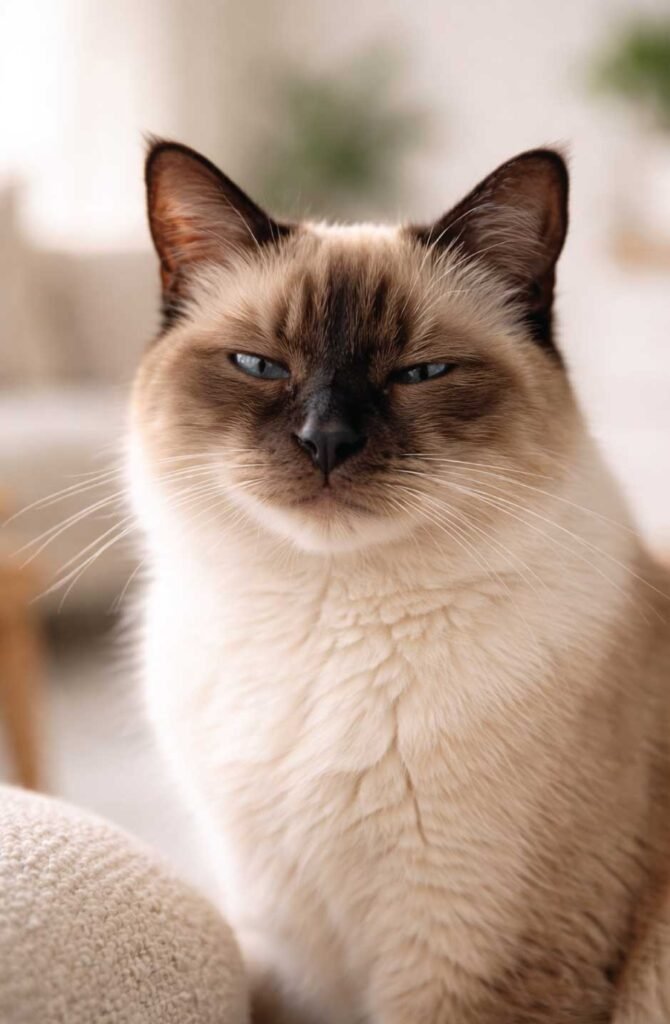
You might catch your cat staring at you from across the room, only to slowly close and open their eyes. This isn’t just a sleepy twitch; the “slow blink” is essentially a feline kiss and one of the most profound visual indicators of affection in the cat world. In the wild, a “hard stare” is a threat or a challenge. By closing their eyes, your cat is signalling they don’t see you as a threat.
- Why it works: Research from the University of Sussex confirms that slow blinking triggers a neurochemical feedback loop in cats that signals a positive emotional state. It is a deliberate tool for positive communication and a sign they feel safe enough to lower their guard.
- How to do it: When you catch your cat’s eye, narrow your eyelids and close them for more than half a second. Reciprocating a slow blink is the fastest way to chemically bond with your cat.
While many owners have noticed this behavior, it’s not just an old wives’ tale; a groundbreaking study published in Scientific Reports proved that slow blinking is a successful form of visual communication between humans and cats.
Headbutting (Bunting) and “Communal Scent”
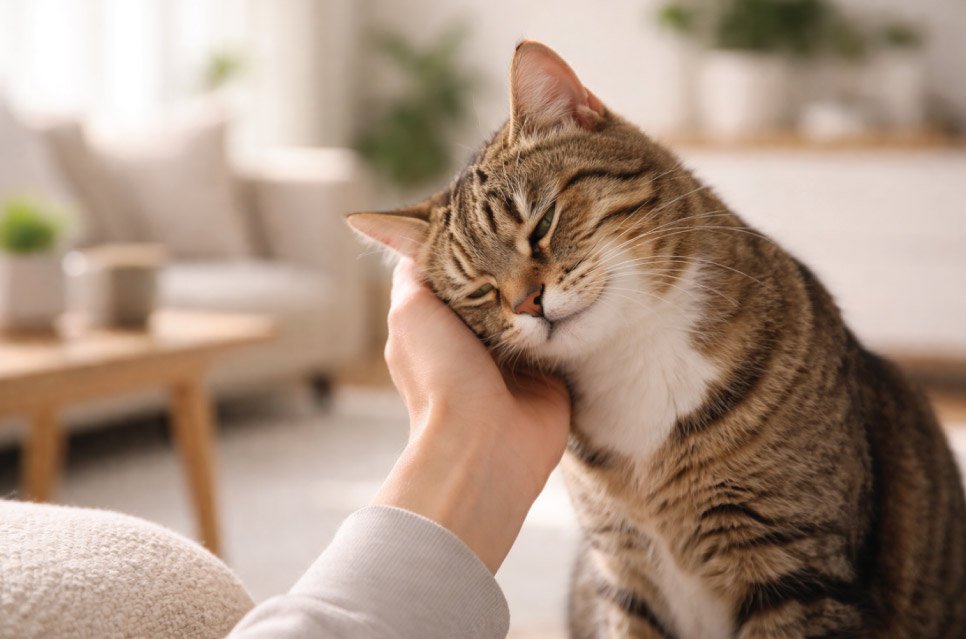
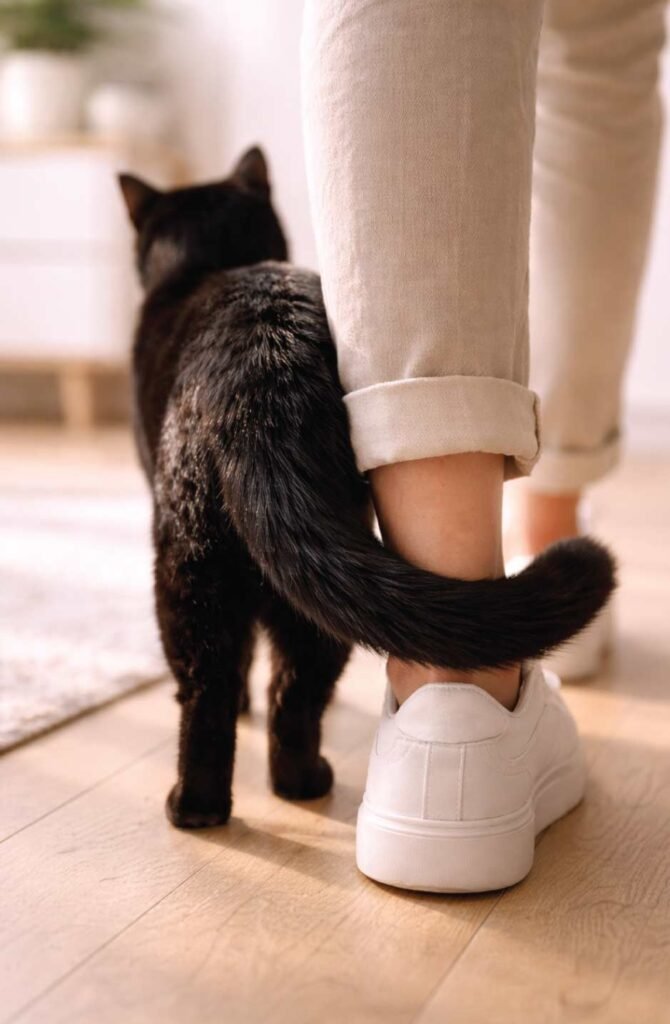
If your cat regularly rams their forehead into your chin or rubs their cheeks against your legs, they aren’t just being pushy for food. This behavior, technically known as “bunting,” is a high-level social ritual. By bunting, your cat is claiming you as a trusted member of their “family colony.”
- Why it works: Cats have specialized scent glands on their forehead and cheeks that release pheromones. When they rub on you, they are creating a “communal scent” that identifies you as part of their inner circle. This isn’t an act of submission; it’s an act of social cohesion.
- How to do it: Lean in! Allowing the head-bump reinforces their sense of security and belonging.
The “Question Mark” Tail Greeting
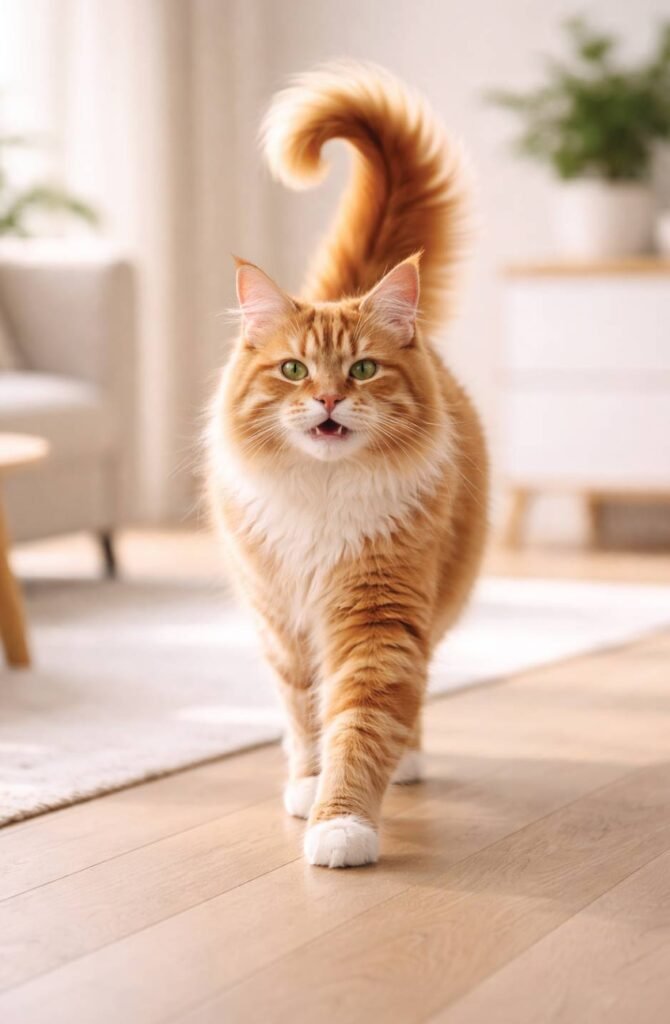
The tail is the most honest communicator in the feline repertoire. A tail held straight up in the air, often with a tiny hook or “question mark” at the tip, is a universal greeting that says, “I’m happy to see you and I’m ready to interact.”
- Why it works: This is a behavior kittens use to greet their mothers. In adult cats, a high tail indicates a cat who feels confident, social, and safe. Research shows cats are significantly more likely to approach humans when their tails are in this “raised flag” position.
- How to do it: When you see the “question mark,” acknowledge the invitation with a soft “hello” or a scratch behind the ears.
Making Biscuits (Neotenous Kneading)
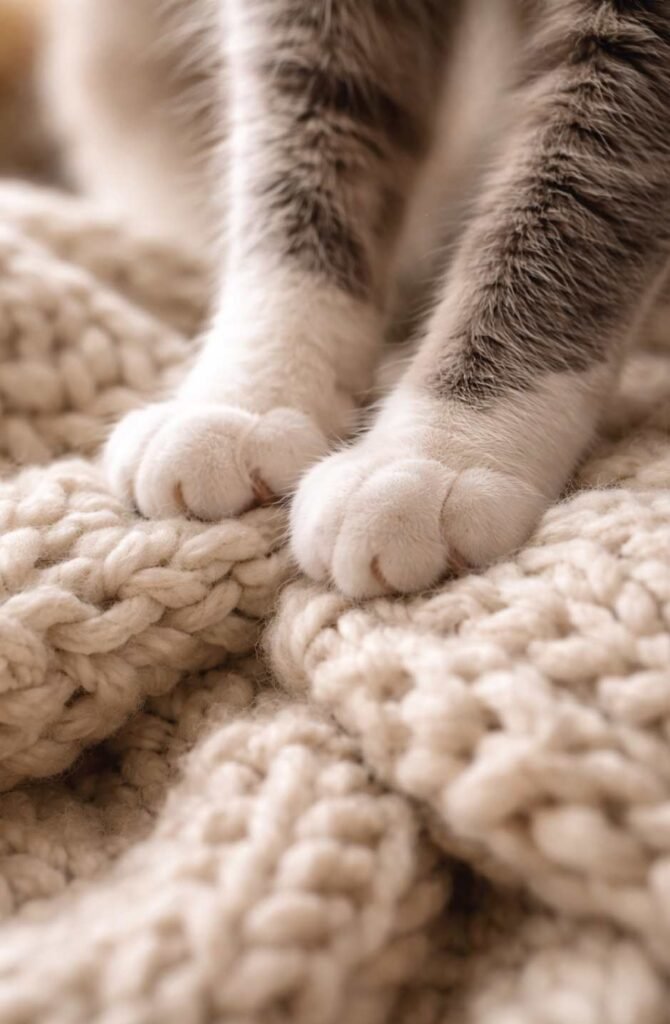
When your cat rhythmically paws at your lap, they are engaging in what scientists call a “neotenous behavior.” This is a juvenile trait that adult cats retain only for those they view as caregivers. Kneading begins in kittenhood to stimulate milk flow, and for an adult cat, it is a sign of maternal-level trust. If you want to learn more about your cat’s mysterious habits, check out our post on Why Do Cats Make Biscuits? Cat Kneading Explained
- Why it works: Kneading is believed to release endorphins in cats, helping them enter a state of deep relaxation. When your cat chooses your lap for “biscuit making,” they are signaling that they perceive you as a protective, maternal figure.
- How to do it: Keep a thick blanket nearby to protect your skin. Stopping a cat mid-knead can disrupt their sense of safety, so let them finish their “work” if possible.
The Trill: The Musical “Hello”
If your cat greets you with a short, high-pitched, musical sound (somewhere between a meow and a purr), you’ve just been “trilled.” Unlike a standard meow, which is often a demand, a trill is almost exclusively a positive vocalization used for greetings and showing affection.
- Why it works: Mother cats trill to tell their kittens to follow them. When your cat trills at you, they are treating you like family and using a specialized social signal reserved for preferred partners.
- How to do it: Answer them! Cats are more likely to interact when we mimic their vocalizations with a soft, high-pitched tone.
Shadowing (Your “Preferred Associate”)
Does your cat follow you into the bathroom or sit near you while you work? In ethology, this is known as “shadowing.” Shadowing identifies you as their “preferred associate”, the specific individual they choose to spend the most time with for emotional security.
- Why it works: For a species that evolved as a solitary hunter, the decision to share physical space is a major proof of love. They view you as their “secure base,” which allows them to feel safe in their environment.
- How to do it: You don’t have to pet them constantly. Simply acknowledging their presence with a soft look or saying their name is enough to reinforce the bond.
The Social Roll (The Belly Reveal)
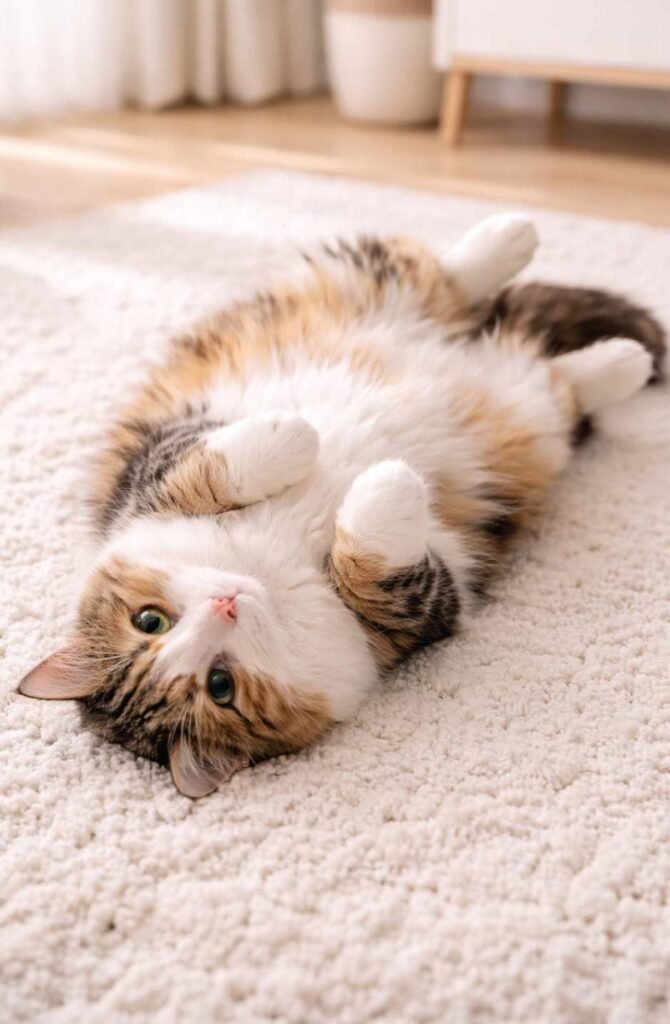
When a cat flops over and exposes their stomach, it’s the ultimate declaration of safety. The “social roll” is a vulnerable posture that reveals vital organs not protected by a ribcage.
- Why it works: This is an act of total vulnerability. By showing you their belly, your cat is stating they trust you 100% and believe you would never harm them.
- How to do it: Admire, don’t touch! For many cats, touching the belly triggers a predatory reflex. Respect their space by offering a chin scratch instead to show you’ve received their message of trust.
The Secret Sauce: 3 Expert Signs You’re Overlooking
- The Vibrating Tail: If your cat’s tail quivers when they see you, it’s a sign of “giddy” high-arousal joy and extreme excitement.
- Social Referencing: When your cat is startled, do they look at your face? Studies show 79% of cats look to their owners for cues on how to feel, proving they view you as their ultimate source of safety.
- Allogrooming: If your cat licks your hair or skin, they are performing a bonding ritual. This marks you as part of their “inner social circle” and serves to reduce mutual stress.
Frequently Asked Questions About Cat Love Language
This is a form of "shadowing." Because cats are territorial, they view the bathroom as part of their core territory. Following you there is a sign that they view you as a "preferred associate" and want to ensure you are safe in a room where you are vulnerable.
Known as "allogrooming," this behavior is reserved for members of the same social group. By licking you, your cat is grooming you as they would a sibling or kitten, effectively "marking" you with their scent to reinforce your family bond.
Yes. Cats typically bond most strongly with the person who communicates with them on their level. This often includes the person who feeds them, plays with them regularly, and, most importantly, respects their personal space and boundaries.
Cats choose to sleep on your chest or head because these are the warmest parts of your body and where your scent is strongest. Sleeping in such close proximity is the ultimate sign of trust, as they are at their most vulnerable while asleep.
While usually a sign of contentment, cats also purr to self-soothe when they are in pain or stressed. However, if your cat is purring while kneading or relaxing with you, it is almost certainly a sign of pure happiness.
The "chirp" or "chatter" is a predatory reflex used when they cannot reach prey. When they "trill" at you, it is a social greeting. Cats save specific vocalizations for humans (like meowing) because they’ve learned it’s the best way to get our attention!
Prefer Audio? Listen to Cat Love Language Signs Podcast Episode
Conclusion: You Are Their “Secure Base”
Understanding these subtle signs changes the entire dynamic of your home. When your cat chooses proximity, slow-blinks, or trills at you, they are confirming that you are their world. Cats don’t give their affection away for free, so take these signs as a badge of honor.
This bond is deeper than most people realize. Researchers at Oregon State University found that cats display the same ‘secure attachment’ styles as dogs and even human infants, as detailed in their study on feline socio-cognitive abilities.
Loved this guide? Pin it to your “Cat Tips” board for later! If you want to learn more about your cat’s mysterious habits, check out our post on Why Is My Cat Licking the Floor?.