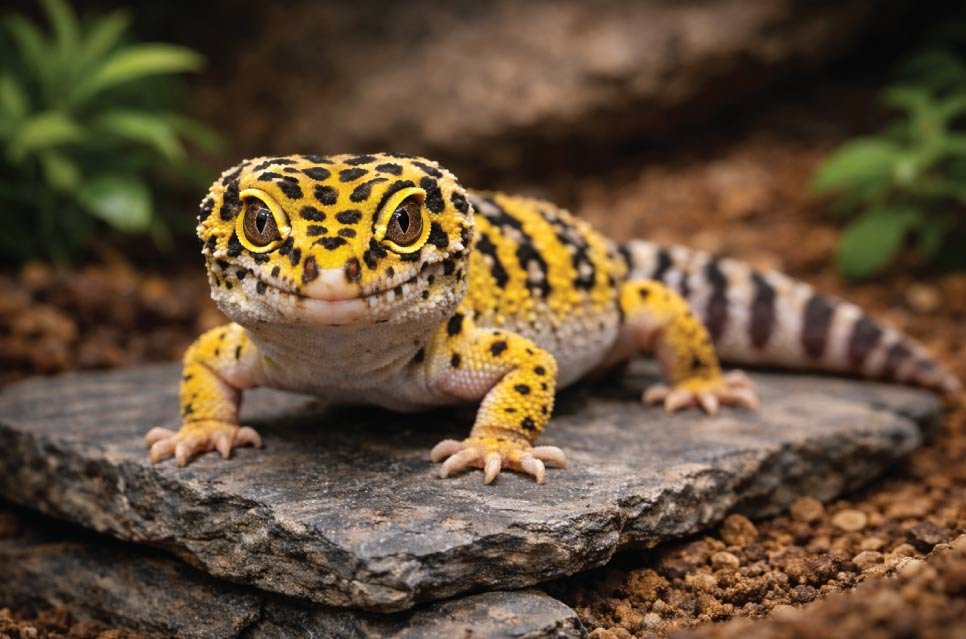
Quick Guide: Modern Leopard Gecko Care at a Glance
- Move Beyond the “Starter Kit”: While often sold as “low-maintenance,” adult leopard geckos thrive best in a 36″ x 18″ x 18″ enclosure (approx. 40-50 gallons). This extra space is crucial for creating a proper temperature gradient, allowing your gecko to move between warm basking spots and cool zones to stay healthy.
- The Power of Overhead Heat & Light: Modern husbandry favors overhead halogen heat lamps and low-level linear UVB lighting over old-school heat mats. This setup mimics natural sunlight, aiding digestion and preventing metabolic bone disease, while providing a more natural day-night rhythm.
- The “Humid Hide” is Non-Negotiable: Even though they are desert-dwelling reptiles, leopard geckos require a dedicated moist hide (filled with damp moss or paper towels). This provides 70–80% humidity, which is essential for safe, healthy shedding and preventing toe or tail injuries.
- Nutrition Requires Variety: As obligate insectivores, these geckos need a rotating menu of live, gut-loaded insects like Dubia roaches, crickets, and silkworms. Always supplement their meals with calcium and multivitamins (including preformed Vitamin A) to ensure they live their full 15–20 year lifespan.
Welcome to the wonderful, slightly addictive world of leopard geckos! If you’ve been browsing pet stores or scrolling through reptile forums, you’ve probably heard these little guys described as the “perfect beginner pet.” If you’re still weighing your options, you might also enjoy our overview on what the best reptile to have as a pet is, especially for first-time keepers. Leopard Geckos are famous for being docile, easy to handle, and having faces that look like they’re perpetually smiling at a secret joke. But if you’re here, you’re probably wondering: is that “low-maintenance” label actually true?
Let’s clear that up right away. Leopard geckos (Eublepharis macularius) are hardy, gentle reptiles, but modern leopard gecko care has moved well beyond the old idea of keeping them in a small setup with only a heat mat. Today, husbandry guidance increasingly focuses on helping these animals thrive, not just survive, by providing appropriate space, a proper heat gradient, low-level UVB, safe substrate choices, and enrichment.
In this leopard gecko care guide, we’re going to explore everything from enclosure design and heating to nutrition, enrichment, and the ethics of certain morphs. Whether you’re a total newbie or a more experienced keeper looking to improve your setup, the goal is the same: giving your gecko the best chance at a long, healthy life. Leopard geckos typically live around 15–20 years in captivity, and some exceptionally well-cared-for individuals may live longer.
The Modern Habitat: Why Bigger is Better
You might see 10- or 20-gallon tanks marketed as “starter kits,” but if we’re talking about an adult gecko, we really need to think bigger. In the wild, these geckos aren’t living on endless sand dunes; they come from dry, semi-desert and arid grassland regions where they navigate rocky ground, sheltering in crevices and hides. Their native range and natural behaviors are well documented by sources such as the San Diego Zoo Wildlife Alliance. They are active explorers who will use the space and choices you give them. Many first-time mistakes come from outdated setups, which we break down in more detail in our guide on common reptile habitat mistakes beginners make.
Breaking the Small Tank Myth
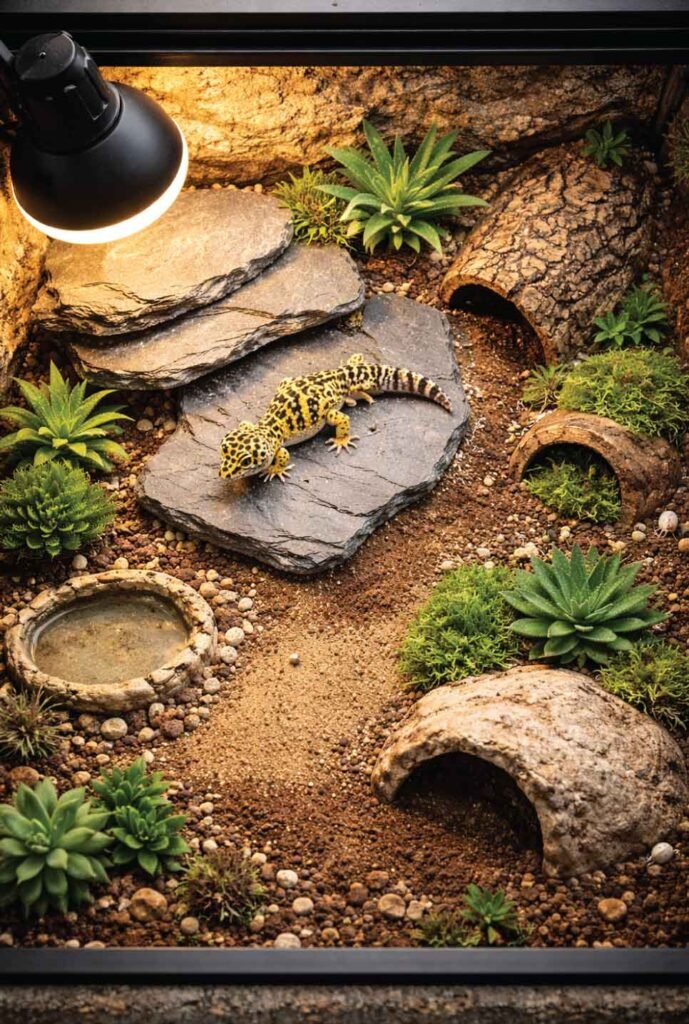
For an adult leopard gecko, a 36″ x 18″ x 18″ enclosure is a much better standard than older 10- or 20-gallon advice. That footprint gives you enough room to create a proper thermal gradient, which is one of the most important parts of leopard gecko care. Leopard geckos need access to a warm basking area, a warm hide, and a cooler area so they can regulate their body temperature naturally. Current guidance commonly places the basking surface around 94–97°F, the warm hide around 90–92°F, and the cool end around 70–77°F.
A bigger enclosure is not just about “more room to roam”, it helps your gecko thermoregulate, digest properly, and experience less stress. In a very small tank, it becomes harder to maintain a safe and useful heat gradient, which can affect overall welfare.
The Design: Front-Opening vs. Top-Opening
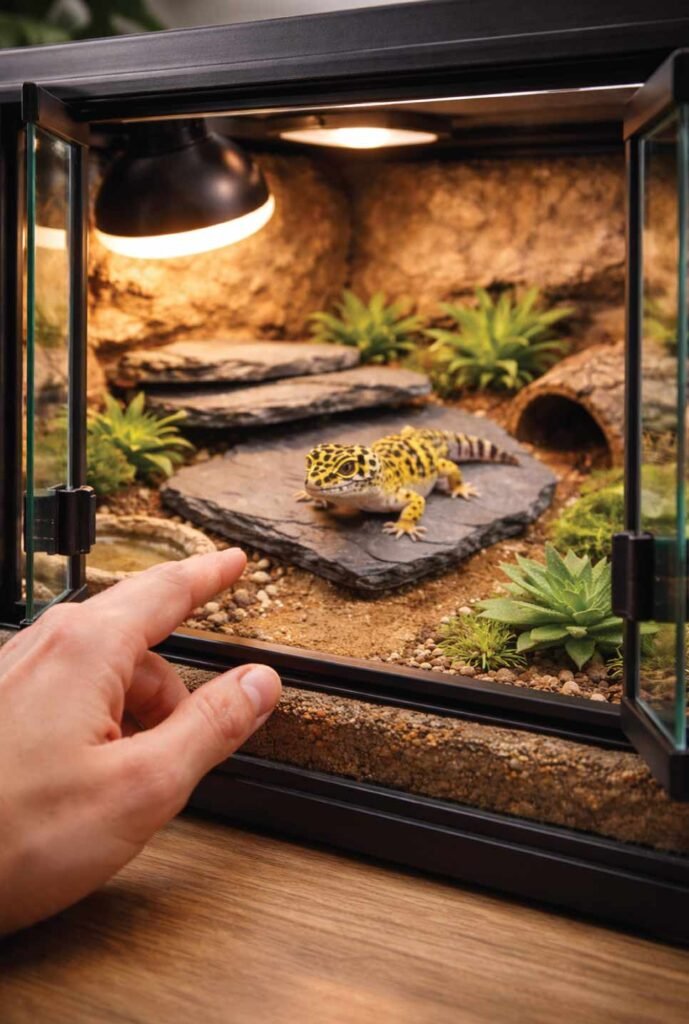
Here’s a setup detail that can make a real difference: front-opening enclosures are often less stressful than top-opening tanks. Leopard geckos are prey animals, and an object coming from above can feel threatening. A front-opening enclosure lets you approach more gradually and at eye level, which can make routine care and handling feel less intimidating.
This simple design change can dramatically reduce stress levels and make handling sessions more enjoyable for both you and your gecko. Front-opening terrariums are one of the best investments for leopard gecko care.
Housing Leopard Geckos Alone
In captivity, leopard geckos are best housed alone. Cohabitation can lead to territorial stress, competition for hides and heat, poor feeding access, injuries, and tail loss. Even when fighting is not obvious, one gecko may quietly dominate the better basking area or food source while the other declines. For beginner and long-term care alike, solo housing is the safest and most responsible standard.
Each leopard gecko should have its own enclosure, its own heat gradient, and its own hides.
Substrate: The Safety Debate
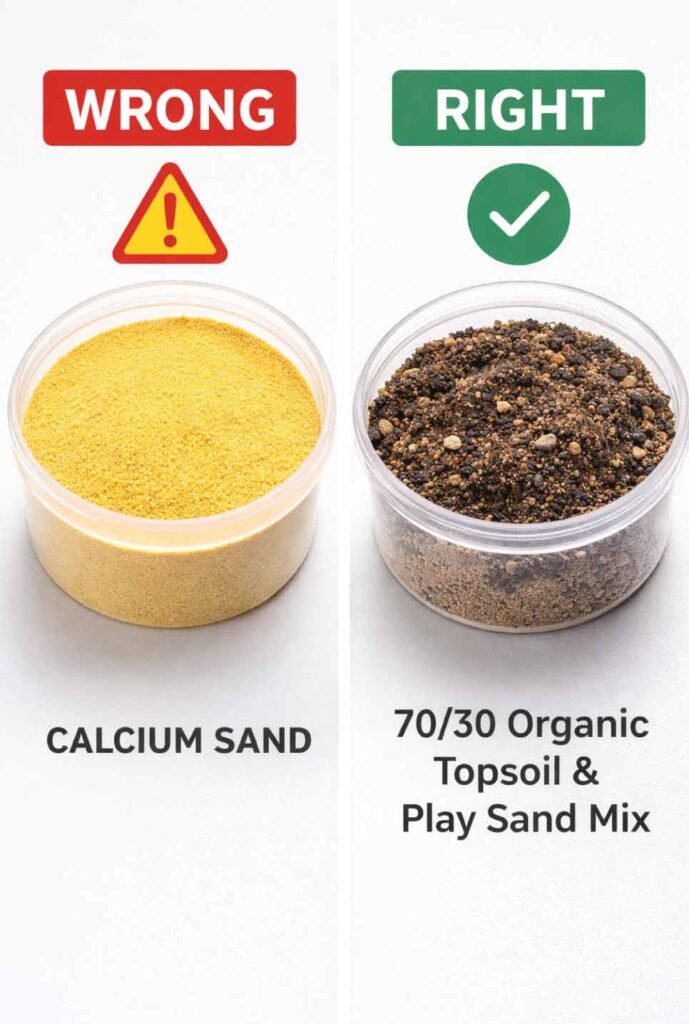
Substrate (the “flooring” of the tank) is one of the most debated parts of leopard gecko care. You’ll still see “calcium sand” sold in stores, but it’s one of those products that looks more beginner-friendly than it actually is. Calcium-based sands and ground walnut shell are widely discouraged because they can create serious health risks if swallowed, and dusty or poorly chosen loose substrates can also irritate the eyes and respiratory system.
For healthy adult leopard geckos, a naturalistic loose substrate such as a mix of about 70% organic topsoil and 30% play sand is a commonly recommended option. This kind of mix allows for more natural digging and exploring behavior than bare or overly sterile setups. However, it is best used only once the gecko is healthy, established, and past quarantine. Loose substrate is not something to rush into with a new arrival, a sick gecko, or a very young gecko.
If you’re a beginner, using paper towels during quarantine or while monitoring a gecko’s health is still one of the simplest and safest approaches. Paper towels make it easy to check droppings, monitor appetite and shedding, and keep the enclosure clean while you learn your gecko’s normal behavior. They are not the most natural-looking option, but they are practical and widely used for observation, quarantine, and temporary setups.
What matters most is context. Loose substrate is not automatically dangerous, but substrate choice should match the gecko’s age, health status, and the quality of the overall setup, especially heating and husbandry. If you do decide to use a naturalistic mix, avoid heavily dusty, calcium-based, or sharp particulate substrates, and skip risky options like walnut shell altogether.
Replicating the Sun: Heat and Light Science
This is one of the most important parts of leopard gecko care. Leopard geckos do not just need “warmth” they need the right kind of heat, the right temperature range, and a usable light gradient so they can regulate their bodies naturally. Good heating and lighting are not optional extras; they are part of the foundation of proper digestion, metabolism, and long-term health.
The Case for Overhead Heat
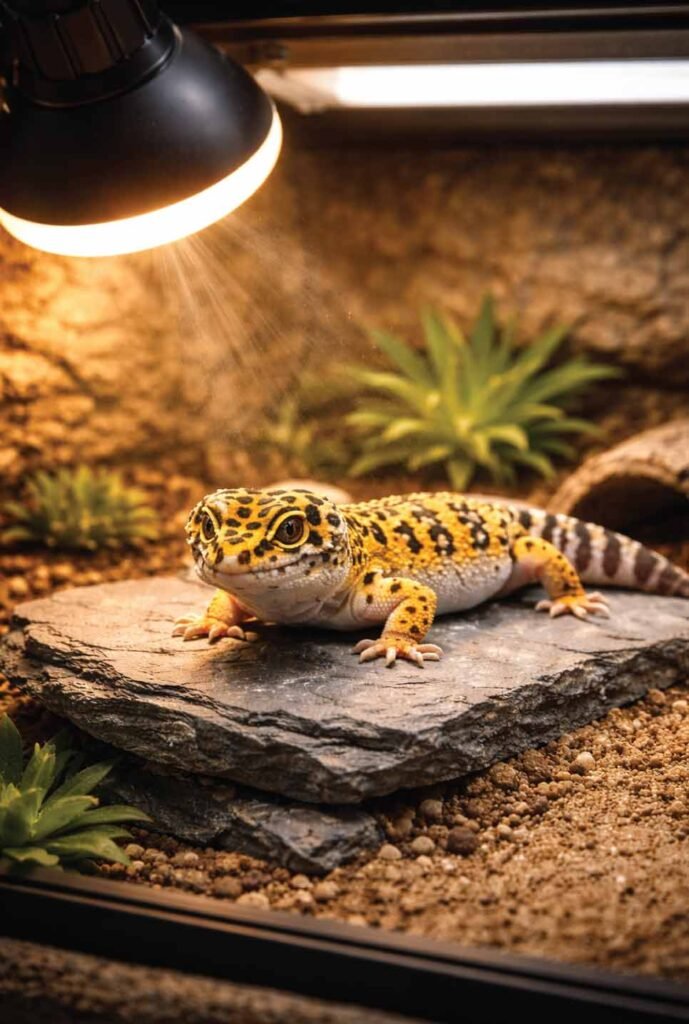
For years, many setups relied mainly on heat mats. While under-tank heat can warm a surface, modern husbandry increasingly favors overhead heating as the primary daytime heat source, because it creates a more natural basking zone and helps establish a better thermal gradient across the enclosure. A halogen heat lamp is commonly recommended for this purpose.
A proper leopard gecko setup should offer several temperature choices, not just one warm spot. Current guidance commonly aims for:
Basking surface: 94–97°F
Warm hide: 90–92°F
Cool end: 70–77°F
These temperatures should be measured with a reliable infrared temperature gun or other accurate tools, not just a stick-on dial.
If you want to provide that classic “belly heat” leopard geckos enjoy, placing a flat piece of slate or stone under the basking lamp can help. The stone absorbs heat during the day and creates a warm surface your gecko can use naturally. This gives you the benefit of overhead heating while still offering a warm contact surface.
UVB: From Optional to Strongly Recommended
Older care sheets often said leopard geckos do not need UVB because they are crepuscular. It is true that they are adapted to lower light levels than many diurnal reptiles, but more recent husbandry guidance increasingly supports providing low-level linear UVB rather than relying on supplements alone. UVB helps reptiles synthesize vitamin D3, which is important for calcium metabolism and bone health, and it may also support more natural behavior and overall welfare.
For leopard geckos, a low-output linear UVB bulb is the usual recommendation, such as an Arcadia ShadeDweller 7%, positioned so the gecko has access to both light and shade. The goal is not to flood the whole tank with UVB, but to create a gentle photogradient that allows the gecko to choose. Recommended basking-area UV exposure is commonly kept in a low range, around UVI 0.5–1.5.
A practical note here: many experienced keepers prefer linear UVB tubes over compact or coil-style bulbs, because linear fixtures provide a broader and more even gradient. That makes it easier to create a safer and more usable lighting setup.
Much of what we now know about UVB and reptile health comes from long-term studies summarized by organizations like the Association of Reptile and Amphibian Veterinarians.
The Humidity Factor and the Humid Hide
Leopard geckos are usually kept in relatively dry ambient conditions, often around 30–40% humidity, but they still need access to a properly set up humid hide.
A humid hide should be enclosed enough to hold moisture well and should contain a damp medium such as sphagnum moss or paper towels. Inside the humid hide, humidity is typically kept much higher than the rest of the enclosure, often around 70–80%, to support healthy shedding. Without this, stuck shed can build up around the toes and tail tip, which can lead to injury over time.
The easiest way to maintain it is to check the hide every few days and re-moisten the substrate as needed. This is one of the simplest but most important parts of leopard gecko husbandry.
Nighttime Temperature Drops
A nighttime temperature drop is normal and beneficial for leopard geckos. Daytime basking heat and bright lighting should not run 24/7. Many care guides allow nighttime temperatures to fall safely, with a lower limit around 60°F, although many keepers aim for something a little warmer than that in practice.
A simple way to think about it is this: warm days, cooler nights, and a reliable day-night rhythm help support more natural behavior. If your home stays comfortably above the lower safe range at night, extra nighttime heat is often unnecessary.
Masterful Nutrition: More Than Just Crickets
Leopard geckos are obligate insectivores. That means no fruit, no veggies, and definitely no “gecko pellets”. They need live, wiggly bugs to stay healthy and stimulated.
Building a Better Menu
Leopard geckos are obligate insectivores, which means their diet should be made up of live feeder insects rather than fruits, vegetables, or pellet-based foods. Feeding a varied rotation of appropriate insects helps provide better nutrition and enrichment than relying on just one feeder type all the time.
Building a Better Menu
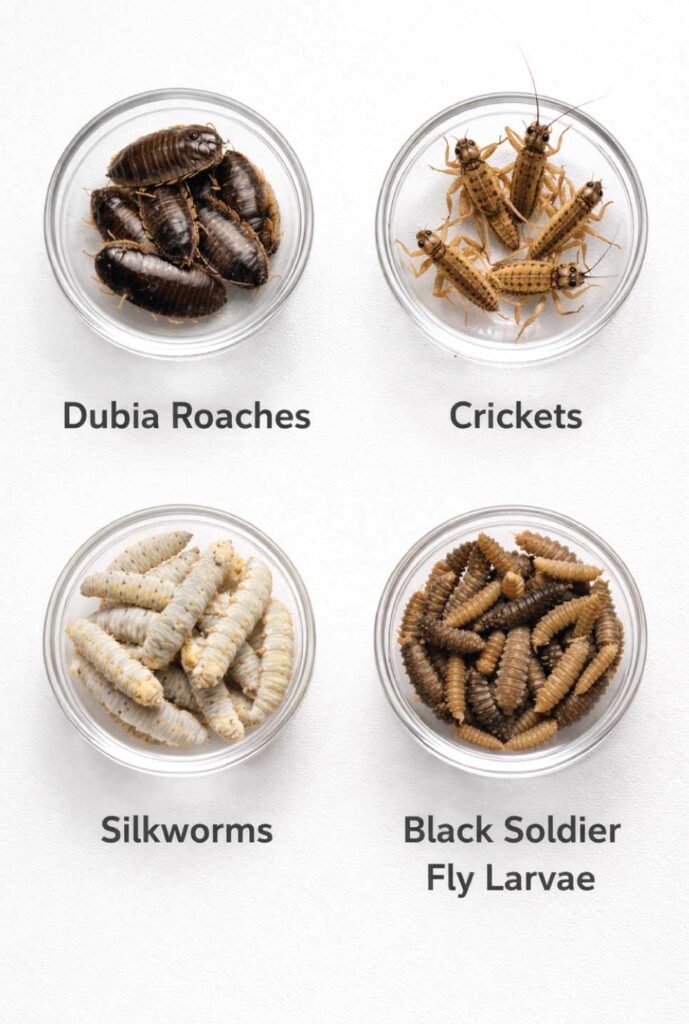
A healthy leopard gecko diet is all about variety. No single feeder insect does everything well, so rotating staples is one of the best ways to improve long-term nutrition and reduce the risk of dietary gaps. Good staple feeders commonly include:
- Dubia roaches – nutritious and easy to digest
- Crickets – active, enriching, and widely used
- Silkworms – soft-bodied and useful for hydration
- Black Soldier Fly Larvae – naturally calcium-rich
Mealworms and superworms can be used in rotation, but they are usually better treated as secondary feeders rather than the only staple. Waxworms are best offered only occasionally because they are high in fat and can encourage picky feeding if overused.
Gut-Loading Matters
Your gecko’s nutrition starts with what the insects were eating before they became dinner. Feeder insects should be gut-loaded for about 12–48 hours before feeding with nutritious foods or a high-quality commercial gut-load.
This helps improve the nutrient value of the prey and makes your supplementation routine more effective. Common gut-loading foods include squash, carrots, and sweet potato, or a reputable prepared insect diet.
The Supplement Schedule
Even a good feeder rotation and gut-loading plan are not enough on their own. Leopard geckos still need calcium and vitamin supplementation to stay healthy in captivity. Exact schedules vary by keeper, supplement brand, age, and whether UVB is provided, but the general idea is consistent:
- calcium should be used regularly
- multivitamins should be used on a schedule, not ignored
- supplement routines should match the rest of the setup, especially UVB exposure
If your gecko is provided with appropriate UVB, keepers often use plain calcium without D3 more often, because the gecko is able to synthesize vitamin D3 naturally. If UVB is not provided, a supplement plan including D3 becomes more important. The exact frequency depends on the supplement brand and husbandry approach, so it is worth following a trusted schedule rather than improvising.
Vitamin A: A Detail That Matters
One important nutrition detail that gets overlooked is vitamin A. Leopard geckos are generally considered poor converters of beta-carotene into usable vitamin A, which is why many modern care guides recommend using a multivitamin that contains preformed vitamin A (retinol) rather than relying only on carotenoid-based products. Vitamin A deficiency can contribute to eye, skin, shedding, and immune problems over time.
That does not mean you should overdo supplements. The safest approach is a balanced routine using reputable products, rather than heavily dusting everything or mixing multiple overlapping powders without a plan.
How Often to Feed
Feeding frequency depends on age, growth stage, and body condition. A commonly used rule is to offer appropriately sized insects, no wider than the space between the gecko’s eyes, and adjust frequency by age:
- Juveniles: usually fed daily
- Young adults: often every other day to every 3 days
- Adults: commonly every 3–5 days, depending on condition and feeder size
Rather than forcing a fixed number for every gecko, it is better to watch body condition, tail fat stores, and appetite over time.
A Better Way to Think About Feeding
Instead of seeing food as just “fuel,” think of feeding as part of enrichment too. Variety, movement, and appropriate prey size all help engage natural hunting behavior. A healthy leopard gecko diet is not just about preventing deficiency, it is also about giving the gecko chances to forage, hunt, and stay mentally engaged.
Advanced Psychology: The Thriving Gecko
This is the part where leopard gecko care becomes more than just food, heat, and cleaning. Leopard geckos may not show affection the way mammals do, but their behavior can still tell us a great deal about their comfort, stress level, and overall welfare. Paying attention to those signals helps you move from simply keeping a reptile alive to creating an environment where it can behave more naturally and confidently.
Enrichment Matters More Than Many People Realize
For a long time, reptile care often focused only on survival basics. More recent welfare research suggests that leopard geckos benefit from enriched enclosures and show a strong preference for more naturalistic setups over sterile, minimal housing. In a 2025 study, leopard geckos interacted with enrichment items and showed a strong preference for naturalistic enriched enclosures, supporting the idea that more complex environments can improve welfare.
In practical terms, enrichment can include things like varied textures, extra cover, climbing opportunities, multiple hides, digging areas, and more natural feeding opportunities. A gecko that has chances to explore and choose between different microenvironments is often displaying more of its natural behavioral range.
Feeding as Enrichment
Food is not just nutrition, it can also be a form of mental stimulation. Offering a variety of appropriately sized feeder insects and creating opportunities for natural hunting behavior can make feeding more engaging than simply dropping the same insect into a bowl every time.
Rather than claiming that one specific prey strategy is always best, it is safer to say this: smaller, active feeder insects and more varied feeding presentation can encourage movement, exploration, and natural hunting behavior. This makes feeding time more interesting and can support a more active gecko overall.
Learning to Read Body Language
Understanding leopard gecko body language is one of the most useful skills a keeper can develop. While no single behavior should be interpreted in isolation, some patterns are commonly used to assess comfort or stress.
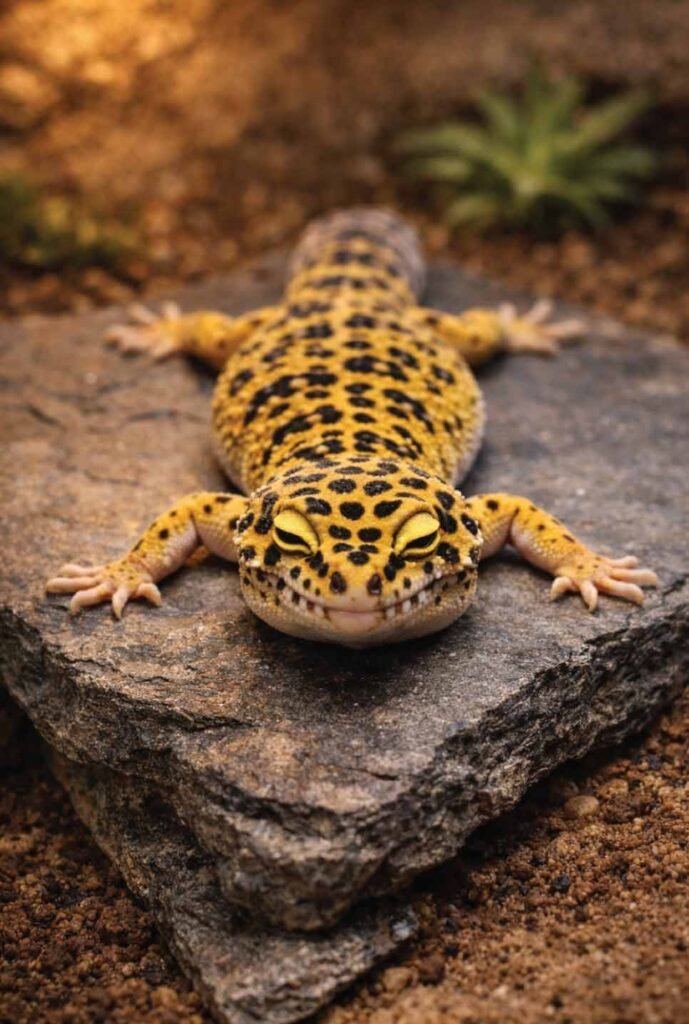
- Relaxed postures can be a good sign. When a leopard gecko lies flat against a warm surface, often with its body stretched out and limbs relaxed, many keepers describe this as “splooting.” This can be a sign that the gecko feels comfortable enough to rest openly in its environment. It is not a scientific diagnostic sign on its own, but in context, a relaxed gecko is generally a positive sign.
- Glass surfing is often a sign that something needs attention. Repeated scratching or pressing against the enclosure walls can be linked to stress, insufficient space, poor temperatures, lack of cover, or general restlessness. It does not always mean the same thing, but if it is happening often, it is worth reviewing the setup and husbandry.
- Slow tail waving usually means the gecko is uncomfortable, defensive, or highly alert. In many cases, this behavior is interpreted as a warning signal, especially if it appears during handling attempts or when the gecko feels threatened. It is best read as a cue to give the animal more space.
Why Naturalistic Setups Are Worth Considering
A more naturalistic enclosure is not just about aesthetics for the keeper. Naturalistic and enriched setups can give a leopard gecko more opportunities to choose where to hide, rest, climb, hunt, and thermoregulate. That choice matters. The 2025 enrichment study found that, when given options, leopard geckos strongly preferred naturalistic enriched housing over more standard setups.
That does not mean every keeper must go fully bioactive immediately. But it does mean that adding more structure, more cover, and more behavioral opportunities is likely a step in the right direction for welfare.
Ethics, Longevity, and the Long-Term Commitment
Before you bring home that adorable baby gecko, it’s important to understand that this is not a short-term pet. Leopard geckos typically live around 15–20 years in captivity, and some exceptionally well-cared-for individuals may live longer. That means bringing one home is a serious long-term responsibility, not an impulse purchase. For many keepers, a leopard gecko can be a companion for well over a decade.
Rather than thinking of them as “easy starter pets,” it is more accurate to see them as beginner-friendly reptiles that still require long-term planning, proper setup, and ongoing care. That includes vet access, reliable heating and lighting equipment, high-quality feeder insects, and a commitment to learning as husbandry standards evolve.
This long-term responsibility ties closely into the principles of responsible reptile ownership.
Choosing Morphs Responsibly
The leopard gecko world is full of beautiful morphs, but responsible keeping means caring about welfare just as much as appearance. Not every morph is equally healthy, and some are associated with serious long-term problems.
Two of the most widely discussed examples are:
Enigma morph
This morph is linked to a neurological disorder commonly called Enigma syndrome. Affected geckos may show:
- poor coordination
- circling
- difficulty striking at food
- head tilting
- “stargazing”
- other neurological problems
Because this condition can significantly affect quality of life, many keepers avoid Enigma geckos entirely on welfare grounds.
Lemon Frost morph
- Research has shown that Lemon Frost leopard geckos have a high incidence of iridophoroma, a tumor affecting the reflective skin cells that help create their unusual coloration. Because of this strong welfare concern, many keepers choose not to support the breeding or purchase of Lemon Frost geckos
Tail Condition: An Important Health Clue
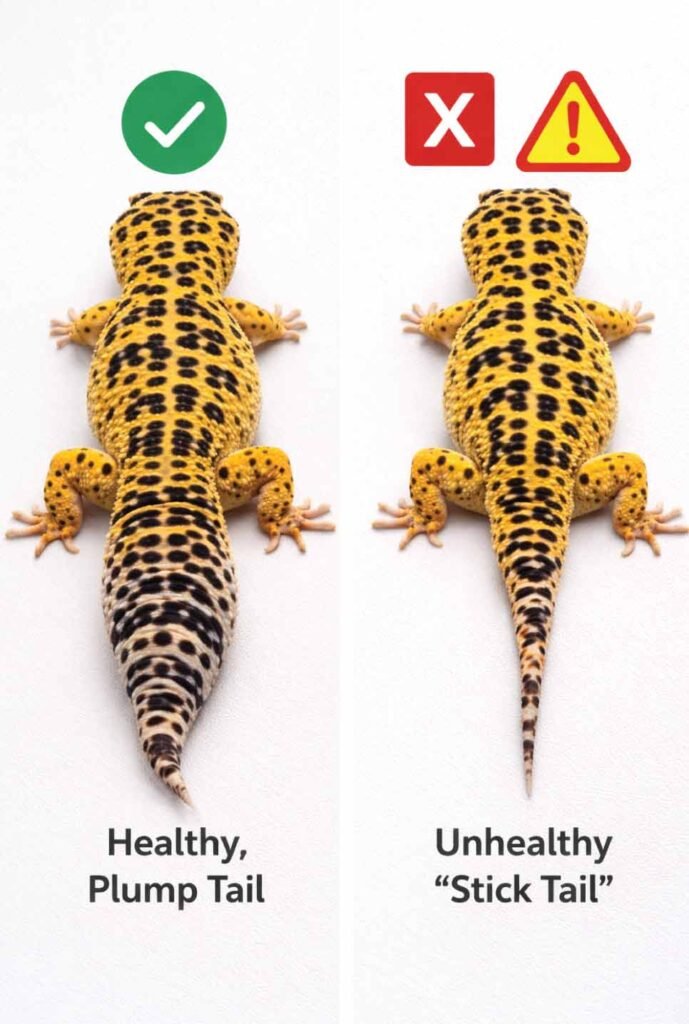
A leopard gecko’s tail is one of the easiest places to notice changes in body condition. A healthy tail should look well-filled, not thin, sharply narrowed, or depleted. If the tail begins to lose condition noticeably, especially if the gecko also seems:
- weak
- bloated
- lethargic
- unwilling to eat
that is a sign something may be wrong.
Keepers often use the phrase “stick tail” to describe severe tail thinning and wasting. This is not a diagnosis by itself, but it is a red flag that should be taken seriously.
Possible causes can include:
- parasites
- chronic illness
- poor nutrition
- husbandry problems
- other medical conditions
In some reptiles, cryptosporidiosis is one possible serious cause of marked weight loss and weakness, but it is not the only possible explanation.
If you notice tail wasting, unexplained weight loss, or a gecko that seems unwell, the safest step is to contact an experienced exotic animal veterinarian promptly. Early veterinary care is far more useful than trying to guess the cause at home.
Frequently Asked Questions About Leopard Gecko Care
Adult leopard geckos are usually fed every 3–5 days, depending on their age, body condition, feeder size, and overall activity level. A commonly used guideline is to offer appropriately sized insects, no wider than the space between the gecko’s eyes, and adjust the amount based on how your gecko maintains weight over time.
For younger geckos:
Juveniles are usually fed daily
Young adults are often fed every other day to every 3 days
Adults are commonly fed every 3–5 days
Rather than sticking rigidly to one number, it is better to watch:
tail condition
body weight
appetite
activity level
That gives you a much better picture of whether the feeding schedule is working.
Leopard geckos can become comfortable with gentle handling, but it is best not to rush. A newly arrived gecko should be given time to settle in before regular handling begins. Many care guides recommend keeping interaction minimal at first and allowing the gecko to adjust to its new environment before trying to build trust.
Once your gecko is settled and eating well, short, calm handling sessions are usually best. A good general rule is:
keep sessions brief
avoid handling immediately after feeding
stop if the gecko seems stressed or defensive
Quality matters more than frequency. Gentle, positive handling a few times a week is usually more helpful than forcing daily interaction.
The basking surface should generally reach around 94–97°F, measured with an infrared temperature gun or another reliable thermometer. The rest of the enclosure should include:
Warm hide: 90–92°F
Cool side: 70–77°F
This range allows the gecko to thermoregulate properly, which is essential for digestion, metabolism, and comfort. Stick-on dial thermometers are not accurate enough for this job.
Yes, a shallow dish of fresh, clean water should always be available. Leopard geckos may get some moisture from their food, but they still need access to drinking water. Some individuals may also occasionally soak in their bowl.
It is a good idea to:
change the water daily
clean the bowl regularly
keep it shallow and easy to access
Fresh water is a basic but essential part of leopard gecko care.
Sexing a leopard gecko becomes easier as it matures. Males typically develop:
visible hemipenal bulges at the base of the tail
a row of more obvious pre-anal pores above the vent
Females generally do not show those features as prominently. These differences are usually easier to see once the gecko is older and more developed, often by around 6–12 months, although this can vary.
If you are unsure, an experienced exotic vet or reptile keeper can help confirm it.
Yes, some leopard geckos naturally eat less or become less active during cooler months, even when kept indoors. This seasonal slowdown is sometimes described as brumation-like behavior.
Reduced appetite can be normal if your gecko is otherwise alert, maintaining weight, and showing no other concerning symptoms. It becomes more concerning if you notice:
clear weight loss
a thinning tail
lethargy
dehydration
signs of illness
If that happens, it is best to review your setup and contact an exotic animal veterinarian if needed.
Prefer Audio? Listen to the Leopard Gecko Care Podcast Episode
Conclusion: Is the Leopard Gecko Right for You?
So, is the leopard gecko the “perfect low-maintenance pet”?
If “low-maintenance” means you can put them in a box and forget about them, then the answer is a hard no. But if it means they are a resilient, fascinating, and deeply rewarding companion that won’t chew your furniture or keep you up barking at night, then absolutely.
The secret to leopard gecko success is moving away from the “convenience minimalism” of the past and embracing a science-based approach. When you get the lighting right, provide a massive 50-gallon world to explore, and offer a variety of high-quality food, you don’t just get a pet that survives. You get a tiny dinosaur that will interact with you, explore its world, and enjoy its world with confidence for many healthy years to come..
Take the time to set it up right from day one. Your gecko’s health and happiness are the ultimate metrics of your success as a keeper.
Happy herping!