Quick Guide: Decoding Dog Body Language
- A wagging tail indicates emotional arousal, not guaranteed happiness; you must evaluate the speed, height, and stiffness of the motion to gauge your dog’s true intent.
- Calming signals like lip licking, yawning, and sniffing are behavioral “whispers” that dogs use to actively de-escalate social stress before reaching a breaking point.
- The visible whites of the eyes (whale eye) and a rigid, frozen posture are critical “red light” warnings signaling that your dog is overwhelmed and requires immediate physical space.
- Accurate interpretation requires evaluating the “whole dog” and their surrounding environment, as breed-specific physical traits can easily mask or distort emotional cues.
Why Speaking “Dog” Is Essential for Every Pet Parent
Ever feel like you’re playing a high-stakes game of charades with a roommate who simply cannot speak your language? We’ve all been there, standing in the kitchen or waiting in the veterinary lobby, wondering if that sudden yawn means your dog is ready for a nap or is seconds away from a total behavioral meltdown. Learning to read your dog’s body language isn’t just a fun party trick; it is the most vital safety and bonding skill any pet parent can master. When humans misunderstand canine communication, we inadvertently push our pets past their emotional thresholds, creating unnecessary anxiety and behavioral friction.
Most “out of nowhere” bites or sudden reactive lunges aren’t actually sudden at all; they are the direct result of humans missing the subtle, early “whispers” a dog uses before they feel forced to “scream.” By relying on human interpretations of animal behavior, like assuming a smile is friendly or a wag is joyful, we fail to provide the leadership and security our pets crave. This comprehensive guide will give you the real-life, science-backed tools you need to become fluent in “Dog,” helping you de-escalate stress and build unbreakable trust starting right now.
Stop Assuming a Wagging Tail Equals a Happy Dog
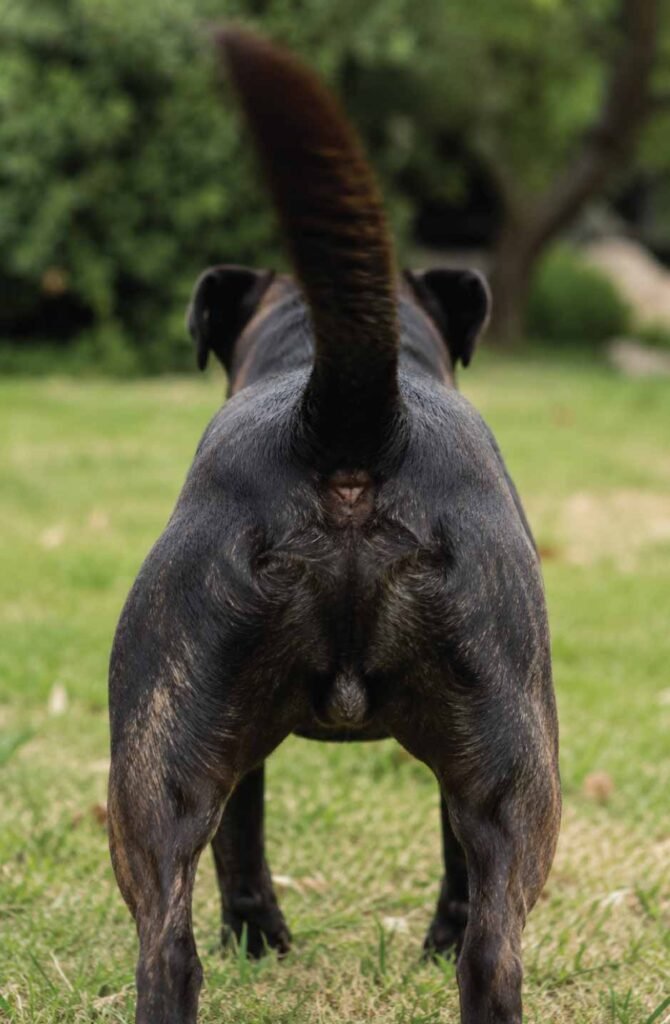
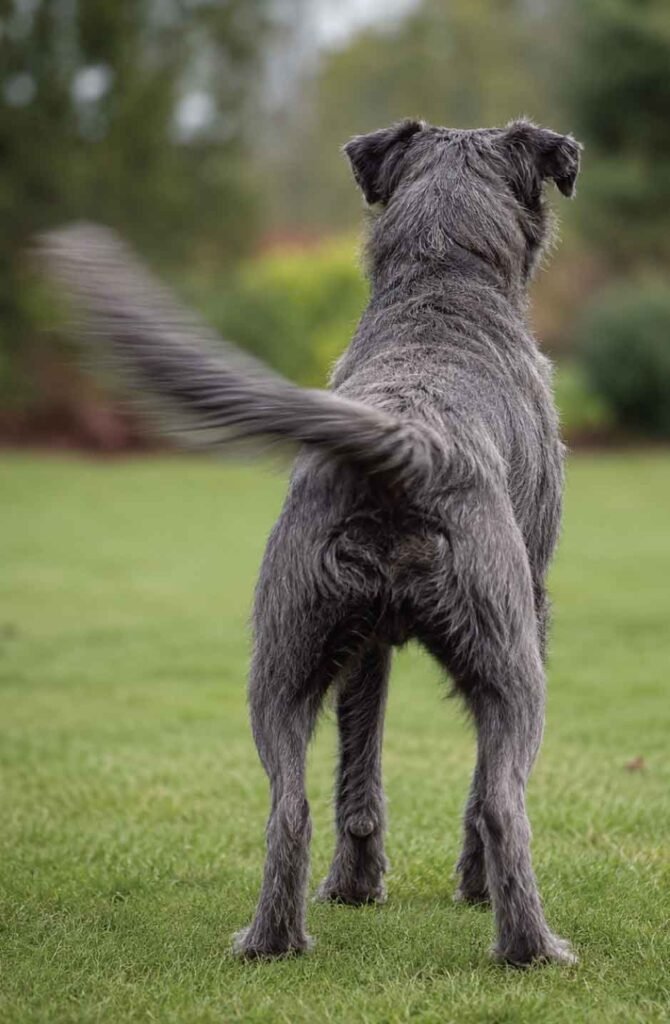
The single biggest myth in the pet world is that a wagging tail is a universal, guaranteed sign of friendship and joy. In reality, a wagging tail simply indicates emotional arousal and heightened energy, which can range from pure bliss to intense frustration or even impending aggression. When a dog’s nervous system is activated by any strong stimulus, whether it is their favorite human walking through the door or a rival dog approaching their territory, their tail moves as a physical manifestation of that internal excitement. To accurately understand what the wag is telling you, you must evaluate three critical metrics: the speed of the swing, the height of the tail relative to the spine, and the overall stiffness of the muscles. For a deeper breakdown of these visual baselines, you can cross-reference the American Kennel Club’s guide to canine body language. A loose, sweeping wag that causes the dog’s entire hindquarters to wiggle is a reliable indicator of a relaxed, friendly animal, whereas a fast, twitch-like vibration held rigidly high indicates a dog on high alert.
- Watch for the “Helicopter Wag”: A tail that spins in wide, loose circles is the gold standard for extreme joy, typically reserved for friendly greetings with trusted loved ones.
- Check height relative to the spine: A tail held high like a flagpole indicates confidence, arousal, or assertiveness, while a tucked tail pressed firmly against the belly signals acute fear and self-protection.
- Look for behavioral asymmetry: Dogs consistently wag more toward their right side when experiencing positive emotions and more toward their left when they perceive a stressor or threat.
- Identify the “Flagging” tail: A high, stiff tail moving with short, rapid, vibrating pulses is a severe warning of high arousal and potential reactivity; proceed with extreme caution and give the dog immediate space.
Catch the “Whispers” of Subtle Calming Signals
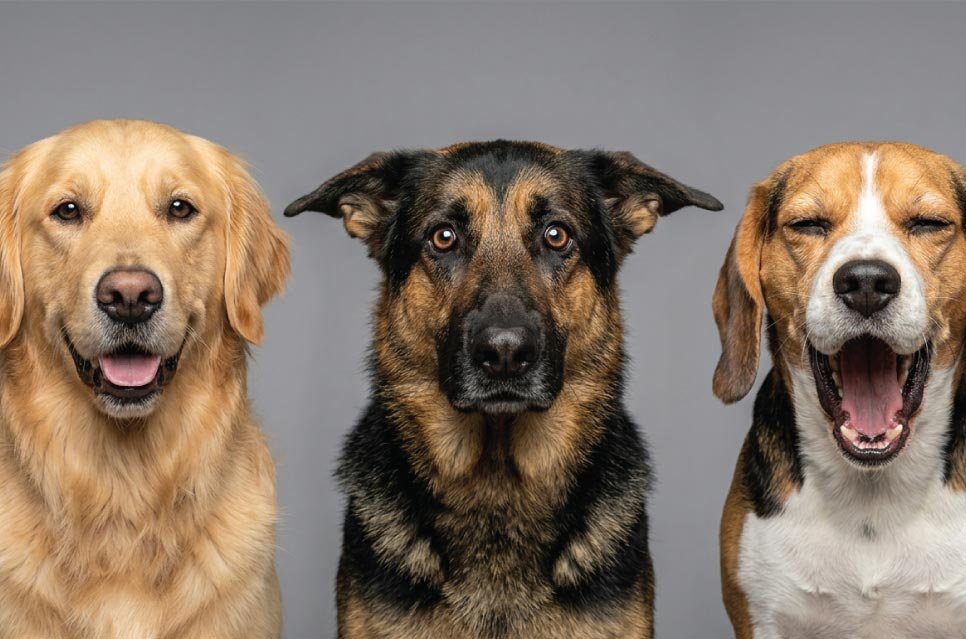
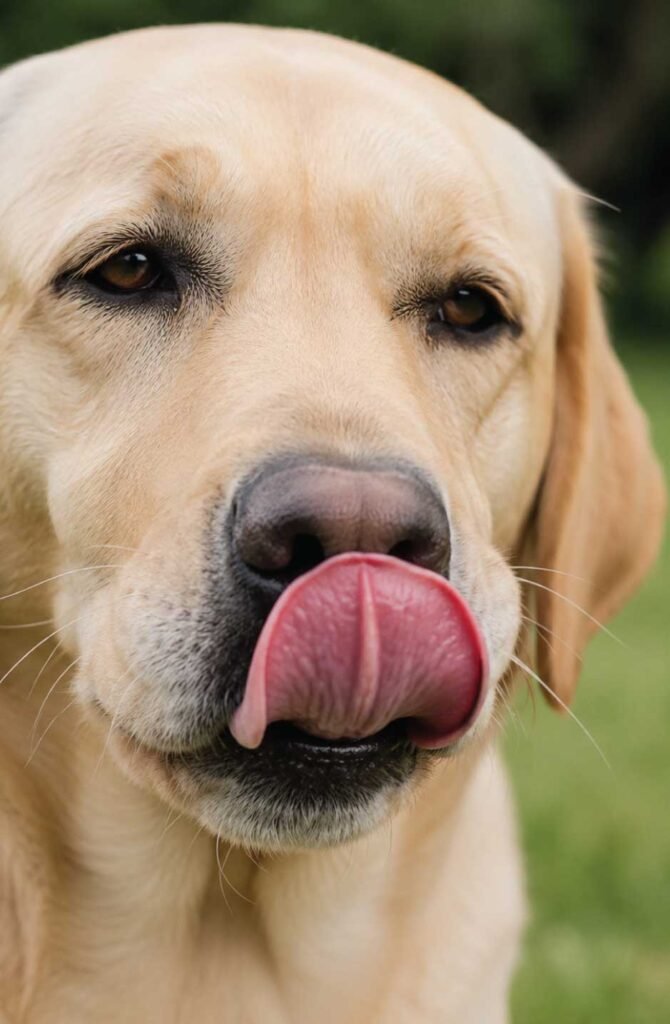
Dogs are natural masters of conflict resolution and rely on a specialized vocabulary of behaviors known as “calming signals” to diffuse tension and maintain social harmony. Signals like lip licking, yawning, and turning the head away are often your dog’s polite way of saying, “I’m uncomfortable, so let’s keep things peaceful and avoid a fight.“ Unfortunately, well-meaning pet parents frequently misinterpret these nuanced gestures as boredom, fatigue, or hunger, entirely missing the animal’s attempt to self-soothe in high-stress environments. When we ignore or unintentionally punish these gentle whispers, the dog learns that polite communication is ineffective, forcing them to escalate to overt “yellow” or “red” light behaviors like growling or snapping. Understanding these early signals is especially critical when figuring out why dogs lick and how to manage it during everyday social interactions.
- Monitor “Out of Context” Yawning: If your dog yawns repeatedly while being hugged, restrained, or sitting in a chaotic environment, they aren’t tired; they are actively attempting to lower their rising cortisol levels.
- Spot the Quick Tongue Flick: A rapid, flicking lick of the nose or upper lip, when no food is present, is a classic, reliable indicator of social anxiety or anticipation of an unwanted event.
- Respect the “Look Away”: If your dog deliberately turns their head or eyes away from an approaching person or animal, they are actively trying to cut off staring and avoid a confrontational interaction.
- Identify Displacement Sniffing: Sudden, intense sniffing of the ground during a tense encounter is a clever diversion tactic used to avoid social pressure and signal non-threat.
Decode the “Ocular Complex” and Whale Eye
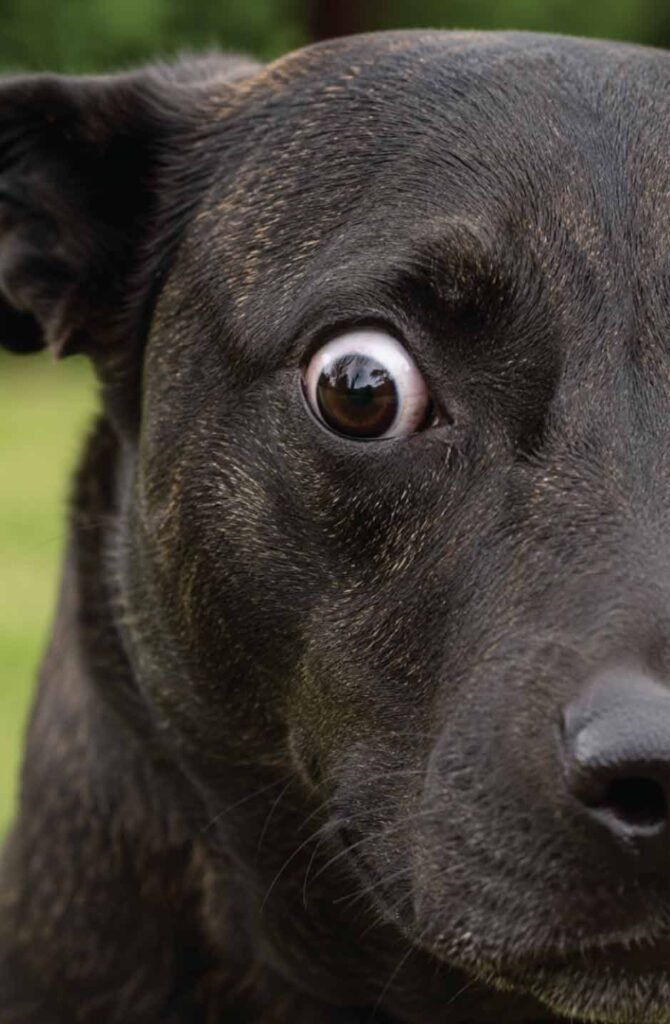
A dog’s eyes serve as a direct window into the autonomic nervous system, revealing real-time shifts between relaxation and fight-or-flight arousal. A calm, contented dog will display “soft eyes” with relaxed, almond-shaped lids, whereas a stressed or threatened dog will exhibit “whale eye,” where the white sclera becomes vividly visible. Whale eye typically occurs when a dog feels intensely uneasy about a perceived threat, such as a hand reaching for their food bowl, but is slightly averting their head in a desperate attempt to de-escalate the situation. This visual dissonance between where the head is pointing and where the eyes are locked is a major diagnostic marker for resource guarding and defensive anxiety. If you frequently observe these ocular stress signals during storms or separation periods, implementing natural ways to calm dog anxiety can help restore emotional balance to their daily routine.
- Look for Dilated Pupils: Rapidly enlarged pupils that do not correspond to low lighting conditions indicate acute fear, adrenaline release, or extreme behavioral arousal.
- Beware the “Hard Stare”: A cold, unblinking, and direct gaze fixed onto a target is an undeniable “red light” warning of impending offensive aggression; never challenge a staring dog.
- Appreciate the Slow Blink: Frequent, deliberate slow blinking in your presence is a beautiful communication of deep trust, indicating your dog feels entirely secure and undefensive.
- Check Lid Tension: Watch the skin surrounding the eye socket; rounder-than-normal eyes accompanied by tight, furrowed brow muscles indicate mounting internal stress and discomfort.

Distinguish Between a Submissive Grin and a Snarl
Exposed teeth do not automatically signal impending violence, but correctly interpreting them requires paying strict attention to the direction the lips are moving. A submissive grin involves a horizontal, backward pull of the lips (a “long lip”) that mimics a human smile, whereas an aggressive snarl involves a vertical pucker that deeply wrinkles the top of the muzzle. Humans frequently mistake a submissive grin for aggression and unfairly correct the dog, even though it is an appeasement gesture explicitly designed to communicate, “I am no threat; I come in peace.” Conversely, an offensive snarl displays the front canines and incisors with stiff facial tension, serving as an unequivocal demand to back off immediately before physical defense becomes necessary.
- Evaluate the Body Context: A “smiling” dog presenting a loose, wiggly, C-shaped body curve accompanied by squinty, soft eyes is offering a friendly submissive grin.
- Identify the “Offensive Pucker”: If the lips are pulled straight up vertically to expose the teeth while the bridge of the nose crinkles deeply, the dog is issuing a serious behavioral warning.
- Notice Sudden Muzzle Tension: A dog who abruptly closes an open, panting mouth and tenses the skin around their cheeks is shifting from relaxed curiosity to a heightened state of vigilance.
- Watch for Acute Drooling: Sudden, excessive salivation or foaming when no food or treats are present is a physiological response to extreme neurological stress, nausea, or panic.

Use Ear Base Movement for Floppy-Eared Breeds
While erect, pointed ears act like visual radar dishes that are effortless to read, every single dog communicates complex emotional states through their “pinnae,” or ears. Even in breeds burdened with long, heavy, floppy ears like Beagles or Spaniels, observing the subtle muscle cartilage movement at the very base of the skull reveals their exact focus and emotional comfort. Ears that are actively perked and oriented forward demonstrate sharp alertness and curiosity, often creating distinct, horizontal wrinkles across the dog’s forehead. On the other hand, ears that migrate backward or are pinned tightly flat against the sides of the head reveal underlying fear, social submission, or an attempt to protect the ear canal from potential conflict.
- Observe the Independent “Swivel”: Notice how dogs can rotate their ear bases independently to monitor multiple acoustic triggers in a busy environment, demonstrating high situational vigilance.
- Spot the “Pinned” Position: Ears pressed flat and tight against the skull represent a critical “yellow light” behavior indicating the dog feels overwhelmed and is trying to appear physically smaller.
- Check for True Neutrality: Completely relaxed ears sit comfortably out to the sides or slightly back without any visible strain or muscle tension across the crown of the head.
- Monitor Forehead Furrows: Deep vertical or horizontal wrinkles between the eyes frequently accompany forward-facing ears during moments of intense concentration or uncertainty.
Interpret Hackles as Arousal, Not Just Anger
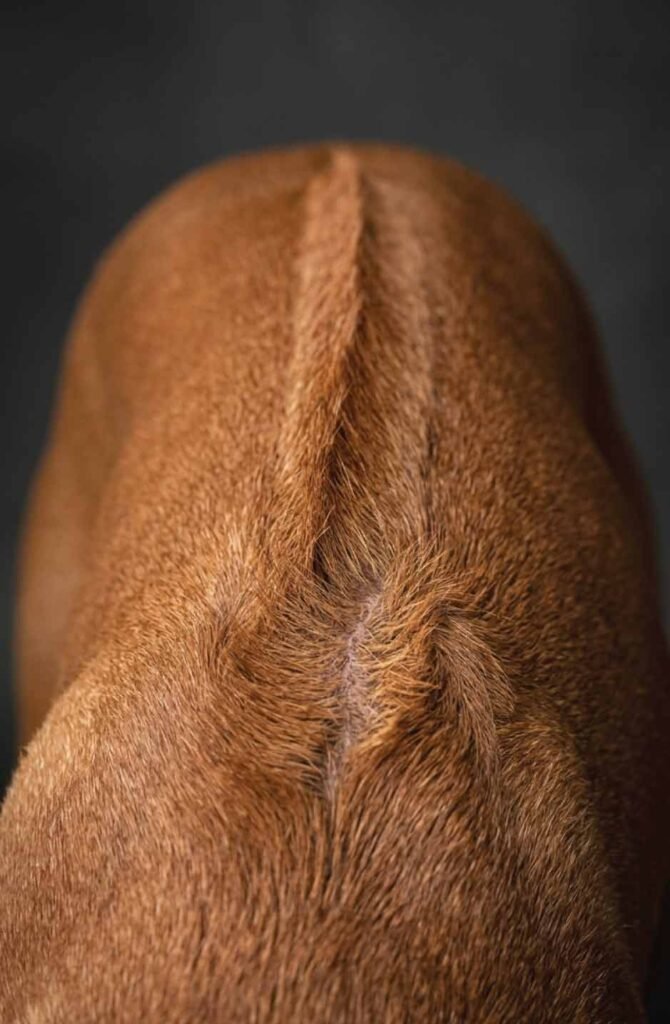
When a dog’s hair suddenly stands up along their spine, a phenomenon technically known as piloerection, many owners panic, assuming their dog has suddenly turned aggressive. Much like human goosebumps, raised hackles are an involuntary reflex of the sympathetic nervous system indicating sudden emotional arousal, which can be triggered by excitement, surprise, or intense curiosity just as easily as anger. Piloerection is an automatic adrenaline response that causes the tiny arrector pili muscles attached to each hair follicle to contract, making the dog look larger to potential threats. While raised hackles do not guarantee a bite is coming, they confirm that the dog’s nervous system is operating at peak capacity and requires careful environmental management to prevent sensory overload.
- Identify the Pattern: A thin, raised line of fur extending from the shoulders all the way to the base of the tail typically suggests high confidence and readiness to react.
- Don’t Panic During Play: If your dog raises their hackles while wrestling or chasing friends at the park, it is often just a harmless physiological byproduct of high-energy stimulation.
- Look for Disconnected Patches: Hair standing up in isolated patches exclusively on the shoulders and hips often indicates internal conflict, ambivalence, or acute fear of the unknown.
- Monitor Event Duration: If hackles remain elevated long after a stimulus has passed, the dog is experiencing chronic arousal and should be guided to a quiet, predictable space to decompress.
Analyze Weight Distribution and Body Posture
The physical distribution of your dog’s body weight across their paws serves as an accurate, immediate predictor of their next behavioral move. A dog leaning forward with their weight pressed into their front toes is displaying confidence, assertiveness, or an intention to approach, whereas a dog shifting their weight backward onto their haunches is actively preparing for flight or defensive retreat. A emotionally secure, relaxed dog moves with fluid, loose grace, often bending their spine into a soft “C” or “S” curve when greeting someone they adore. Conversely, a posture that suddenly becomes rigid, stiff, and “frozen” is a high-level alarm indicating that the animal’s coping mechanisms are exhausted, making an explosive fight-or-flight reaction imminent. For comprehensive guidance on managing severe postural reactivity and behavioral modification, consult the resources available through the ASPCA’s behavioral management database.
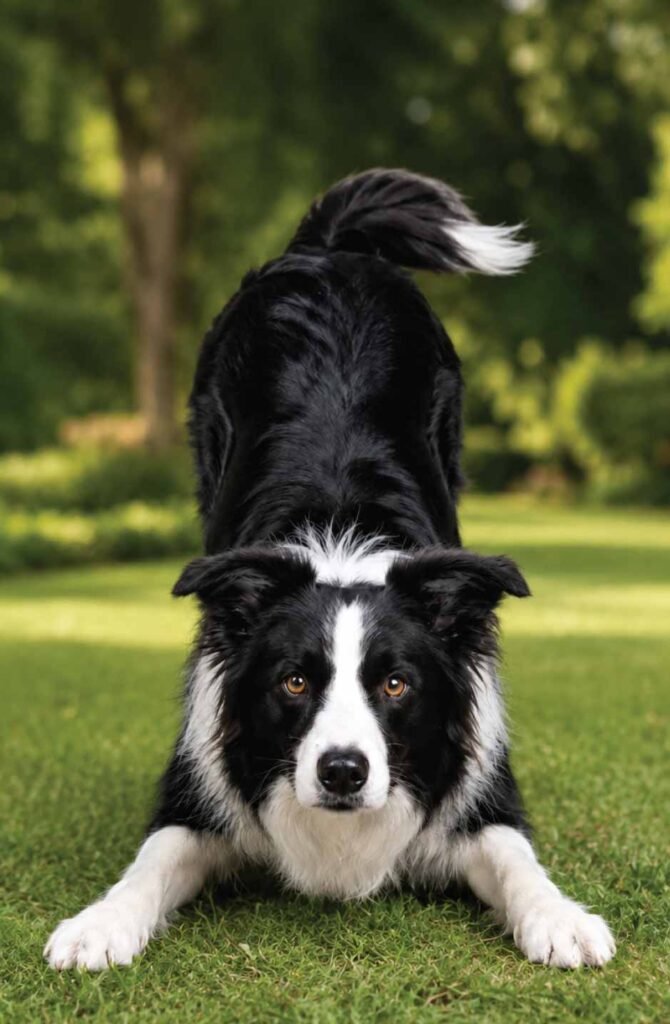
- Spot the Classic Play Bow: Front elbows resting on the ground while the rear end stays elevated is the universal “meta-signal” confirming that all subsequent roughhousing is purely a game.
- Identify “Cowering” Postures: A lowered, hunched body contour where the dog physically attempts to shrink toward the floor is an unmistakable display of submission, intimidation, or fear.
- Watch for “Standing Tall”: A dog standing rigidly on tiptoes with their legs braced straight and neck arched high is deliberately attempting to project size and dominance toward a rival.
- Recognize the “Shake-Off”: After surviving a tense or stimulating encounter, a dog will vigorously shake their entire body, as if drying off from a bath, to physically release trapped cortisol and reset their nervous system.
The Secret Sauce
1. The Left-Right Tail Wag
Your dog’s brain talks directly through their tail, and the direction of the wag reveals exactly how they feel. Because the left and right sides of the brain handle different emotions, the tail acts like a real-time mood tracker:
Wagging to the right: This is controlled by the left side of the brain, which processes positive, happy emotions. Dogs wag to the right when they see their owners or feel safe and relaxed.
Wagging to the left: This is controlled by the right side of the brain, which processes fear, anxiety, and caution. Dogs wag to the left when they see an intimidating stranger or a dominant dog.
The Slow-Mo Trick: This directional bias happens too fast for the human eye to catch in real-time, but recording your dog in slow motion on your phone will show you which side of their brain is doing the talking.
2. The Flat-Faced “Communication Gap”
Not all dogs are built the same, which means some breeds have a much harder time talking to other pets. Flat-faced dogs like Pugs, French Bulldogs, and Boxers face a unique challenge due to their physical traits:
The Accidental Stare: Their naturally big, bulging eyes, wrinkled faces, and high-set ears make them look permanently alert, tense, or aggressive to other dogs, even when they are perfectly happy.
The 50% Rule: Studies show that other dogs take nearly 50% longer to read a flat-faced dog’s intentions because they don’t have a traditional, wolf-like snout to show clear expressions.
Your Job: If you own a squishy-faced pup, you must act as their translator and protector at the dog park to make sure other dogs don’t mistake their natural face for a challenge or a threat.
3. The “N400” Brain Wave (They Know Real Words!)
Your dog isn’t just listening to the excited tone of your voice; they actually understand the exact meaning of the words you say. Recent brain-mapping studies have proven that dogs build real mental pictures of objects in their heads:
The Brain Surprise: Scientists discovered that dogs experience a spike of brain surprise, called the N400 effect, when a spoken word doesn’t match the object they see.
The Ball vs. Leash Test: If you say the word “ball” but hold up a leash, your dog’s brain immediately recognizes the mistake and tries to solve the puzzle.
The Big Takeaway: When you talk your dog through a stressful situation, they are using advanced brain power to connect your human words to their world, proving they really are listening to you.

Frequently Asked Questions about Dog Body Language
Rolling onto the back is not always an invitation for affection; it is frequently a submissive appeasement gesture meant to deflect a perceived threat. To tell the difference, you must evaluate muscle tension and facial cues. If your dog has a loose, wiggly body, a open, panting mouth, and relaxed paws, they are asking for a belly rub. However, if their limbs are stiffly frozen, their tail is tucked tightly between their legs, and they are lip-licking or avoiding eye contact, they are displaying an "appeasement roll" and asking for immediate physical space, not a petting session.
A raised front paw usually signals anticipation, uncertainty, or mild social conflict, rather than just a cute attempt to shake hands or point. While hunting breeds like English Pointers have been selectively bred to raise a paw to indicate game, everyday companion dogs typically do this when they are trying to assess a novel or confusing situation. If your dog lifts a paw while approaching a new object or another dog, their nervous system is pausing to ask, "What happens next, and is it safe?"
Leaning against your legs is almost never about dominance; it is typically a communication of deep affection, seeking emotional comfort, or requesting physical support. In unfamiliar or chaotic environments, anxious dogs frequently use their humans as a secure physical anchor to help regulate their stress levels. In relaxed home settings, a dog pressing their hip or ribcage against your shins is simply engaging in tactile bonding, similar to how humans hold hands or hug.
A head tilt is a sign of intense cognitive focus and auditory processing, helping your dog locate sound sources and clear their visual field. When you speak to your dog, they tilt their head to adjust the position of their outer ear flaps (pinnae), allowing them to pinpoint familiar words and distinct vocal tones. Additionally, because long muzzles can obstruct a dog's lower field of vision, tilting the head allows them to see your mouth and facial expressions clearly as you talk!
The "zoomies", scientifically known as Frenetic Random Activity Periods (FRAPs), are a biological mechanism used to discharge pent-up physical energy or acute physiological stress. While pet parents most often see these frantic, joyous bursts of running during play or after waking up, dogs also use FRAPs to decompress after surviving an uncomfortable event. If your dog starts sprinting in circles immediately after a bath, a nail trim, or a stressful veterinary visit, they are physically shaking off adrenaline and resetting their nervous system.
A leash severely restricts a dog’s natural ability to communicate using polite, curved approach paths, frequently triggering a stress response known as barrier frustration. In the wild, dogs rarely approach one another in a direct, head-on straight line; instead, they arc around each other to signal non-threat. Being tethered to a short leash forces them into direct frontal approaches while removing their option to flee, which can cause an otherwise friendly dog to default to defensive behaviors like barking, lunging, or snapping to create distance.
Prefer Audio? Listen to Dog Body Language
Conclusion: Becoming Fluent in Your Dog’s Silent Language
Mastering canine communication is not about memorizing a static checklist of isolated body parts; it is an ongoing, empathetic practice of observing the entire animal within their specific environment. When we commit to looking at the “whole dog”, combining ear tension, tail dynamics, facial musculature, and weight distribution, we remove the guesswork from our daily interactions and replace it with profound clarity. Every time you notice a subtle lip lick and step back to give your dog space, or recognize a frozen posture and gently redirect them away from a stressor, you make deposits into a lifelong bank account of trust.
By listening to your dog’s silent whispers today, you actively protect them from feeling the need to scream tomorrow, preventing accidental bites and fostering a deeply secure home environment. True fluency in “Dog” allows you to transition from being a mere caretaker to becoming your pet’s trusted ally, protector, and best friend. The next time your canine companion attempts to tell you how they feel, you will be fully equipped to listen, understand, and respond with the confidence of a seasoned expert.
Pin this for later! Save this visual guide to your favorite Pinterest pet care board so you can easily reference these crucial behavioral cues whenever you need a quick refresher.
If you want to dive even deeper into building a balanced, stress-free routine for your companion, learning how physical and mental stimulation intersect is the logical next step. Check out my guide on A Tired Dog is a Happy Dog? Finding the Balance to discover how to properly exercise your dog’s brain and body without triggering chronic overstimulation!