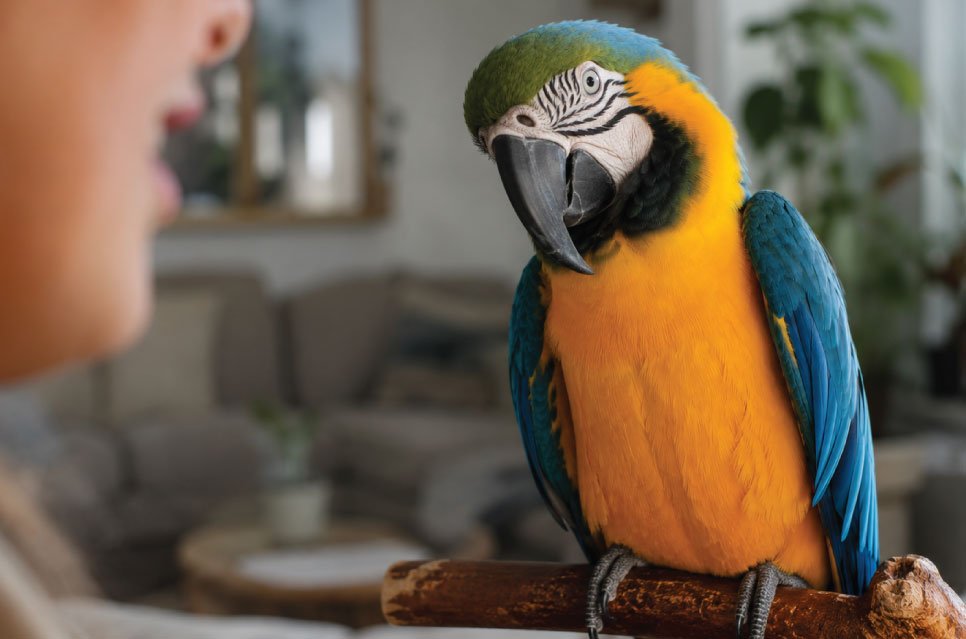
Quick Guide Does My Bird Recognize My Voice?
• Scientific Proof: Birds possess a unique auditory cognitive system that maps your vocal timbre, allowing them to identify you by your distinct acoustic footprint regardless of what you say.
• Emotional Sensitivity: Avian companions track vocal “prosody” (emotional pitch and rhythm), meaning they respond best to high-pitched, enthusiastic, infant-directed speech.
• Physical Tells: You can instantly confirm your bird recognizes your voice by watching for clear physiological signs like sudden pupil pinning, rhythmic head tilting, and soft beak grinding.
• Flock Integration: Single pet birds view human caregivers as their core flock, frequently adopting household appliance sounds or phrases as functional contact calls to bridge physical distance.
Ever find yourself chatting with your feathered friend about your morning routine, only to wonder if you’ve finally crossed the line into eccentric pet parent territory? The excellent news is that your bird isn’t just reacting to random noise; they genuinely recognize the unique acoustic signature of your voice. It is easy to feel like you are speaking to a beautiful, beautifully colored wall, but modern avian science confirms that bird auditory cognition is incredibly advanced.
This post delivers a breakdown of how your bird identifies you, the distinct behavioral signs that prove they are tuning in, and how you can use vocal bonding to improve their mental health. We are moving past the old myth of the mindless mimic to reveal the deeply analytical, highly social companion processing every syllable you speak.
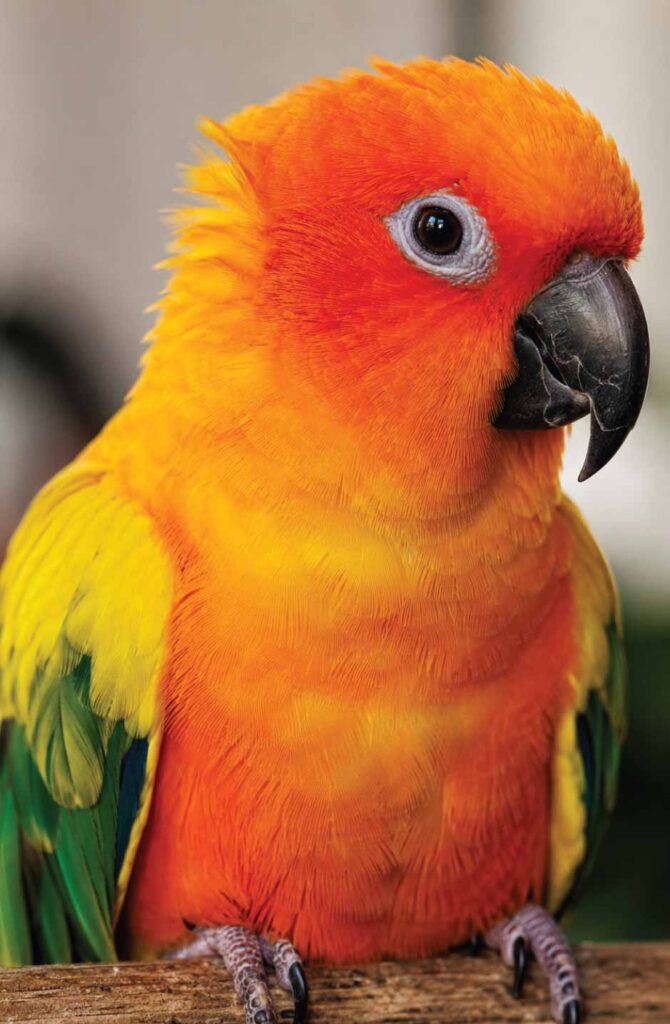
How Do Birds Recognize Individual Human Voices?
Research into avian behavior shows that parrots and other vocally flexible birds possess an underlying vocal recognition system that allows them to isolate individual human voice prints. Much like a human fingerprint, a voice print is a unique acoustic combination of frequency, rhythm, and vocal tract resonance that remains completely stable across different words. Avian researchers publishing studies through platforms like ScienceDirect have discovered that even when birds adapt their own calls dynamically, they easily categorize the permanent vocal traits of their human caretakers. This means your bird doesn’t just recognize a static word like “hello”; they recognize the complex harmonic structures produced uniquely by your vocal cords.
- Maintain a consistent vocal presence: Because birds rely heavily on vocal timbre, you do not need to worry about confusing them if you change your hair or wear bulky winter clothes; they will always know it is you the moment you speak.
- Acknowledge their subtle alerts: If your bird perks up, stops chewing a toy, or calls back the moment you speak from a completely different room, they have successfully tracked your precise voice print across the house.
Does Your Bird’s Eye Movement Prove They Are Listening?
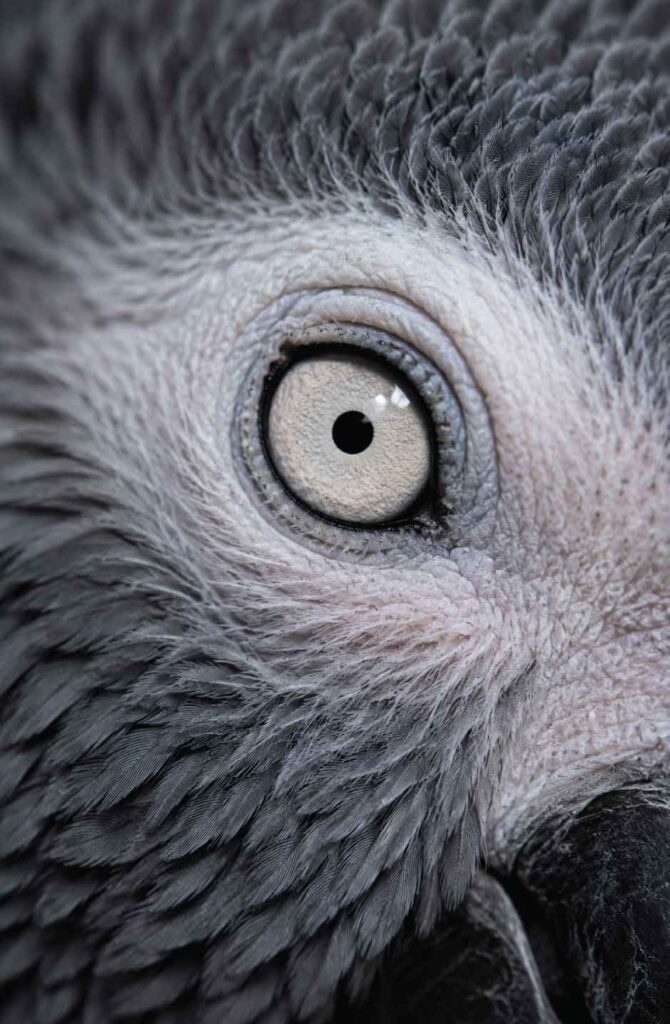
One of the most immediate physiological signs that your bird recognizes and is excited by your voice is pupil pinning, which is also commonly referred to as an iris flash. Birds possess unique voluntary control over the striated muscles inside their irises, allowing them to rapidly dilate and contract their pupils when processing interesting environmental stimuli. When this rapid clicking of the eye occurs alongside a relaxed body posture, it serves as a reliable indicator of intense curiosity, recognition, and pleasure upon hearing a favorite voice. It is their automatic physical way of focusing their undivided attention on the specific human caregiver they value most. To better interpret these ocular patterns alongside other physical signals, check out our comprehensive breakdown on Pet Bird Body Language Explained.
- Watch for the rapid eye flash: When you step up to the cage and speak, observe their eyes closely; quick, rhythmic pupil pinning paired with a slightly fluffed, calm posture is a massive vote of confidence.
- Distinguish excitement from overstimulation: Always remember that pupil pinning can also signal territorial defense or impending aggression, so verify that it is paired with happy signs like soft beak grinding or low chattering rather than a slicked-down, defensive posture.
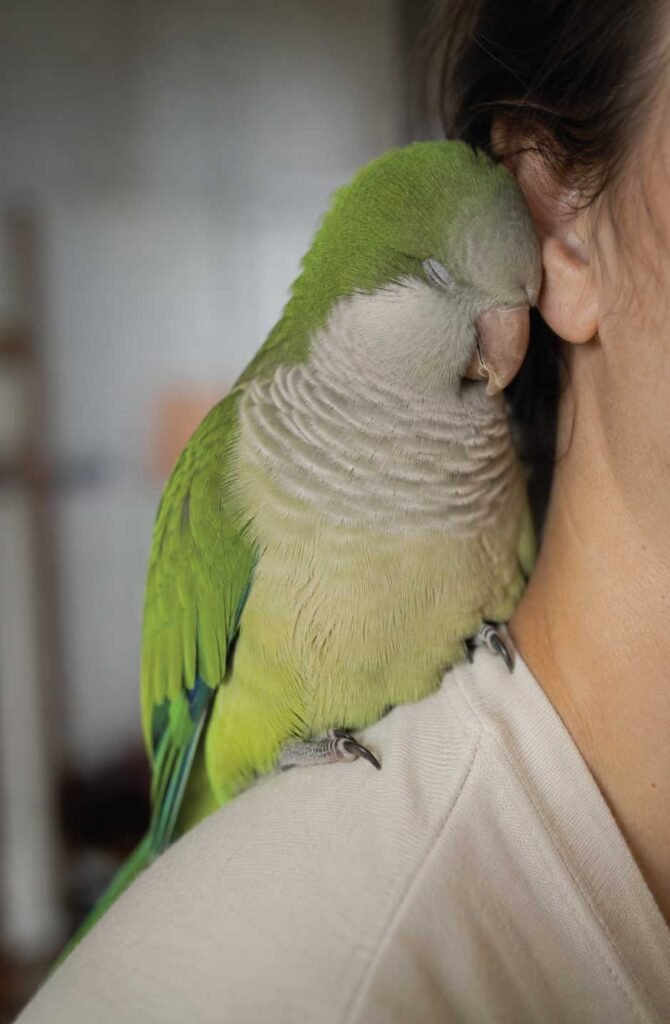
Why Does “Baby Talk” Work So Well on Birds?
Avian species are incredibly sensitive to vocal prosody, the exact emotional pitch, rhythm, and melodic volume of your speech, rather than just the literal vocabulary words you use. Controlled cognitive experiments published via Nature demonstrate that birds prioritize these emotional acoustic cues over structural syntax, often responding far more intensely to vocal delivery than humans do. High-pitched, enthusiastic “baby talk” is highly effective because companion birds naturally associate these varied, non-threatening tones with safety, close social bonding, and flock security. This mirrors infant-directed speech in humans, triggering a positive neurological response that boosts their focused attention span and accelerates vocal learning. If you are eager to turn this enthusiastic tone into actual words, look over our practical guide on How to Teach Your Pet Bird to Talk.
- Embrace the silly tones: Using an exaggerated, melodic, high-pitched “parrot voice” is not just silly fun; it is a scientifically backed tool for building deep structural trust with a timid bird.
- Eliminate flat or harsh tones: Low-pitched, flat, or stern commands are frequently interpreted by sensitive birds as environmental threats or emotional boundaries, which can cause them to socially withdraw or hide.
Is Your Bird Actually Labeling You with a Spoken Name?
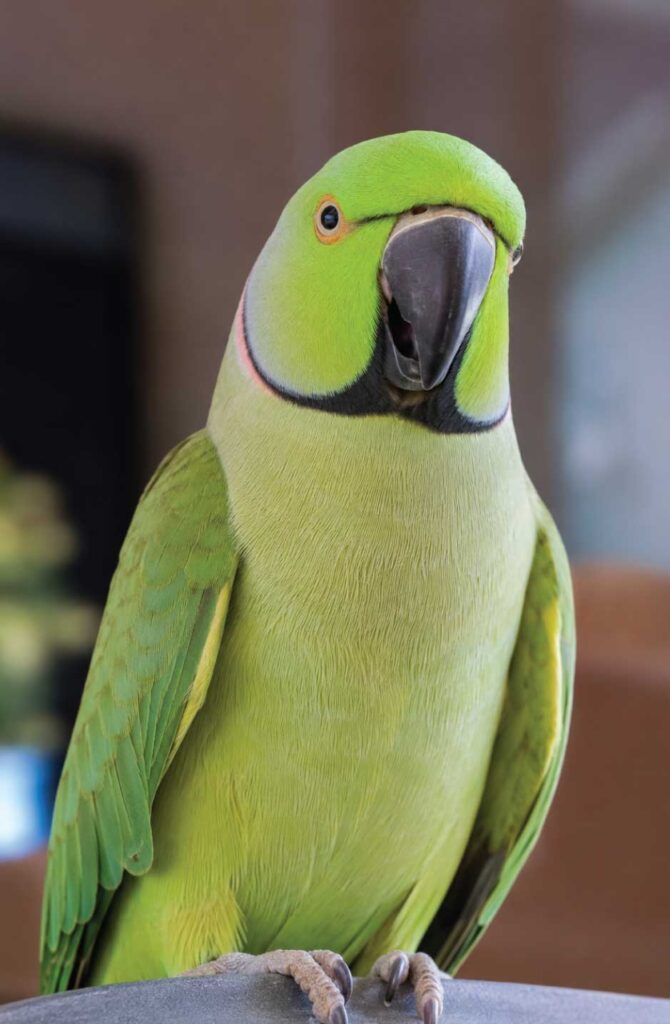
Recent scientific studies suggest that companion parrots are not merely mimicking random household sounds; they frequently use specific human names with intentional, functional context. In extensive observations of companion parrots, researchers noted that birds consistently deploy human names to grab the attention of a specific person in the house. Remarkably, some birds even vocalize the specific names of family members who are entirely out of sight, suggesting a high level of mental mapping and symbolic representation of their human flock. This confirms that their vocalizations are often highly targeted labels chosen deliberately to initiate communication with a specific person.
- Track the environmental context: Pay close attention to the exact moments your bird states your name; if they use it precisely as you step through the front door or when they want a treat, they are using it as a functional label for you.
- Reinforce functional communication: Always respond consistently and interact with your bird when they use the correct name for you or an object, as this reinforces their understanding that specific sounds carry real-world power.
Why Do Birds Mimic Microwaves, Phones, and Beeps?
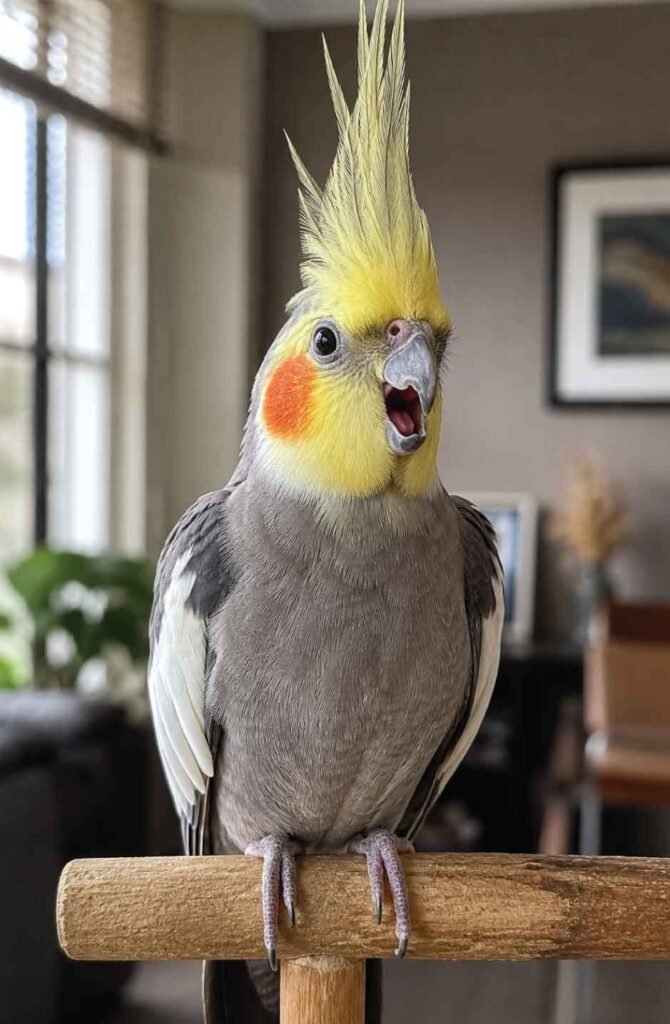
If your bird constantly mimics the ringtone of your phone or the high-pitched beep of your kitchen microwave, they are not trying to be annoying, they are trying to join the family circle. In their wild habitats, parrots utilize continuous, localized vocalizations known as contact calls to maintain group cohesion when flying through dense canopies. A single pet bird living in a human household views their human caretakers as their primary flock and will quickly adopt standard household noises that get an immediate human response as their personal contact call. They notice that when the phone rings, you instantly run to pick it up, so they replicate that exact sound to make you run directly to them. If these contact calls have escalated into disruptive behavior, dive into our troubleshooting steps on Why Is My Bird Suddenly Screaming?.
- Decode the underlying motivation: Understand that repetitive, high-frequency household sound mimicry is your bird’s instinctual method of staying connected to you when you are out of their direct line of sight.
- Swap out screaming for better phrases: If your bird screams loudly for attention, completely ignore the harsh noise and only reward them with your physical presence when they use a softer “bridge” sound, such as a melodious whistle or a specific spoken phrase.
What Does the Classic Avian Head Tilt Mean?
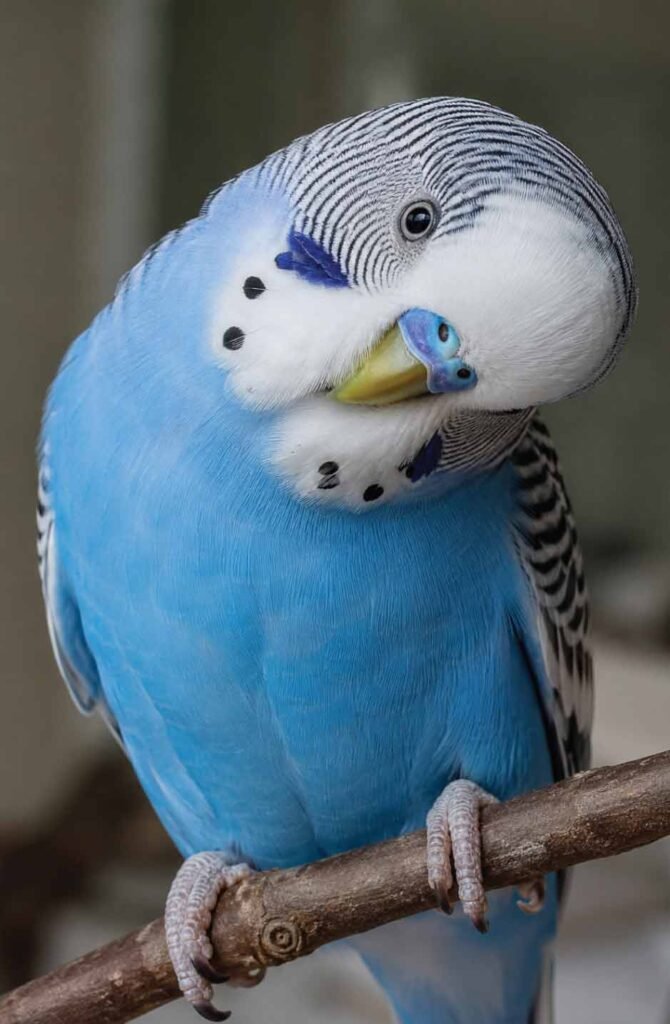
When a bird tilts its head sideways or nods rhythmically while you are speaking, they are deploying a highly sophisticated auditory focusing mechanism to process your voice print. The avian brain features highly organized, specialized auditory processing zones, such as Field L, which act as the main gateway for incoming acoustic signals. The distinct head tilt allows your bird to align their ears perfectly to the sound source, proving that they are actively auditing your voice and analyzing the microscopic nuances of your speech. It stands as a clear indicator of profound cognitive engagement, showing that they view you as a highly significant social partner.
- Keep the conversation going: If your bird tilts their head and locks eyes with you while you chat, keep talking because they are in an active processing state and are absorbing your vocal timbre.
- Pair your voice with soft expressions: Always match your soothing vocal cues with relaxed, happy facial expressions, as many advanced bird species possess the cognitive ability to recognize individual human faces alongside distinct voices.
The Secret Sauce
The Schroeder Tone Advantage
Birds possess an extraordinary physiological sensitivity to temporal fine structure, allowing them to perceive microsecond-level fluctuations in sound waves that are completely imperceptible to human ears. While our human ears simply process a clean, uniform whistle, a bird hears a complex, textured landscape of rapid phase variations. This hyper-advanced acoustic processing capability means they can effortlessly differentiate between two family members with incredibly similar spoken voices because they are literally hearing the microscopic texture of your individual vocal cords.
The “Vocal Keyboard” Architecture
Unlike standard songbirds, vocally flexible parrots possess a specialized, highly evolved lateral brain region known as the acoustic area structures (or AAC shell) that functions similarly to a musical vocal keyboard. Specific neural clusters within this advanced brain framework correspond directly to individual consonant and vowel variations across an expansive vocal register. Because of this unique keyboard setup, your parrot is not just passively echoing your voice; they are actively typing out specific sounds using a specialized neural highway that mirrors how humans structurally encode speech.
Left-Brain Processing for Family Voices
Neurological mapping of the avian brain reveals that the caudomedial nidopallium (NCM), the avian equivalent of the human auditory cortex, exhibits distinct left-sided hemispheric dominance specifically when processing familiar “tutor” voices. In a companion pet environment, you are the primary vocal tutor for your bird. This means your unique voice print is processed inside a specialized, dedicated memory center of their brain, completely separated from how they filter out random, irrelevant environmental noises like traffic or televisions.
Frequently Asked Questions About Does My Bird Recognize My Voice?
Most pet birds will begin to recognize and mentally map your distinct voice print within two to four weeks of consistent, daily vocal interaction. While highly social or young birds might tune into your acoustic signature within days, older rehomed birds or timid species may take a bit longer as they work to associate your vocalizations with safety, comfort, and fresh food.
Many advanced parrot species can easily recognize their owner's voice through electronic speakers, though digital audio compression can sometimes dilute the subtle vocal textures they naturally rely on. If your bird is deeply bonded to your real-life acoustic footprint, hearing a flattened digital version through a smartphone might cause temporary confusion before they successfully piece together your familiar rhythm and prosody.
Avian species possess exceptional long-term acoustic memory, meaning your bird will easily recognize your unique voice print even after months or years of physical separation. Because wild flock dynamics require birds to remember individual contact calls for survival, your pet’s brain is biologically wired to store your vocal signature permanently, allowing them to instantly recognize you the moment you speak upon your return.
Visually impaired or completely blind birds adapt remarkably well to sensory loss by relying almost exclusively on your voice print as their primary psychological safety net. Because their internal auditory processing centers are so highly sophisticated, regular verbal check-ins from you replace visual tracking, helping them navigate their cage boundaries safely while maintaining deep emotional flock cohesion.
Altering your language, adopting a new accent, or switching up your vocabulary will not confuse your bird because they identify you by the physical resonance of your vocal tract rather than human linguistics. Even if you completely change the words you are saying, the permanent, underlying harmonic baseline of your individual vocal cords remains instantly identifiable to their advanced auditory filters.
Birds are incredibly sharp masters of contextual awareness and can easily differentiate when your voice is directed at them by analyzing your physical gaze, body orientation, and subtle shifts in your pitch. They quickly learn to tune out your casual, lower-pitched human-to-human conversational tones, but they will instantly switch into an alert, engaged state the moment you look at them and transition into your high-pitched flock leader voice.
Prefer Audio? Listen to Does My Bird Recognize My Voice
Bringing the Avian Bond Home
Your bird does not merely hear background noise when you speak; they actively recognize the unique timbre of your voice print, connect your spoken name to your physical face, and use your vocal presence as an absolute psychological safety net. By intentionally leaning into high-pitched, melodic vocal prosody and acknowledging their subtle body language cues, you are speaking their language fluently, even if you are just reading them your weekly grocery list.
Pin this for later! Also, to ensure your bird’s home environment remains perfectly secure and optimized for health while you build this vocal connection, take a look at our crucial guide on 5 Bird Cage Mistakes That Are Making Your Pet Bird Sick.