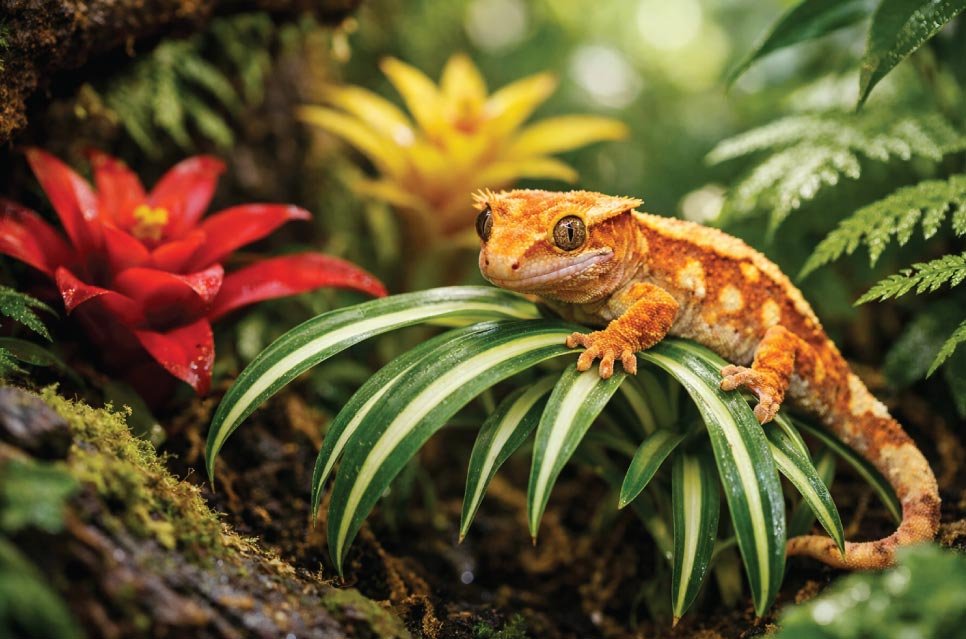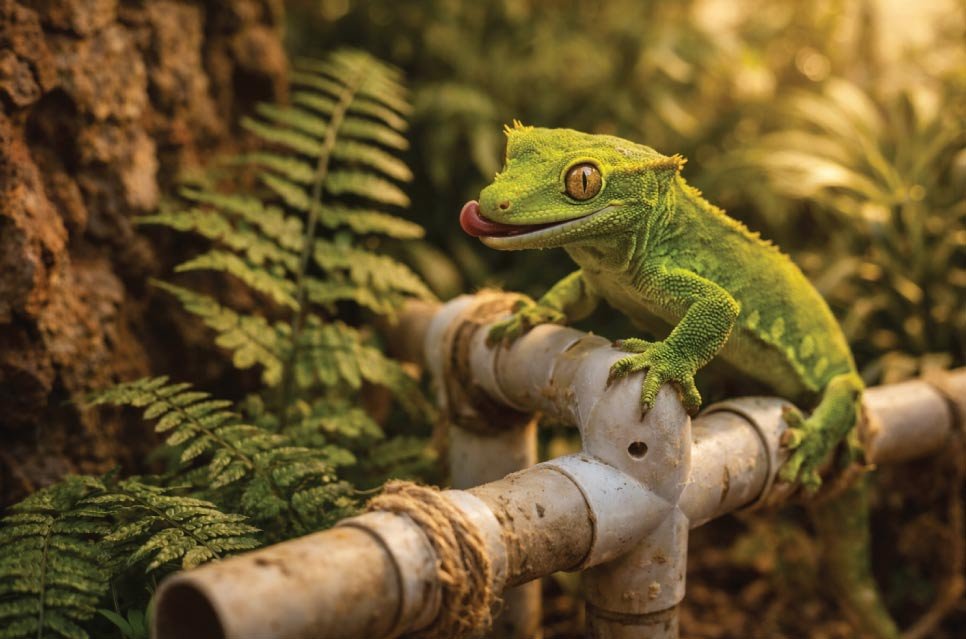

Quick Guide: Crested Gecko Care
- Verticality is Non-Negotiable: Adults need a tall enclosure (ideally 18x18x36 inches) to prevent Floppy Tail Syndrome and support their natural climbing instincts.
- Master the Humidity Cycle: Aim for 60-80% humidity through misting, but you must allow a daytime drying period (40-50%) to prevent lethal respiratory infections and mold.
- Commercial Diet is the Staple: Use high-quality powdered diets (CGD) like Pangea or Repashy; avoid homemade fruit purees which lead to Metabolic Bone Disease.
- Temperature “Safe Zone”: Keep your gecko between 72-78°F; temperatures consistently above 85°F are often fatal due to heat stroke.
You’ve likely seen those adorable “eyelash” faces on Pinterest and thought, I need a tiny dragon in my life. But then the care sheet rabbit hole happens, and suddenly you’re drowning in conflicting advice about heat mats, UV bulbs, and whether or not a mashed banana is a death sentence. If you’re feeling overwhelmed by the sheer volume of conflicting opinions, take a deep breath, you are exactly where you need to be. Most gecko content online is 80% fluff and 20% useful info, but we’re flipping that script today.
This guide is built for the busy pet parent who wants a thriving, “fired-up” gecko without the guesswork or the clinical boredom of a textbook. We’re skipping the general history and getting straight to the actionable steps that keep your gecko climbing, jumping, and living its best 20-year life.

Why Your Gecko Needs a “Skyscraper,” Not a Ranch
Crested geckos are obligate arboreal lizards, meaning their entire anatomy, from their sticky toe pads (setae) to their prehensile tails, is structurally designed for vertical movement. Housing an adult gecko in a short, horizontal tank is the equivalent of forcing a world-class rock climber to live out their life inside a cramped crawlspace. Beyond just causing daily psychological stress, a lack of vertical structure and horizontal resting perches is the primary cause of Floppy Tail Syndrome (FTS). FTS is a preventable condition where the tail flops heavily over the back or side when the gecko hangs upside down, eventually twisting and deforming the pelvis. To avoid structural mistakes early on, checking out a comprehensive guide like Reptile Habitat Setup: Essentials Every Pet Owner Needs will ensure your climbing elements are safely configured.
- Go Big or Go Home: Upgrade your adult gecko to a minimum 18″ x 18″ x 36″ vertical glass enclosure to allow for natural leaping, hunting, and proper muscle tone.
- The “Two-Thirds” Rule: Ensure the upper two-thirds of the tank are densely cluttered with branches, cork bark, vines, and broad leaves to provide necessary security.
- Horizontal is Healthy: Provide plenty of horizontal perches at various heights so your gecko can rest flat without gravity pulling its tail into a permanent 90-degree deformity.
Baby Steps: Keep small hatchlings under 12 grams in smaller 6-quart tubs or 12x12x12 enclosures so they do not get lost and fail to find their food bowl.
The “Room Temperature” Trap and Proper Heating
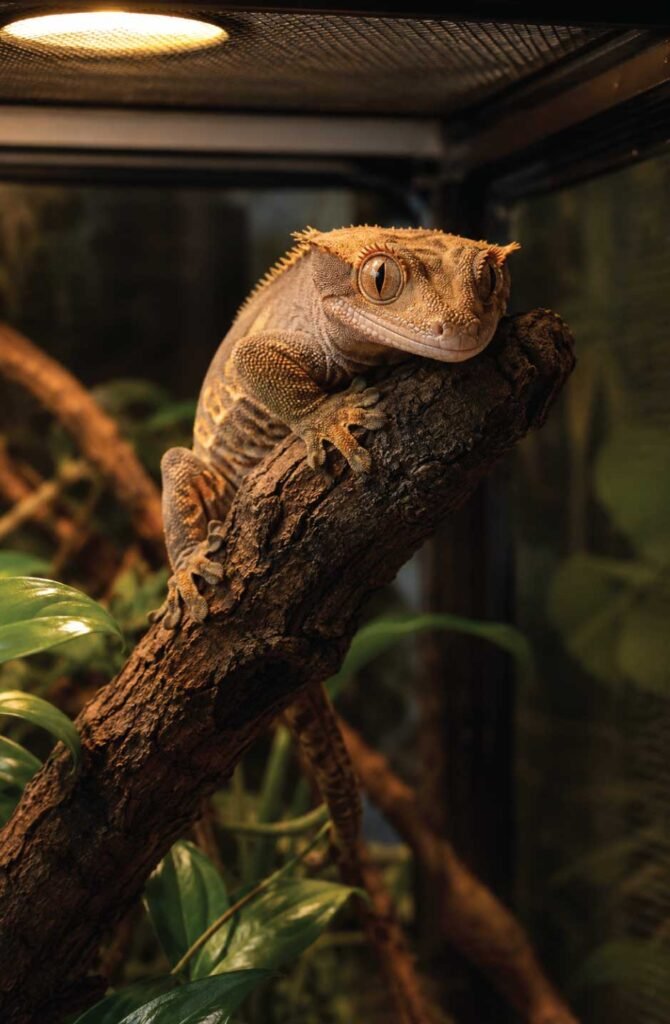
One of the most dangerous myths in the reptile hobby is that crested geckos do not need supplemental heat because they like standard “room temperature.” While it is true they are highly heat-sensitive, they are still ectotherms that require a subtle thermal gradient to properly digest their food and support their immune systems. Relying solely on your home’s ambient winter temperature prevents the gecko from micro-basking to jumpstart its metabolism, which frequently leads to lethargy and a poor appetite. Over-reliance on room conditions is a frequent pitfall, and reviewing the Top Reptile Habitat Mistakes Beginners Make (and How to Avoid Them) can help you avoid setting up an accidental cold zone.
- Establish the Gradient: Use a low-wattage overhead heat source (like a mini ceramic heat emitter or a deep heat projector connected to a thermostat) to create a warm zone of 80–82°F at the top of the tank.
- The Bottom Line: Keep the bottom floor of the enclosure at a cool 70–74°F so your gecko can self-regulate and escape the warmth when needed.
- Watch the Ceiling: Never allow the enclosure temperatures to exceed 85°F; prolonged exposure to high heat is a fast track to fatal heat stroke for this species.
- Nightly Reset: Allow a natural temperature drop down to 65–72°F at night to accurately mimic their natural New Caledonian environment.
Mastering the “Wet-Dry” Humidity Rhythm
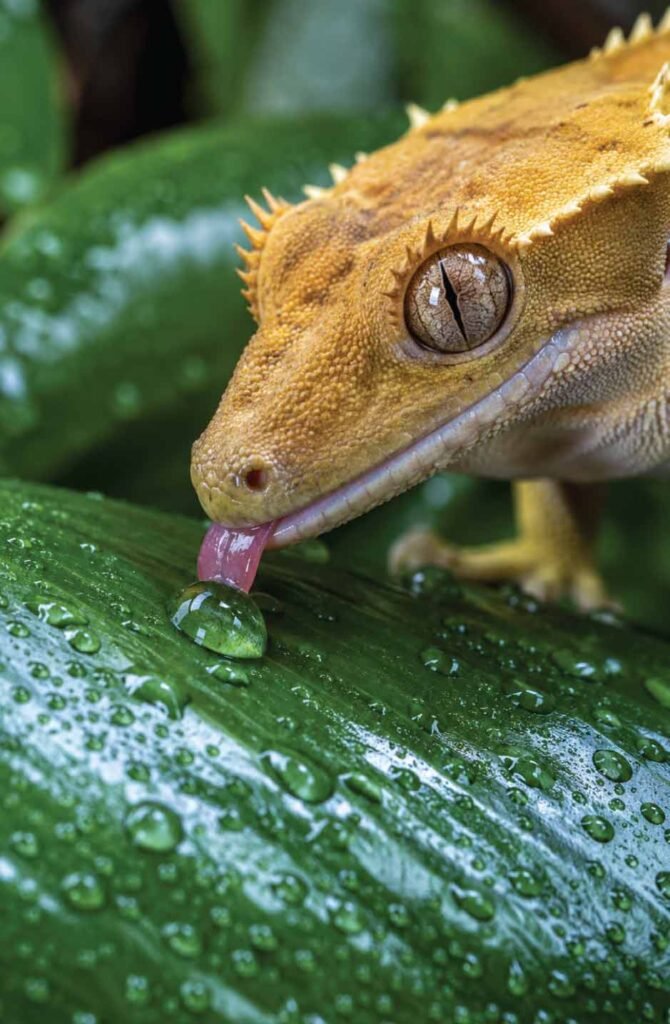
New owners often think “tropical” means the enclosure should remain a permanent, dripping swamp, but constant saturation is a recipe for medical disaster. Perpetually wet environments harbor dangerous mold, mildew, and stagnant bacteria that quickly lead to belly rot and life-threatening respiratory infections. Your gecko relies heavily on a distinct daily humidity cycle, a sharp evening spike for hydration followed by a mandatory daytime dry-down period that keeps the air fresh. For a deeper look at how atmospheric conditions impact reptile anatomy, you can research the structural mechanics of How Do Reptiles Breathe? to understand how sensitive their lungs are to airborne mold.
- The Evening Spike: Mist heavily in the evening to raise humidity to 80–100%, encouraging your gecko to drink fresh water droplets off leaves as it wakes up.
- The Daily Dry-Down: Ensure the enclosure dries out naturally to roughly 40–50% during the daytime to prevent harmful bacterial growth on surfaces.
- Check the Air: If your tank stays wet or fogged for more than 24 hours straight, you need to increase your ventilation immediately by utilizing a screen top.
- Hygrometer Accuracy: Ditch the cheap analog plastic sticker gauges; always use a digital probe hygrometer to monitor these moisture shifts accurately.
Avoiding the “MBD” Nutritional Disaster
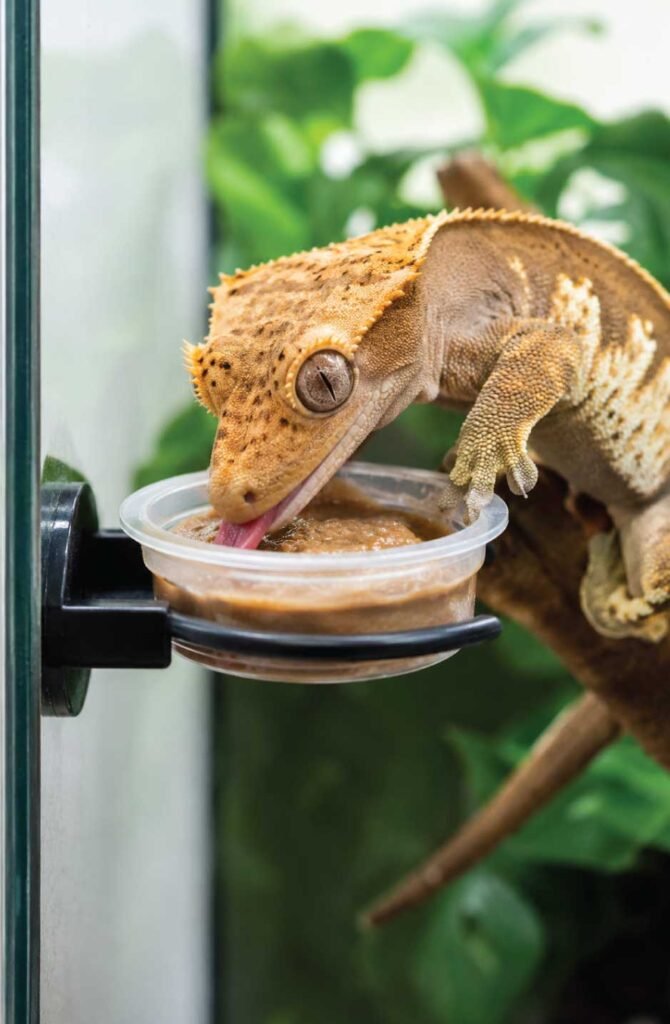
Metabolic Bone Disease (MBD) is a heartbreaking, and entirely preventable, condition where a gecko’s body strips calcium from its own bones because its dietary intake is unbalanced. Feeding your gecko raw fruit purees, baby food, or unsupplemented insects is the fastest way to cause soft jaws, kinked spines, trembling legs, and fatal seizures. Modern commercial diets have completely solved this complex nutritional puzzle, so there is zero reason to freestyle your gecko’s daily food plan. According to clinical guidelines from the Association of Reptilian and Amphibian Veterinarians (ARAV), feeding a standardized complete diet is the single most effective way to eliminate nutritional metabolic issues in captive reptiles.
- Choose the Pro Stuff: Use complete powdered diets like Pangea or Repashy as the 90% staple; these are scientifically balanced with the correct calcium-to-phosphorus ratios.
- The 2:1 Golden Ratio: If you choose to offer live insects for enrichment, they must be gut-loaded with nutritious greens first and dusted thoroughly with calcium powder.
- Ban the Raw Banana: Never feed plain raw bananas to your gecko; their 1:12 calcium-to-phosphorus ratio actively blocks calcium absorption in the gut.
- Monitor the Signs: Watch closely for “rubber jaw,” a jerky or uncoordinated swimming gait, or twitching toes, which serve as emergency signals of advanced MBD.
UVB: The “Invisible” Insurance Policy
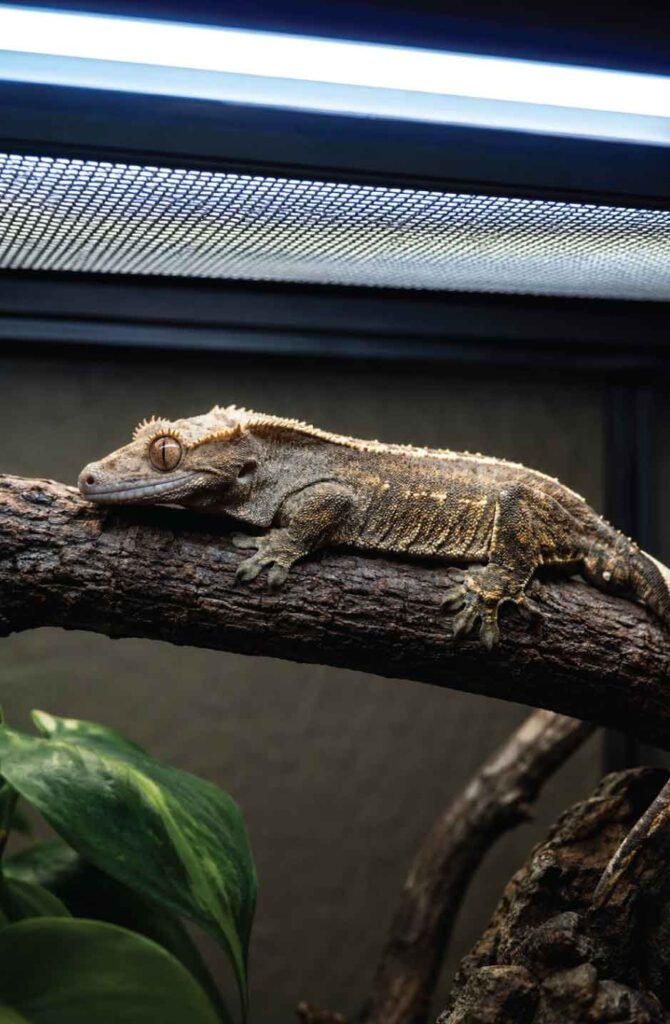
While older care guides claim that crested geckos do not need ultraviolet light because they are nocturnal, modern veterinary science has proven that low-level UV exposure significantly boosts long-term health. UVB light allows your gecko to naturally synthesize Vitamin D3, which is the internal chemical key that unlocks calcium absorption in their digestive tract. Even though they are active primarily at night, they utilize a behavior called “cryptic basking” during the day, exposing just a foot or tail to the light while keeping the rest of their body hidden. As noted in the comprehensive ReptiFiles Crested Gecko Care Guide, adding low-level UV lighting helps stabilize calcium synthesis and mirrors natural outdoor exposure.
- Ferguson Zone 1: Use a low-output linear T5 UVB bulb (2% to 7%), such as the Arcadia ShadeDweller, positioned securely over the top mesh screen.
- Linear is Leader: Avoid compact “coil” or compact bulbs, which often emit highly inconsistent output and can be too intensely focused or too weak.
- Expiration Dates: Replace your linear UVB bulb every 6–12 months; UVB bulbs will continue to emit visible light long after the therapeutic UV rays have stopped working.
- Glass Blocks Everything: Never place your tank in front of a windowpane as a substitute for a bulb, since standard glass filters out 100% of useful UVB rays.
The Art of the “Hand-Walk” (and Tail Drop Fear)
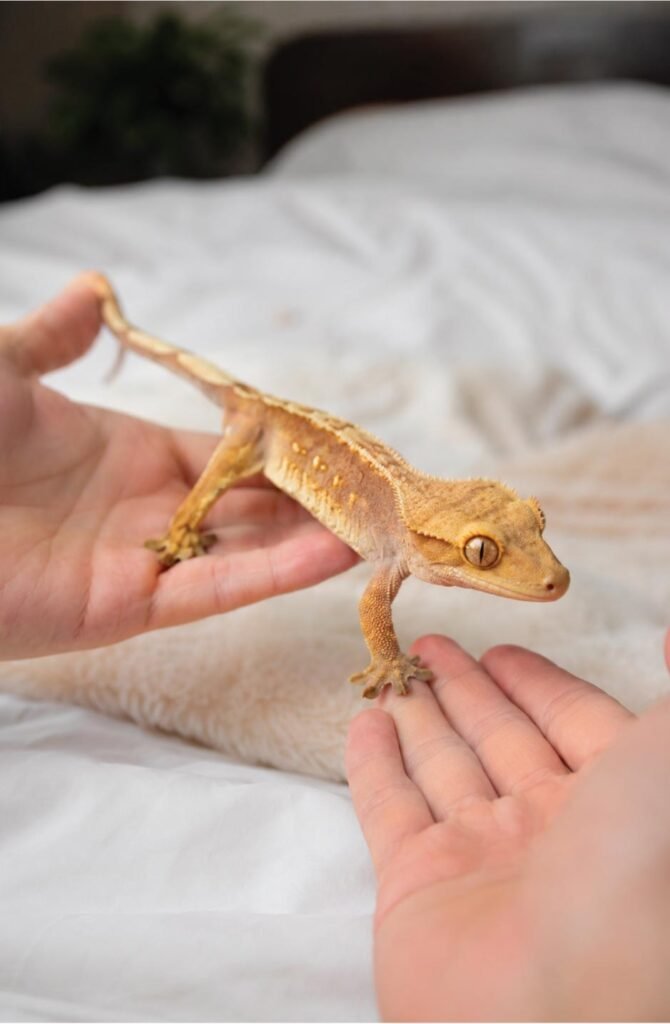
Crested geckos are generally docile creatures, but they are also impulsive “leap-of-faith” jumpers who do not comprehend the concept of a 4-foot drop to a hardwood floor. The most common handling mistake beginners make is grabbing the gecko tightly over its back, which instantly triggers their predator-panic response and causes them to drop their tail. Unlike many other common lizards, once a crested gecko drops its tail, it stays gone forever, leaving them with a distinct look affectionately known as a “frog butt.” To build a confident, stress-free relationship during socialization sessions, you can read our guide on Handling and Taming a Reptile: Tips for Building a Lasting Connection.
- The Treadmill Technique: Use the “hand-walking” method, as the gecko moves off one hand, place your alternate hand directly in front of it to create a never-ending bridge.
- Two-Week Timeout: Leave a newly arrived gecko completely alone for at least 14 days to acclimate to its environment before you attempt to touch it.
- Stay Low: Always handle your gecko while sitting over a soft surface (like a bed or couch) to provide a safe landing for those inevitable leaps of faith.
- Tail Safety: Never grab, pinch, or apply pressure to the tail; it is a voluntary detachment mechanism they use to escape what they perceive as a predator.
The Secret Sauce: Expert-Level Gecko Hacks
Checking the “Calcium Savings Account”
Did you know geckos have built-in calcium reservoirs that you can check visually? You can actually see how healthy your gecko’s mineral levels are by looking at the “endolymphatic sacs” located on the roof of their mouth. If these bright white sacs look plump, your gecko is nutritionally secure; if they are flat, deflated, or completely invisible, you are dealing with a nutritional emergency that requires immediate calcium correction.
The “Fired Up” Mood Ring
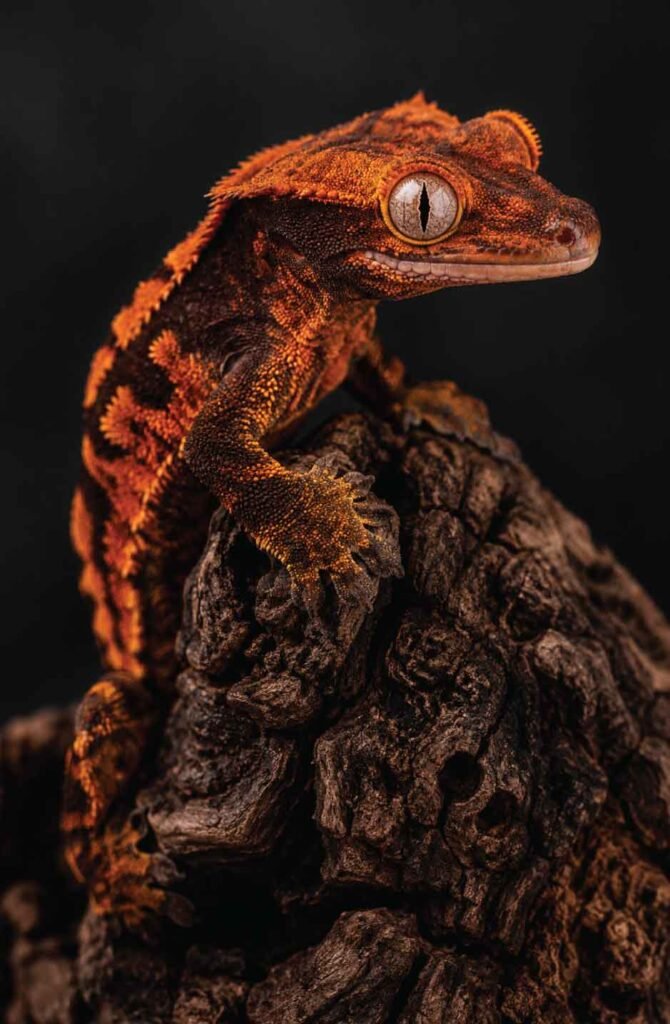
Your gecko’s body color isn’t static, it changes based on humidity shifts, activity levels, and physical excitement. When a gecko “fires up,” its skin colors become incredibly dark, intense, and vibrant; when it’s “fired down” while sleeping, it looks pale and ghostly. If your gecko stays completely fired up 24/7 without a break, it might actually be a primary sign of chronic environmental stress or poor tank conditions.
The 20-Minute “Sauna” for Stuck Shed
If you see crusty old skin stuck on your gecko’s tiny toes, do not attempt to pull it off, as you can easily rip the delicate new skin underneath. Instead, place your gecko inside a ventilated plastic deli container lined with lukewarm, soaking-wet paper towels for exactly 20 minutes. This temporary high-humidity “sauna” softens the stubborn skin, letting you gently slide it off with a soft cotton swab and saving your gecko from losing a toe to blood constriction.
Frequently Asked Questions About Crested Gecko Care
Crested geckos are strictly solitary animals and should always be housed individually to prevent territorial fighting, severe injuries, and chronic stress. While new keepers often mistake two geckos sitting together as "snuggling," they are actually competing directly for resources like the best basking branch or hiding spot. Even females housed together can suddenly turn aggressive after years of peaceful cohabitation.
You can typically determine your gecko's sex once they reach around 15 to 25 grams, which usually happens between 6 to 12 months of age. Males will develop a highly visible, prominent swelling at the base of their tail known as a hemipenal bulge, along with a distinct row of preanal pores between their hind legs. Females lack this large bulge and will remain completely flat in that area.
Yes, these little reptiles are surprisingly vocal and are capable of producing soft chirps, squeaks, or even tiny raspy growls. Geckos typically chirp or vocalize to express annoyance when they want to be left alone, to communicate with potential mates during the breeding season, or to defend their immediate space. If your gecko squeaks at you during handling, it is a clear sign they are feeling stressed and need a break.
Finding your gecko snacking on its own skin can be jarring, but it is completely normal, healthy reptile behavior. Geckos eat their shed skin to recycle vital minerals like calcium and protein while simultaneously erasing any scent trails that could reveal their hiding spot to predators. They usually do this late at night, which is why owners rarely catch them in the act.
Mature female crested geckos can lay infertile "dud" eggs every few weeks during the spring and summer months without ever being paired with a male. This is a perfectly natural biological process similar to a chicken laying eggs. Simply remove the infertile eggs from the substrate and throw them away, but make sure to slightly increase her dietary calcium to replace what she lost while forming the shells.
Loose substrate like a damp coconut fiber and organic topsoil blend is perfectly safe for healthy adult geckos, provided your heating and hydration setups are correct. Gut impaction is almost never caused by the dirt itself, but rather by poor overall husbandry, like low enclosure temperatures or chronic dehydration, that causes the gecko's digestive tract to slow down and fail to pass accidentally swallowed particles. If you are worried or are raising a tiny juvenile, stick to safe paper towels instead.
Prefer Audio? Listen Crested Gecko Care
Setting Your Tiny Dragon Up for Success
Caring for a crested gecko doesn’t have to turn into a stressful second full-time job. By focusing your setup on ample vertical space, a high-quality commercial powdered diet, and a proper wet-dry humidity cycle, you’re successfully covering 90% of what it takes to raise a happy pet. Remember that they aren’t dogs; they won’t love you or wag a tail, but they will learn to trust that you are a safe, warm bridge that provides the good bugs.
Pin this for later!
If you found this care layout helpful, you’ll definitely want to check out my practical deep dive next: Top Reptile Habitat Mistakes Beginners Make (and How to Avoid Them).