Quick Guide: The Non-Negotiable Facts of Reptile UVB Lighting
- UVB is an invisible lifeline: Your reptile uses it to synthesize Vitamin D3 and absorb calcium, preventing fatal bone diseases.
- Linear tubes beat coils: T5 High Output (HO) fluorescent tubes create a safe, wide basking gradient; compact coil bulbs are unreliable and can cause eye damage.
- Mesh screens steal rays: Standard terrarium lids filter out 30% to 50% of UVB output, meaning you often need to mount the bulb inside or upgrade its strength.
- Bulbs die before they burn out: The phosphor coating degrades invisibly, requiring you to replace bulbs every 6 to 12 months even if they still emit bright visible light.
If you are staring at a wall of reptile lights feeling completely overwhelmed, take a deep breath because you are not alone. The pet store lighting aisle is a confusing mess of watts, percentages, coils, and technical acronyms that look more like algebra than pet care. But getting your UVB lighting right is the single most important decision you will make for your reptile’s long-term health. We are skipping the dense, textbook biology lectures today to focus purely on what works. Instead, you are getting a fast, practical breakdown of exactly what UVB does, which bulb to buy, and how to set it up safely.
“Sun in a Box” and the Threat of Metabolic Bone Disease
Providing UVB isn’t just about mimicking nature for aesthetic reasons; it is a literal metabolic requirement for survival. Without UVB light, most diurnal (day-active) reptiles cannot naturally produce Vitamin D3, meaning they cannot absorb calcium from their food. When a reptile’s blood calcium drops, their body aggressively steals calcium from their own skeleton to keep their heart beating. This painful, crippling condition is called Metabolic Bone Disease (MBD), and it is entirely preventable with the right lighting setup.
To build a solid foundation against MBD, follow these practical steps:
- Prioritize lighting over aesthetics: A beautiful enclosure means nothing if the lighting is wrong. Prioritize high-quality lighting fixtures before investing in expensive décor.
- Pair lighting with proper nutrition: UVB light works in tandem with calcium powder. You must dust your feeder insects or salads to give the UVB something to work with, a process vital to Reptile Health: Tips for Maintaining their Best Care.
- Watch for early warning signs: Tremors in the toes, a soft jawbone, or lethargy are massive red flags that your current UVB setup is failing.
The Great Bulb Debate: Linear Tubes vs. Compact Coils
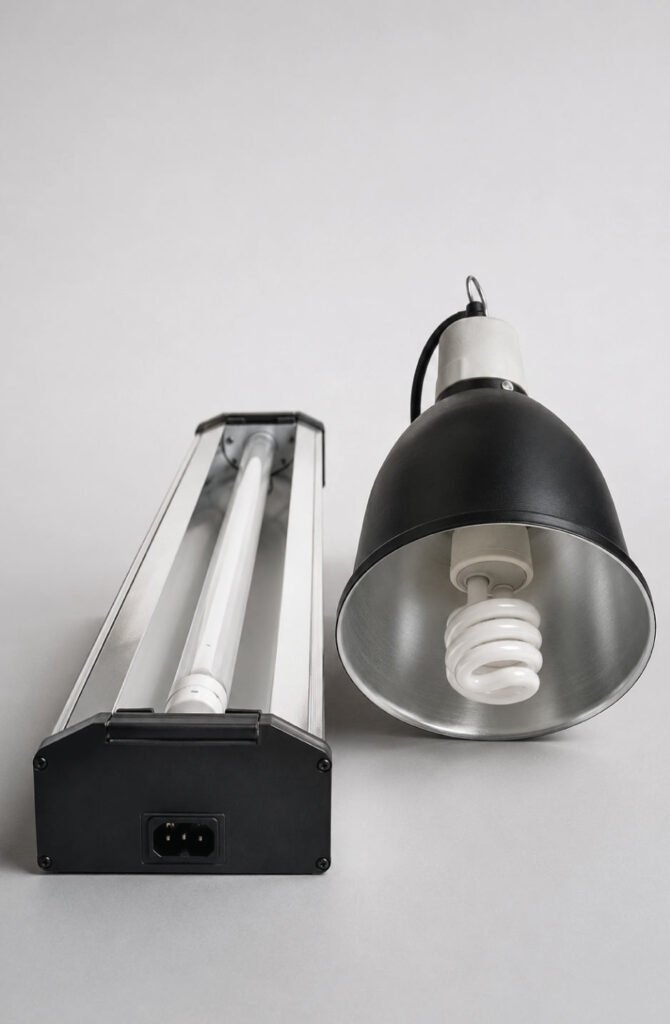
When shopping for bulbs, you will immediately notice two distinct shapes: short, swirly compact bulbs (coils) and long, fluorescent tubes. Compact coil bulbs concentrate their UV output into a narrow, intense laser beam that can burn a reptile’s eyes, while offering almost zero usable UV just a few inches away. Because reptiles regulate their bodies by moving through different zones, a tiny spotlight of UV is completely useless. Linear T5 High Output (HO) tubes are the gold standard because they project a wide, even blanket of light that covers the entire basking area.
Here is how to ensure you are buying the right hardware for your setup:
- Ditch the domes for UV: Save your deep dome fixtures for heat bulbs; always use a linear hood fixture for your UVB tube.
- Choose the right length: Buy a linear bulb that spans one-half to two-thirds the length of your terrarium. This creates a safe gradient, allowing your pet to escape the UV rays when they want to sleep.
- Avoid the biggest rookie error: Falling for cheap “all-in-one” kits that include coil bulbs is one of the Top Reptile Habitat Mistakes Beginners Make (and How to Avoid Them).
The Screen Tax: Surviving Mesh Lid Interference
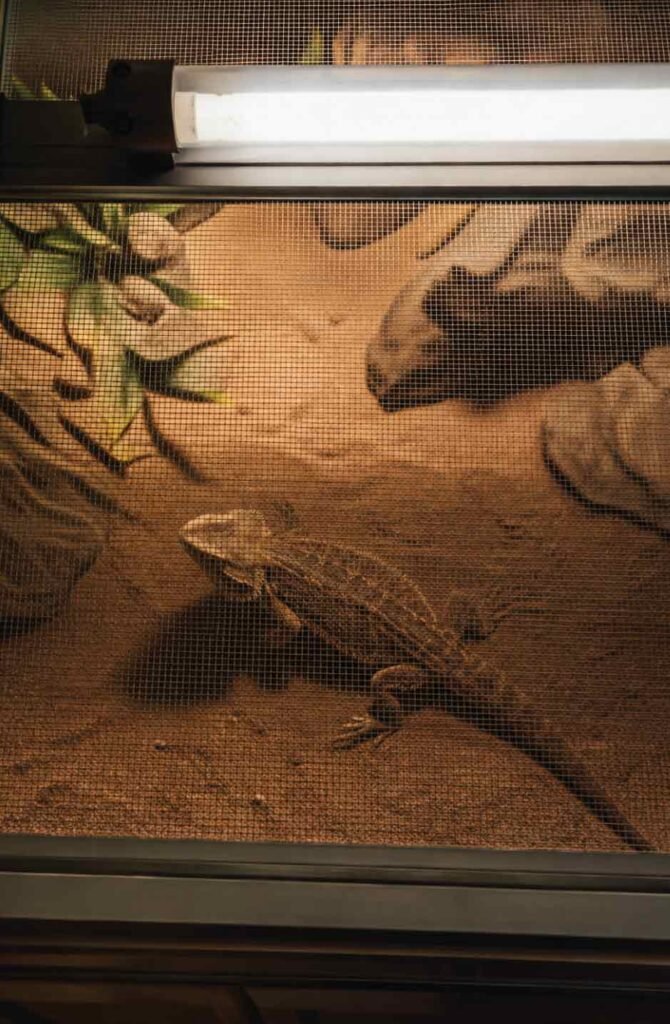
Many owners buy the perfect bulb, set it on top of their terrarium, and unknowingly starve their pet of UV rays. Standard mesh screen lids act like a heavy filter, blocking anywhere from 30% to 50% of the vital UVB rays from reaching your pet. If you calculate your bulb’s distance based on open air, placing it over a tight mesh screen leaves your reptile severely under-exposed. You must factor in the “screen tax” by either mounting the bulb inside the enclosure or upgrading the bulb’s intensity.
Manage your terrarium lid barriers effectively with these adjustments:
- Use zip-ties or mounting tape: If you have an arboreal species that needs lower UV, safely mount the T5 fixture underneath the mesh using heavy-duty zip ties or strong adhesive hooks.
- Upgrade to a stronger percentage: If you must rest the light on top of a screen, bump up the bulb strength (e.g., swapping a 5% bulb for a 10% bulb) to compensate for the mesh blockage.
- Chck the manufacturer’s distance chart: Reputable brands like Arcadia and Zoo Med provide specific distance charts online that show the exact UV output with and without a screen.
Navigating the “Ferguson Zones” for Your Specific Species
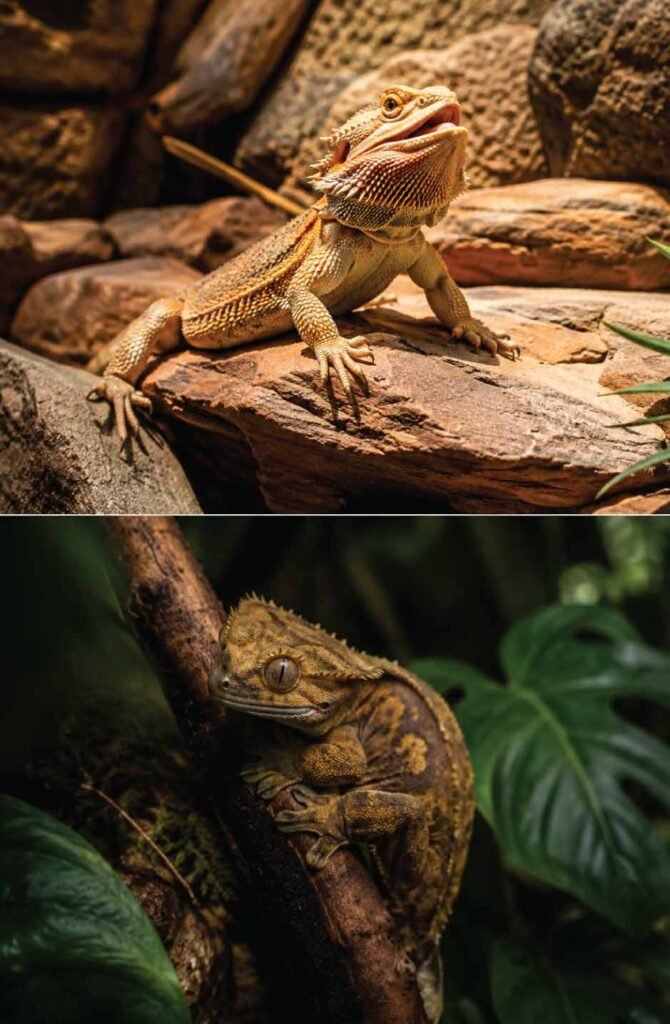
Not all reptiles require the same intensity of sunlight; a desert lizard needs vastly different lighting than a forest-dwelling gecko. Herpetologists divide reptiles into “Ferguson Zones” (Zones 1 through 4) to map out exactly how much UV a specific species receives in the wild. A Zone 1 animal is a shade-dweller that only needs a weak, gentle bulb, while a Zone 4 animal is a mid-day sun-basker that requires the strongest tube on the market. Matching your pet to their correct Ferguson Zone removes all the guesswork from buying bulbs. For a deeper dive into the clinical science behind these zones, you can review the guidelines provided by authoritative organizations like the Association of Reptilian and Amphibian Veterinarians (ARAV).
Apply the zone concept to your shopping cart immediately:
- Identify your pet’s zone: Research your exact species. Leopard geckos are Zone 1/2, while Bearded Dragons are solidly Zone 3/4.
- Buy the matching percentage: Zone 1/2 animals typically thrive on 5% to 7% UVB bulbs, whereas Zone 3/4 animals need 10%, 12%, or even 14% output.
- Incorporate zones into your layout: Setting up varied heights and hiding spots allows your pet to auto-regulate their exposure, a core component of proper Reptile Habitat Setup: Essentials Every Pet Owner Needs.
The Hidden Expiration Date on Every Bulb
A harsh reality of reptile keeping is that your lights will silently fail long before they actually go dark. The chemical phosphor coating inside the tube that generates UVB degrades continuously, usually exhausting its usable output within 6 to 12 months. To the human eye, the bulb still looks incredibly bright and white, giving owners a false sense of security while their pet’s bones slowly weaken. You must replace your T5 linear bulbs yearly, and T8 or compact bulbs every six months, regardless of whether they are still emitting visible light. Authoritative veterinary resources, such as the Merck Veterinary Manual on reptile management, consistently highlight neglected bulb replacement as a primary driver of captive nutritional diseases.
Never miss a replacement cycle with these foolproof habits:
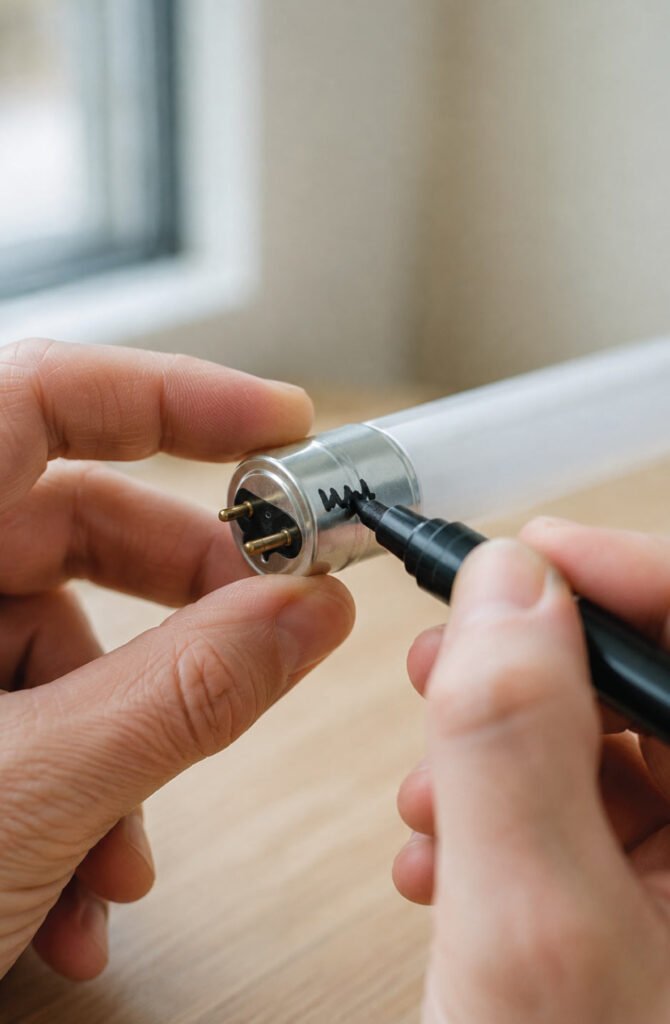
- Grab a sharpie: The moment you unbox a new bulb, write the installation date directly on the silver metal end-cap.
- Set a phone alarm: Schedule a recurring calendar alert for 10 months from the installation date so you have time to order a replacement.
- Keep a backup: Always have one spare bulb in your closet, as shipping delays or sudden bulb shatterings constitute an immediate reptile emergency.
The Secret Sauce
The Solarmeter Investment
If you want to transition from a guessing beginner to a confident expert, the Solarmeter 6.5 is your ultimate tool. This handheld device measures the exact UVI (Ultraviolet Index) reaching your pet’s basking spot, eliminating all guesswork about screen blockage and bulb degradation. While it costs around $200, it actually saves you money long-term because you only replace bulbs when the meter proves they are dead, rather than relying on an arbitrary calendar date.
The Power of the Reflector
Buying a great bulb is only half the battle; capturing the light is the rest. Placing a bare UVB tube over a tank wastes 50% of the light by shooting it upward at your ceiling. Always buy a fixture that features a polished, curved aluminum reflector inside the hood, which bounces the lost rays directly down into the terrarium where your pet actually needs them.
Balancing the Dietary D3 Trap
Many reptile calcium powders come pre-mixed with synthetic Vitamin D3, which creates a tricky balancing act. If you are providing high-quality, high-output UVB lighting, feeding your reptile a calcium powder heavily spiked with D3 can actually lead to toxic vitamin overdoses. When using excellent lighting, switch to a plain calcium powder for daily use, and only use the D3-enriched powder once or twice a month as a safety net.
Frequently Asked Questions About UVB Lighting for Reptiles
Standard glass and plastic completely block beneficial UVB rays from reaching your pet. Even if you place your terrarium directly next to a bright, sunny window, the glass filters out the exact UV spectrum your reptile needs to produce Vitamin D3. You must provide a dedicated, unobstructed UVB fixture inside or directly over the enclosure screen to keep your pet healthy.
Reptiles require a natural day and night cycle to regulate their sleep and stress levels, so all UVB lights must be turned off at night. Leaving bright lights on 24/7 disrupts their circadian rhythm, leading to severe chronic stress and immune system suppression. Put your lighting system on an automatic smart plug or timer set to 10–12 hours of daylight and 12–14 hours of total darkness.
Standard LED strip lights, plant grow lights, and aquarium LEDs do not produce the specific UVB spectrum required for reptile calcium synthesis. While they are fantastic for illuminating the enclosure beautifully or keeping live bioactive plants alive, they offer zero metabolic benefits for your pet. Unless a light is heavily engineered and explicitly marketed as a UVB-producing LED (which are still rare and expensive), assume it only provides visible light.
Yes, providing a UVB bulb that is too strong or mounting it too close to the basking spot can cause severe skin burns and photokeratitis, which is essentially snow blindness. This is exactly why it is critical to match the bulb percentage to your pet's specific Ferguson Zone and respect the manufacturer's distance guidelines. Always ensure your terrarium features a "UV gradient" with plenty of heavily shaded hides so your reptile can escape the rays when they have had enough.
While nocturnal reptiles can survive with dietary Vitamin D3 supplements alone, providing low-level UVB significantly improves their immune function, color, and overall vitality. In the wild, these animals often expose a single tail or leg to sunlight while sleeping in crevices, a clever survival behavior known as cryptic basking. Offering a gentle 5% to 7% shaded UVB bulb gives them the option to self-regulate their exposure naturally and thrive, rather than just survive.
The safe mounting distance depends entirely on the strength of the bulb and the fixture type, but it generally ranges from 12 to 18 inches for standard T5 high-output tubes. Placing the bulb too close causes eye damage, while placing it too far away renders the UV rays completely useless by the time they reach the terrarium floor. Always check the specific brand's UV index chart on the packaging to measure the exact safe distance for your specific bulb and screen setup.
Find Your Reptile’s Vibe
Understanding UVB doesn’t have to be a nightmare of confusing charts and pet store anxiety. By tossing out the coil bulbs, upgrading to a T5 linear tube, accounting for your mesh screen, and setting a calendar reminder to replace it, you instantly elevate your pet’s quality of life. You are actively protecting them from invisible bone diseases and giving them the vibrant energy they deserve. Don’t let this crucial information get lost in your tabs. Pin this post to your reptile care board so you always have the bulb replacement rules handy!
If you are setting up an enclosure for a sun-loving, high-UVB species and want to see how all these lighting concepts come together in real life, check out our deep dive: How Challenging are Bearded Dragons as Pets?.
Quick Vibe Check: What’s your reptile’s Ferguson Zone personality?
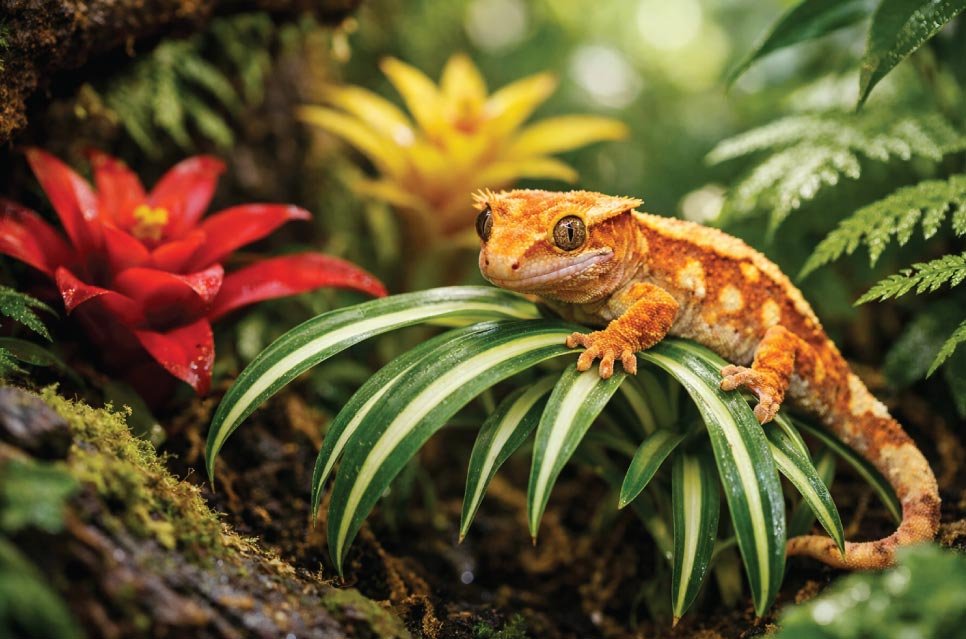
- The Cryptic Vampire (Zone 1): Hides all day, hates bright lights, prefers dusk. (Think: Crested Geckos, Leopard Geckos). Grab a 5% to 7% Bulb!
- The Casual Sunbather (Zone 2): Enjoys a gentle morning sunbeam but retreats by noon. (Think: Corn Snakes, Ball Pythons). Grab a 6% to 7% Bulb!
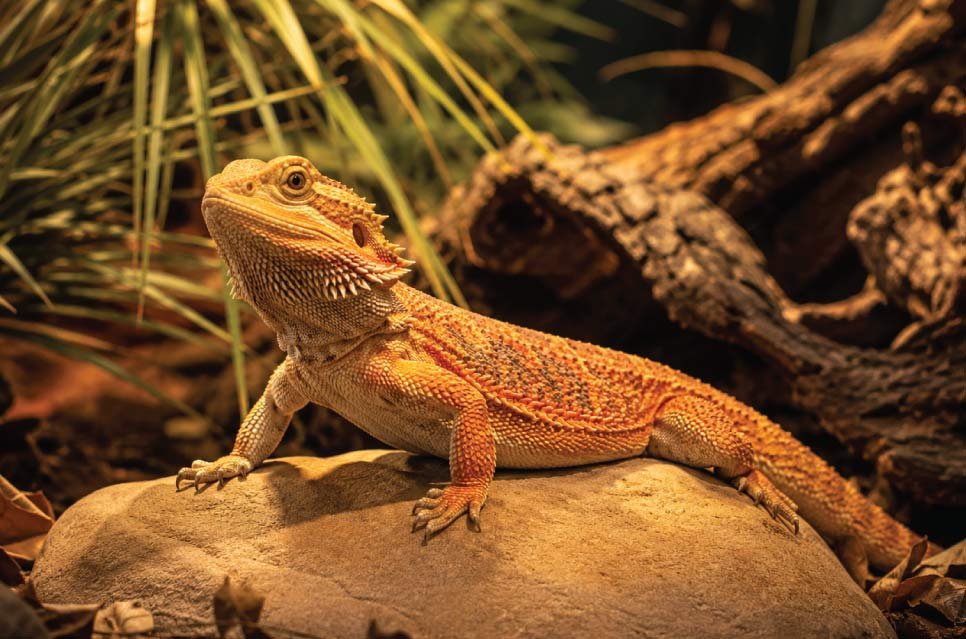
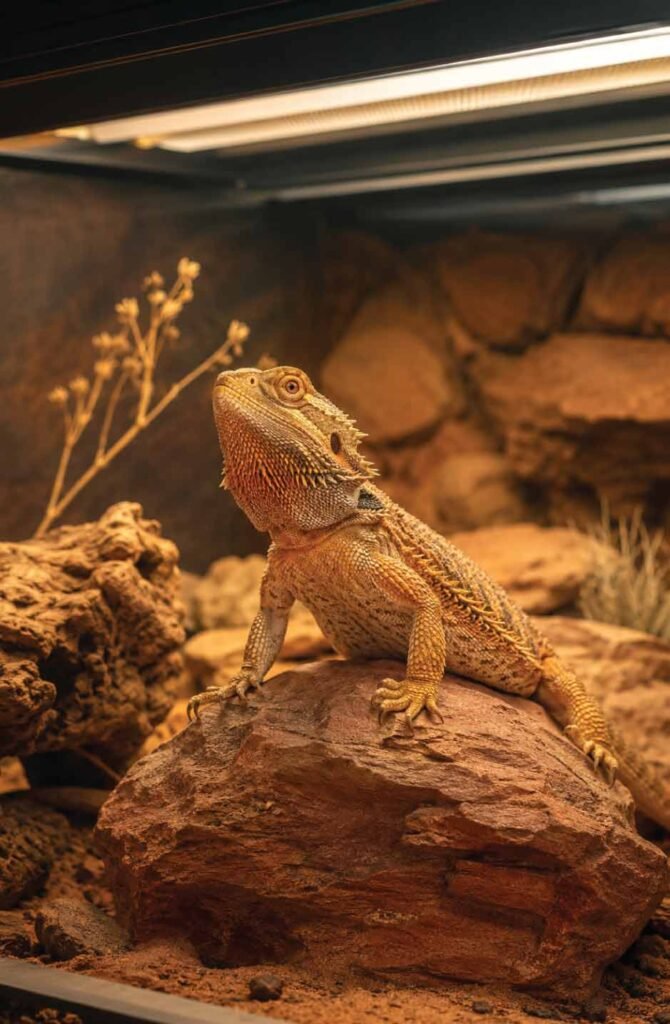
- The Solar Panel (Zone 3/4): Demands maximum noon-day rays, actively basks with mouth open. (Think: Bearded Dragons, Uromastyx). Grab a 12% to 14% Bulb!