Quick Guide
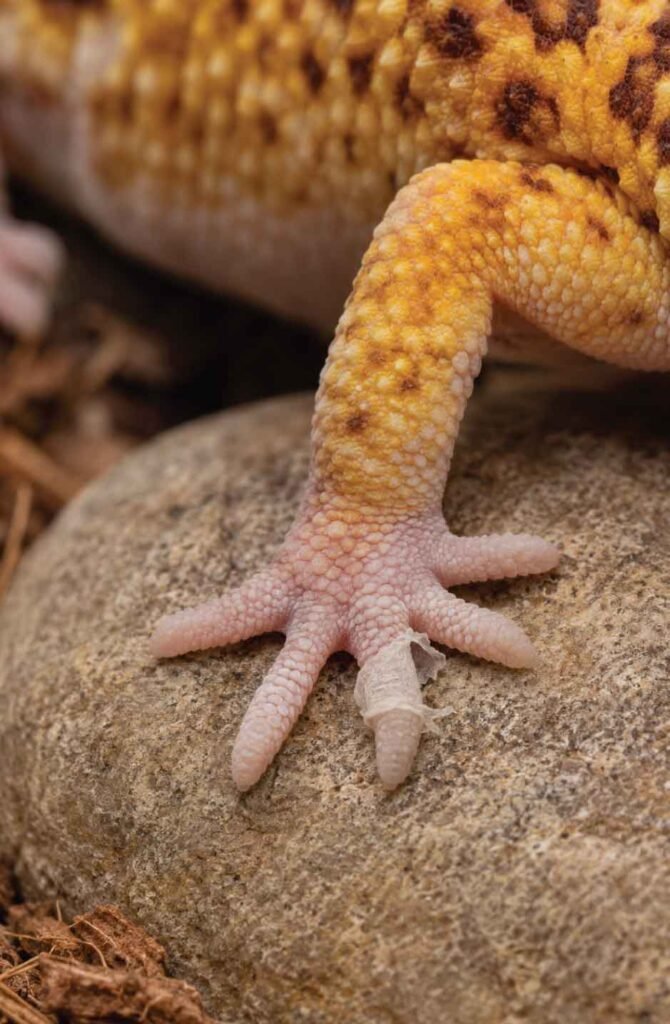
- Recognize abnormal shedding: Old skin that remains attached, especially around the toes, eyes or tail, may indicate stuck shed (dysecdysis).
- Check humidity and temperature: Incorrect enclosure conditions are common causes of reptile shedding problems.
- Never pull off stuck skin: Provide species-appropriate humidity, suitable hiding places and safe rubbing surfaces instead.
- Know when to see a vet: Constricted toes, darkened tail tips, retained eye caps, damaged skin and recurring shedding problems require veterinary attention.
Shedding should be your reptile’s natural wardrobe change, not a stressful experience for either of you. But when your leopard gecko has stubborn skin around its tiny toes, your snake sheds in frustrating little pieces, or your bearded dragon develops unusual dry patches, it’s natural to wonder whether something is wrong.
Most reptile shedding problems can be prevented through appropriate habitat conditions, hydration and nutrition, but some indicate underlying health issues.
The tricky part is knowing when to help and when to leave your scaly friend alone.
This guide explains what healthy shedding looks like, which warning signs deserve attention, and the practical adjustments you can make to support your reptile’s next shed. No unnecessary treatments, complicated routines or risky skin-peeling techniques required.
Normal Shedding vs. Stuck Shed: What’s the Difference?
Not every reptile sheds in the same way. What looks perfectly normal on a bearded dragon could indicate a problem in a ball python.
Healthy shedding means the old outer skin eventually separates completely without damaging the new skin underneath.
Abnormal or incomplete shedding is medically known as dysecdysis, commonly called stuck shed or retained shed.
What Does Healthy Shedding Look Like?
| Reptile | Reptile Normal shedding | Potential warning signs |
|---|---|---|
| Ball python | Skin usually comes off in one piece | Fragmented shed or retained eye caps |
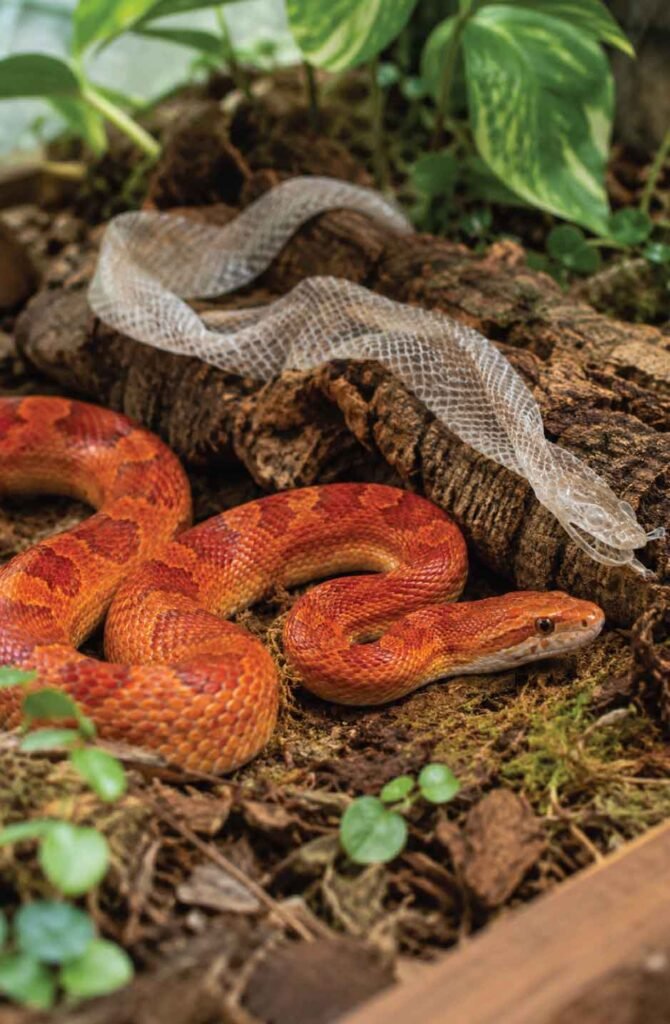
| Corn snake | Complete, sock-like shed | Persistent patches of attached skin |
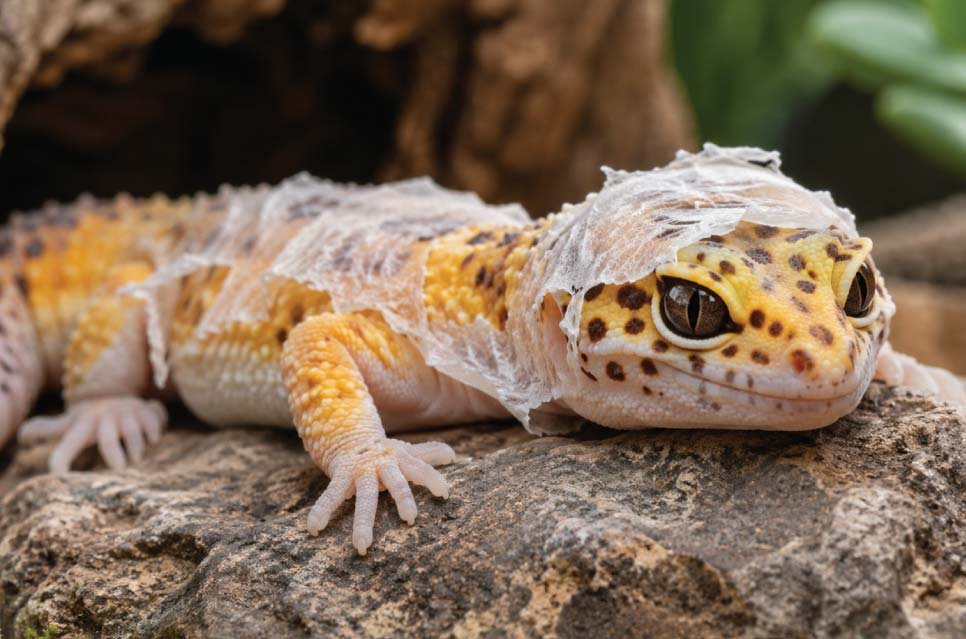
| Leopard gecko | Skin becomes pale; gecko often eats its shed | Skin remaining around toes or tail |
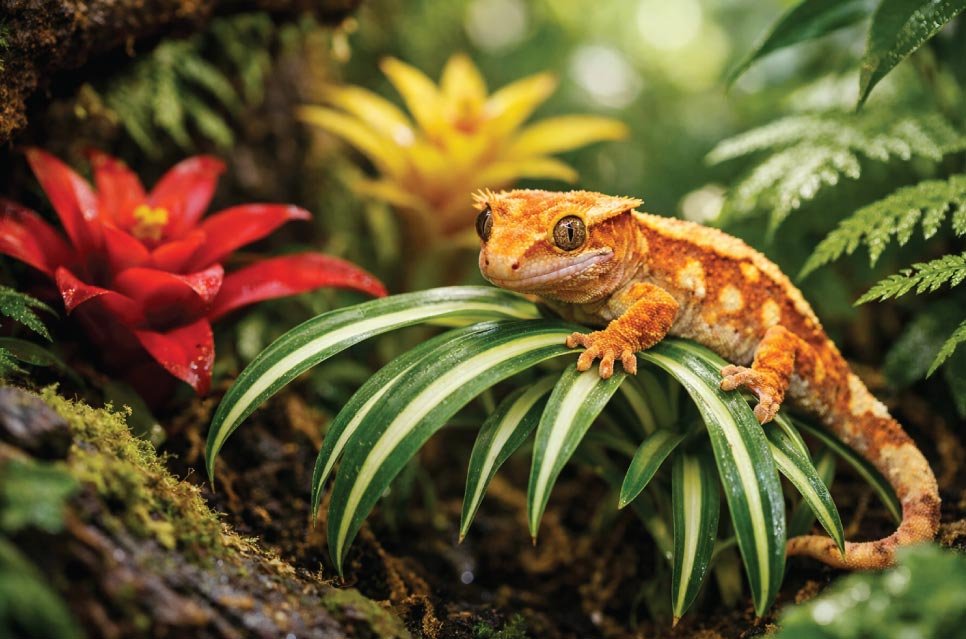
| Crested gecko | Skin sheds and is often eaten | Retained skin around toes or body |
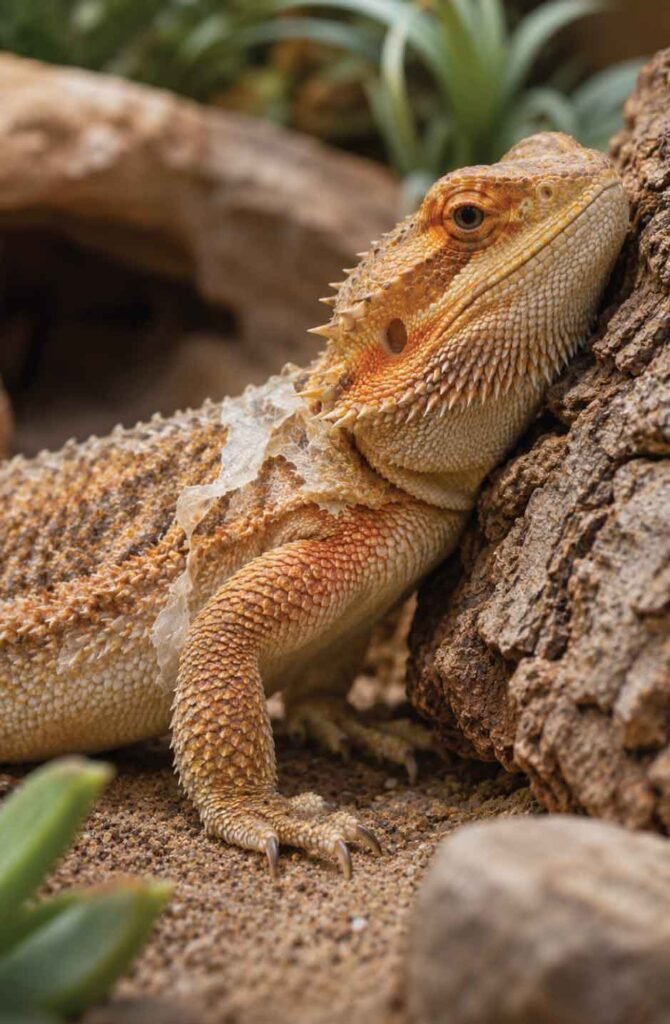
| Bearded dragon | Different body areas shed in patches | Persistent, tightly attached or constricting skin |
| Chameleon | Skin flakes or separates in sections | Persistent, tightly attached or constricting skin |
Common Signs Your Reptile Is About to Shed
- Dull, pale or whitish skin.
- Increased hiding or reduced activity.
- Rubbing against enclosure decorations.
- Temporary appetite changes.
- Cloudy or bluish eyes in snakes before shedding.
Temporary color changes and patchy shedding are not automatically signs of illness. Compare what you see with your reptile’s normal shedding pattern before attempting to intervene.
Why Is My Reptile Not Shedding Properly?
A difficult shed is often your reptile’s way of telling you that something in its care routine needs attention.
Incorrect humidity is a common environmental trigger, but increasing moisture isn’t the solution to every shedding problem.
According to the Merck Veterinary Manual’s guide to reptile environmental diseases, abnormal shedding can also be associated with nutritional deficiencies, parasites, infections and unsuitable enclosure conditions.
Seven Common Causes of Reptile Shedding Problems
- Low humidity: Old skin becomes difficult to release.
- Dehydration: Insufficient hydration can interfere with healthy shedding.
- Incorrect temperatures: Inadequate heating affects normal bodily functions.
- Nutritional deficiencies: An unsuitable diet can compromise skin health.
- Missing rubbing surfaces: Your reptile lacks suitable objects to loosen old skin naturally.
- Previous skin injuries: Damaged or scarred areas may shed unevenly.
- Illness or parasites: Mites, infections and other medical conditions may interfere with shedding.
Start by checking your enclosure measurements and care routine rather than immediately purchasing shedding sprays or treatments.
If your reptile repeatedly struggles to shed despite appropriate husbandry, arrange a veterinary examination.
Get Humidity and Temperature Right for Your Species
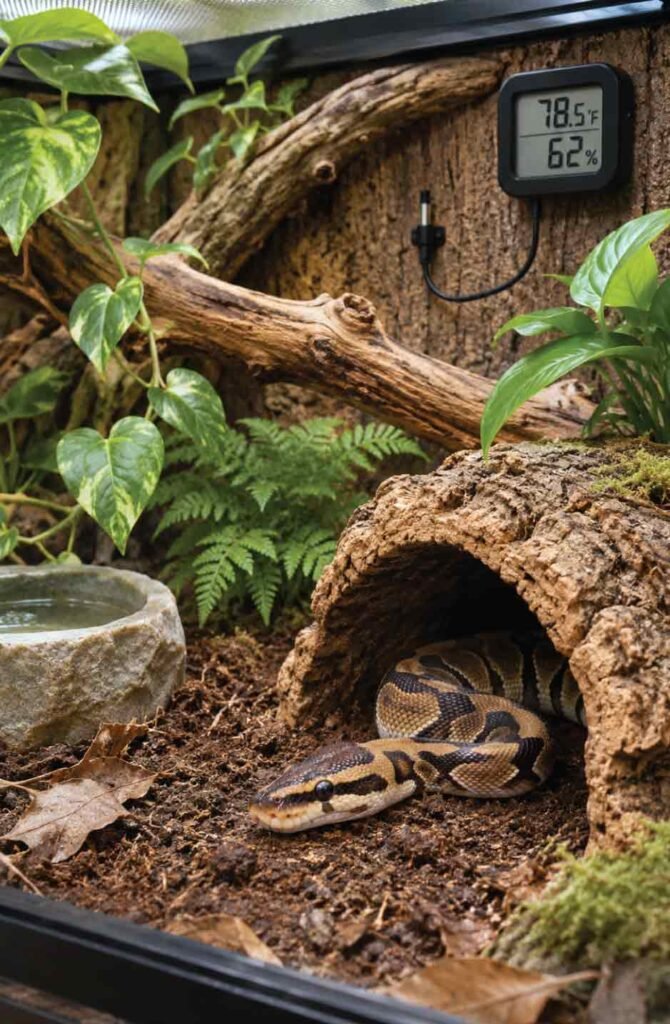
More humidity does not necessarily mean better shedding. A tropical gecko and an arid-dwelling bearded dragon have very different environmental needs.
The goal is to create the correct moisture balance for your particular reptile, not turn every terrarium into a rainforest.
Excessive moisture, poor ventilation and constantly wet substrate can contribute to other health problems.
Different Reptiles, Different Humidity Needs
| Reptile | Humidity approach |
|---|---|
| Leopard gecko | Relatively dry enclosure with a dedicated humid hide |
| Bearded dragon | Drier environment with good ventilation |
| Ball python | Consistently suitable humidity with secure hiding areas |
| Corn snake | Moderate humidity and access to a moist retreat |
| Crested gecko | Higher humidity with appropriate drying periods |
| Chameleon | Species-specific humidity cycles and excellent ventilation |
Make These Practical Adjustments
- Use digital hygrometers to monitor humidity in relevant enclosure zone.
- Check temperatures on both the warm and cool sides.
- Monitor humidity at different times of day.
- Maintain adequate ventilation rather than sealing the enclosure to trap moisture.
- Follow humidity and temperature recommendations for your reptile’s exact species.
Need help reviewing your enclosure? My Reptile Habitat Setup: Essentials Every Pet Owner Needs guide explains the key components of a healthy reptile environment.
How to Safely Help a Reptile With Stuck Shed
When you notice retained skin, resist the temptation to peel it away. Your reptile is not wearing a removable sticker!
Pulling attached skin can damage healthy tissue, cause bleeding and increase the risk of infection.
For mild retained shed away from sensitive or constricted areas, begin with gentle environmental support.
Safe Steps to Support Shedding
- Check that temperature and humidity are appropriate for the species.
- Provide access to clean drinking water and suitable hydration opportunities.
- Offer a humid hide if appropriate for your reptile.
- Ensure safe, textured surfaces are available for natural rubbing.
- Reduce unnecessary handling and monitor the affected area.
- Contact an exotic pet veterinarian if the skin remains attached or the condition worsens.
Five Stuck Shed Mistakes to Avoid
- Peeling or picking at attached skin.
- Using tweezers to remove retained eye caps.
- Scrubbing the reptile with a toothbrush.
- Applying household oils, lotions or unprescribed medications.
- Forcing your reptile into prolonged or unsupervised baths.
Bathing is not a universal treatment for reptile shedding problems. If your veterinarian recommends soaking, follow their species-specific guidance regarding water depth, temperature and duration.
Create a Humid Hide for Healthier Shedding
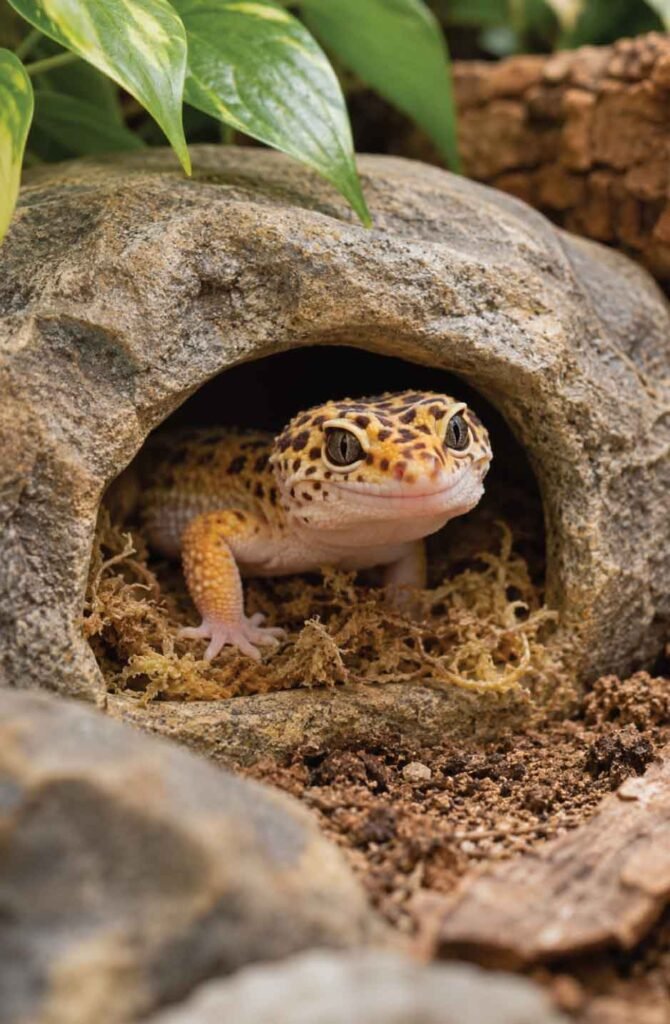
A humid hide is a sheltered, moisture-retaining microclimate that allows suitable reptile species to access additional humidity when needed.
It is particularly useful for leopard geckos, which require access to a moist retreat despite living in relatively dry environments.
A properly maintained humid hide provides localized moisture without making the entire enclosure excessively damp.
DIY Humid Hide: Four Simple Steps
- Choose a shelter: Use an appropriately sized reptile hide or clean, pet-safe container.
- Create a safe entrance: Make sure your reptile can enter and exit easily, with no sharp edges.
- Add moisture-retaining material: Use damp paper towels or suitable sphagnum moss.
- Choose the right location: Place it in a species-appropriate temperature zone and check its moisture regularly.
The material should feel damp rather than dripping wet. Replace it whenever it becomes dirty or develops mold.
For more species-specific advice, read my Leopard Gecko Care Guide, which explains humid hides, heating and other essential care requirements.
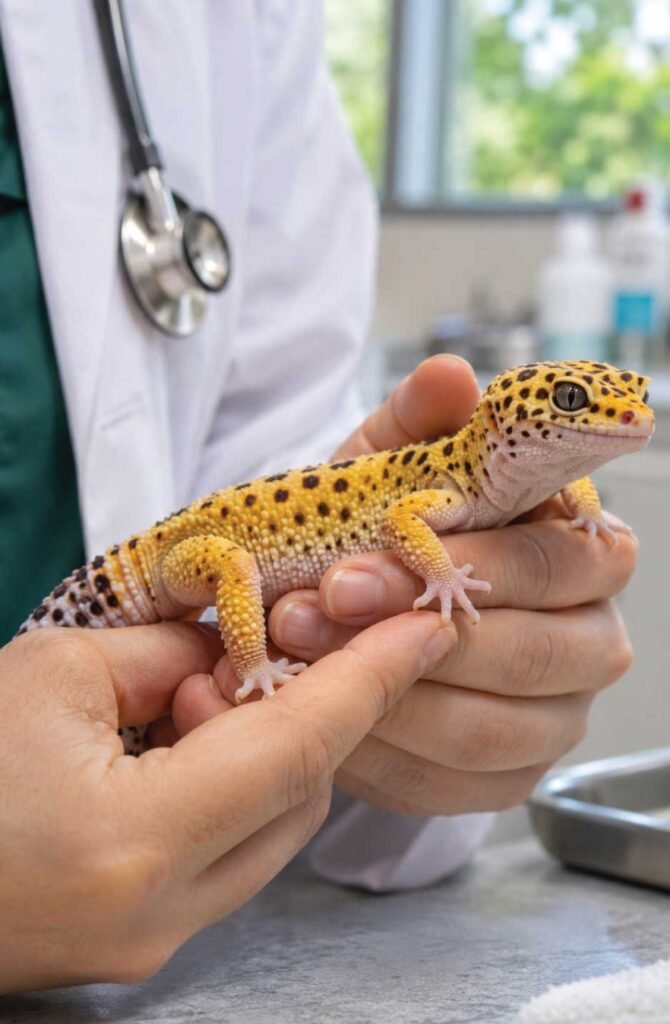
When Does Stuck Shed Become Dangerous?
A small patch of retained skin may initially look harmless. However, problems develop when drying skin tightens around delicate body parts.
Retained skin can restrict blood circulation, particularly around toes and tail tips, potentially causing permanent tissue damage.
The Tree of Life Exotic Pet Medical Center’s veterinary guidance on stuck shed also warns against manually removing retained eye caps because of the risk of serious eye injuries.
Warning Signs That Require Veterinary Attention
| Warning sign | Recommended action |
|---|---|
| Darkened or swollen toes | Seek urgent veterinary care |
| Tight bands of skin around the tail | Seek urgent veterinary care |
| Suspected retained eye caps | Contact a reptile veterinarian promptly |
| Bleeding, open wounds or discharge | Seek prompt veterinary care |
| Persistent retained skin | Arrange a veterinary examination |
| Repeated incomplete sheds | Investigate underlying causes with your vet |
| Unusual lethargy or persistent appetite loss | Contact your veterinarian |
Never wait for the next shedding cycle if retained skin is restricting circulation or your reptile shows signs of injury.
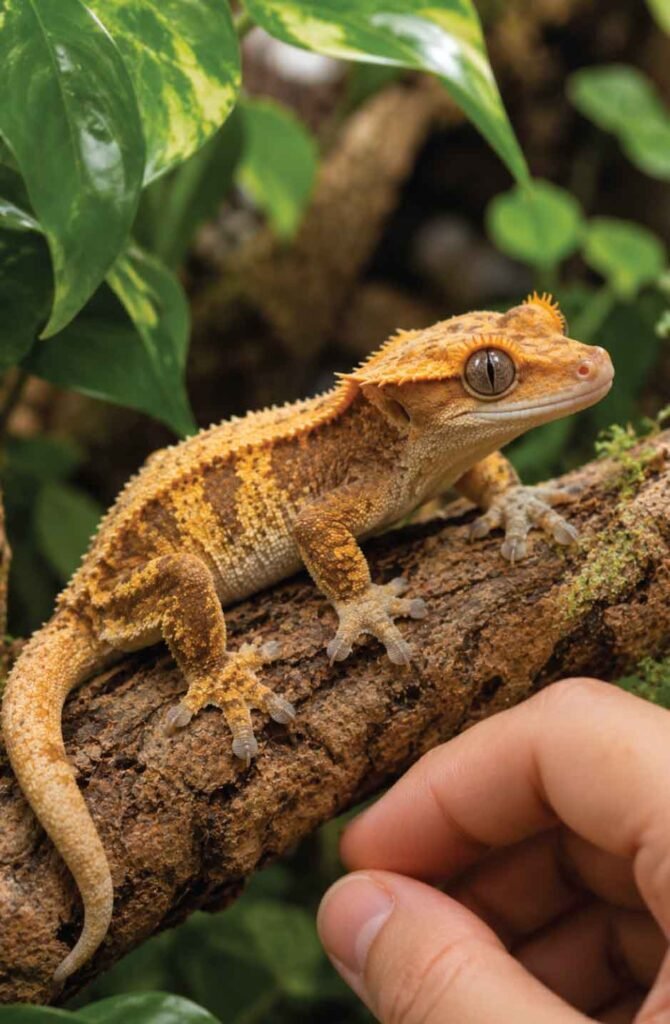
The Secret Sauce
Preventing reptile shedding problems goes beyond checking humidity when your pet starts turning pale. These three small habits can make a meaningful difference.
Check the Tiny Trouble Spots
After every shedding cycle, take a close look at the areas where old skin is easily overlooked:
- Toes and claws.
- Tail tips.
- Around the eyes.
- Leg creases.
- Skin folds.
A quick visual inspection can help identify retained skin before it becomes a serious problem.
For snakes, inspect the discarded shed for both transparent eye caps and the tail tip. If you cannot confirm that these areas shed properly, ask your veterinarian rather than attempting to remove anything yourself.
Give Your Reptile Natural Shedding Tools
Reptiles benefit from having suitable textures in their habitat that allow them to loosen old skin independently.
Consider adding securely positioned cork bark, textured branches or stable rocks appropriate for your species.
Safe textured surfaces support natural shedding while also providing environmental enrichment.
Avoid sharp decorations, abrasive sandpaper and unstable objects that could cause injuries. Think gentle friction, not a miniature exfoliation salon.
Keep a Simple Shedding Diary
Instead of relying on memory, create a small record of each shedding cycle.
Write down:
- The date shedding began and ended.
- Whether the shed was complete.
- Temperature and humidity readings.
- Changes in appetite or behavior.
- Any recurring problem areas.
A shedding diary can reveal patterns that might otherwise go unnoticed, such as incomplete sheds during seasonal humidity changes.
It also provides useful information for your veterinarian if shedding difficulties become frequent.
There is no universal shedding schedule for all reptiles, so focus on changes from your individual pet’s usual pattern.
Healthy Reptile Shedding Checklist
Before your reptile’s next shed, make sure these essentials are covered.
- Species-appropriate humidity levels.
- Correct warm and cool enclosure temperatures.
- Reliable digital thermometer and hygrometer.
- Fresh drinking water and suitable hydration.
- Humid retreat where appropriate.
- Safe, textured enclosure decorations.
- Balanced, species-appropriate nutrition.
- Clean enclosure and adequate ventilation.
- Minimal unnecessary handling during shedding.
- Post-shedding inspection for retained skin.
Frequently Asked Questions About Reptile Shedding Problems
The shedding process can take anywhere from a few hours to several weeks, depending on the reptile species and the stage of shedding. Leopard geckos may remove their old skin within a few hours, while snakes typically go through several days of preparation before shedding. Bearded dragons may shed different body areas over an extended period. Monitor your reptile for normal progress rather than expecting it to finish within a fixed timeframe.
Yes, young reptiles generally shed more frequently because their bodies are growing rapidly. As reptiles mature and their growth slows, shedding usually becomes less frequent. However, adult reptiles continue shedding throughout their lives to renew their skin. Less frequent shedding in a healthy adult is not necessarily a cause for concern, provided its appetite, weight and behavior remain normal.
A snake's eyes can return to their normal appearance several days before the actual shed begins. This is a natural part of the shedding cycle as the fluid separating the old and new skin layers is reabsorbed. Your snake may appear to have finished shedding even though its old skin is still attached. Continue maintaining appropriate enclosure conditions and avoid disturbing your snake unnecessarily.
You can continue offering food according to your reptile's normal feeding schedule, but never force it to eat during shedding. Some reptiles temporarily lose interest in food, particularly snakes. For insect-eating reptiles, remove uneaten live insects to prevent them from biting vulnerable skin. If appetite loss continues after shedding, or your reptile begins losing weight, consult an exotic pet veterinarian.
Many aquatic turtle species naturally shed the thin outer layers of their shell plates, known as scutes. This process helps renew the shell and accommodate growth. Healthy shed scutes are generally thin, while soft areas, unpleasant odors, bleeding, pitting or unusual discoloration may indicate shell disease. Never forcibly remove attached scutes, and consult a reptile veterinarian if the shell appears unhealthy.
An exotic pet veterinarian will examine your reptile's skin, review its habitat conditions and assess whether an underlying health problem is affecting shedding. Depending on the symptoms, diagnostic tests may include skin scrapings, microscopic examinations, bacterial or fungal cultures, and blood tests. Bring photographs of your enclosure, temperature and humidity records, and details of your reptile's diet and supplements to help your veterinarian identify the cause.
Final Thoughts: Let Nature Do the Peeling
Your reptile doesn’t need a complicated skincare routine or a collection of expensive shedding products. It needs an environment that supports its natural biology.
The best way to prevent reptile shedding problems is to maintain appropriate habitat conditions consistently, rather than trying to correct them only when shedding goes wrong.
Learn what a normal shed looks like for your species, pay attention to subtle changes and make environmental adjustments when necessary. Most importantly, allow your reptile to shed naturally without pulling at attached skin.
If problems keep returning, don’t assume that humidity is always to blame. Nutrition, parasites and underlying health conditions may also need investigating with an exotic pet veterinarian.
Want to become more confident at spotting early health concerns? Explore my guide to Reptile Health: Tips for Maintaining Their Best Care for more practical ways to support your scaly companion’s well-being.
📌 Pin this guide for later! Save the shedding checklist to your reptile care Pinterest board so you know exactly what to check the next time your little dinosaur starts changing its outfit.
Happy shedding, little scales! 🦎
This article provides general educational information and is not a substitute for professional veterinary advice. Reptile care requirements vary by species, age and individual health.