At PetSweetJoy, we sometimes share products we truly love and use with our own pets. This post contains affiliate links, which means we may earn a small commission, at no extra cost to you. We only recommend products that fit our values of care, comfort, and responsible pet parenting.💗
If you’ve been thinking about getting a cockatoo, chances are you’ve already fallen for their charm. Their fluffy crests, curious eyes, full-body dances, and heart‑melting cuddles can make anyone dream of bringing one home.
But here’s something beginners rarely hear upfront: cockatoos may be the most emotionally intense parrots kept as pets. They can be affectionate, silly, loving, loyal, and deeply bonded to their humans, but also noisy, demanding, clever, anxious, and sometimes destructive.
This “Cockatoo for Beginners Guide” is written for people who want real information. Not sugar‑coating, not discouragement, just honest, gentle guidance. We’ll walk through the emotional, physical, and long‑term realities of owning a cockatoo.
Think of this as the guide you wish every new cockatoo owner received.
Listen to the Podcast: Cockatoo for Beginners
The Weight of Commitment (A Suitability Assessment)
Many first‑time bird parents imagine a cockatoo snuggling on their shoulder, following them around like a feathered puppy. While moments like this can happen, they come with responsibilities that often surprise beginners.
Cockatoos May Live 60–80 Years
Cockatoos aren’t just pets, they’re lifelong companions. In the right environment, some species may reach 70–80 years, especially Moluccan and Umbrella cockatoos.
This means:
- you might celebrate decades of birthdays with the same bird
- your adult children may inherit them
- they may outlive multiple generations of pets
A cockatoo is a lifetime promise.
Their long lifespan is also why so many end up in rescues, their needs change faster than humans’ lifestyles do.
Time Commitment: Not Hours… but Lifestyle
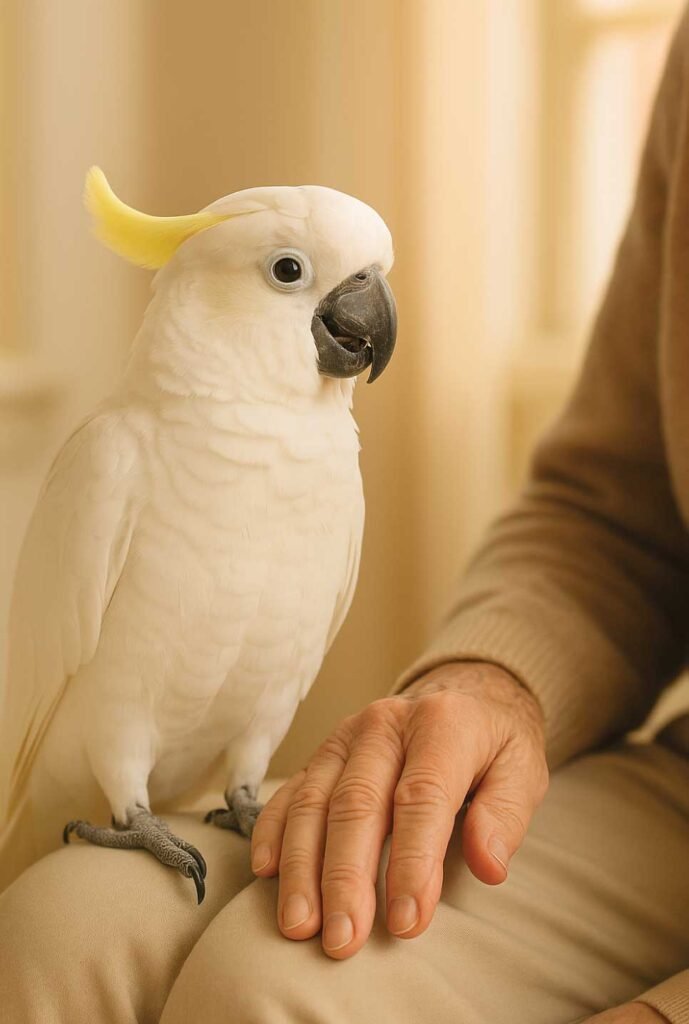
Most species may need 3–5 hours daily of:
- exercise
- supervised out‑of‑cage time
- interaction
- training
- enrichment rotation
Beginners often assume that “out-of-cage time” means relaxing together on the couch. But cockatoos may need active engagement:
- climbing
- foraging
- chewing
- exploring
- socializing
A cockatoo is rarely okay just sitting quietly while you work.
If your job, energy level, or family routine already feels full, adding a cockatoo may push you into burnout.
Cockatoo Screaming: A Daily Reality
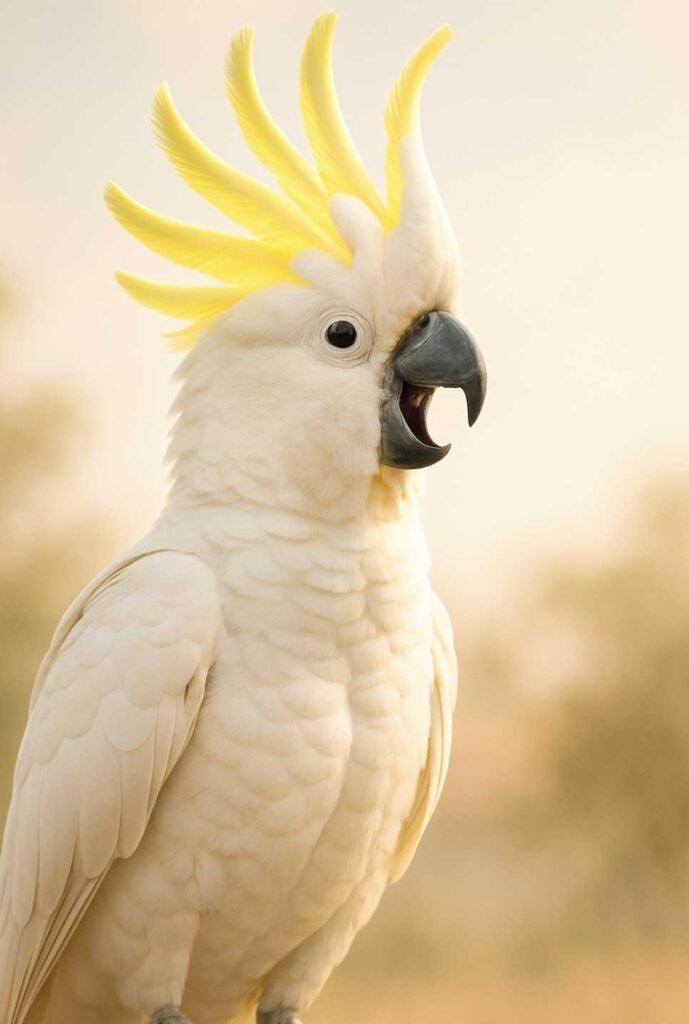
Let’s expand this honestly. Cockatoo screaming isn’t:
- a rare meltdown
- a once‑a‑week incident
- an easy habit to “train out”
It’s their natural voice.
Cockatoos scream:
- to call their flock
- to express excitement
- at sunrise
- at sunset
- when stressed
- when lonely
- when something changes
- when their human walks out of the room
For many beginners, the daily and sometimes hourly screaming may be overwhelming.
And because their calls can reach 120 decibels (similar to a jet engine or siren), neighbors may hear it through walls.
If you’re sensitive to noise, or if you live in a shared building, this may be a big challenge.
Destructive Power: The Cockatoo Grip
The word “cockatoo” comes from a term meaning “grip”, and yes, their beaks live up to this.
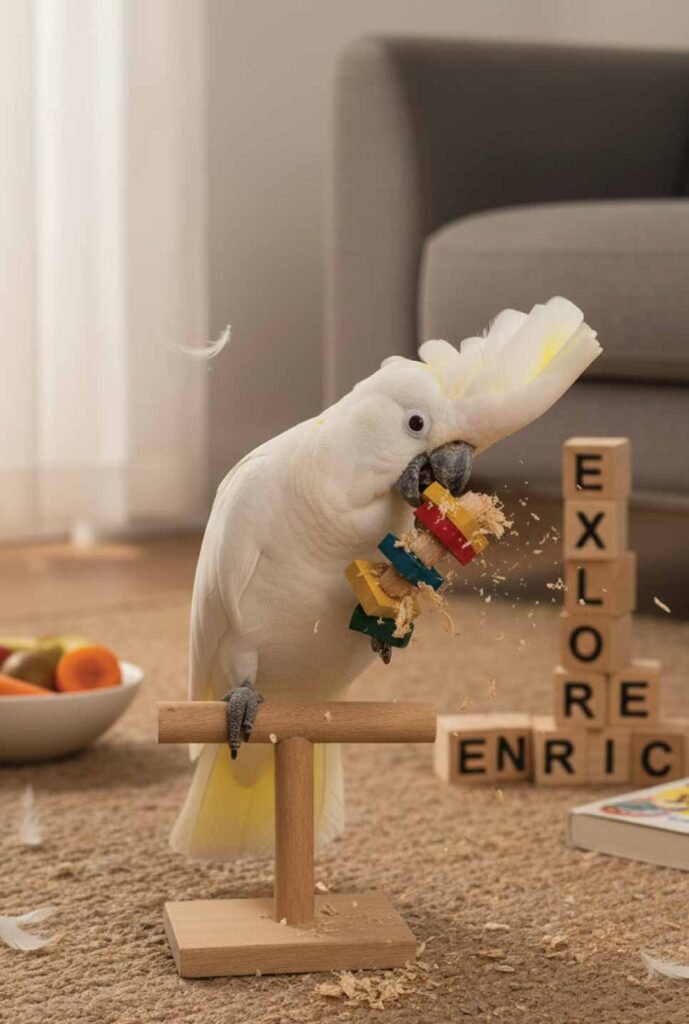
A cockatoo’s natural instinct to chew may lead them to:
- strip wooden door frames
- remove wallpaper
- chew furniture corners
- bite buttons off remote controls
- pull apart toys in minutes
- create holes in drywall
But none of this means they are misbehaving.
Cockatoos chew to:
- relieve stress
- keep their beaks healthy
- explore
- stay mentally stimulated
Without a steady supply of chew toys, household destruction is almost guaranteed.
Good options include:
- Forest Dangle Chew It’s made of safe and hygienic apple wood that is non-toxic and harmless to keep your little friends safe. The chew toy helps them exercise, drain their excess energy.
- Chew Stack offers pets endless fun while providing a good way to ease stress and prevent boredom. This Jungle Canopy Toy’s unique design is sure to keep your pet happy and healthy while interacting with the different wooden blocks, cylinders and cubes.
- Crinkle Barrel With Apple Sticks encourages mental and physical enrichment, providing an assortment of items for fun and stimulating play. Our Crinkle Barrel is crafted from safe, natural materials.
Providing daily chew items is not optional, it’s essential.
Cockatoos and Children: A Careful Combination
Cockatoos may be sweet, but their beaks can crush nuts and snap wooden toys. They can bite when scared, overstimulated, or hormonal.
Children often:
- move quickly
- grab suddenly
- shout without meaning to
- misread warning signs
Cockatoos often:
- react faster than humans expect
- defend their “chosen person”
- bite when overwhelmed
Many behaviorists suggest waiting until children are older to introduce a cockatoo.
Re-Homing: The Hidden Crisis
Cockatoos are one of the most surrendered parrots in the world.
Reasons include:
- screaming
- biting
- plucking
- emotional dependency
- destruction of property
- changes in owner lifestyle
A healthy cockatoo may experience 20–25 homes in their lifetime.
Frequent re-homing may create trauma that expresses itself as:
- self-mutilation
- chronic screaming
- intense anxiety
- extreme bonding or mistrust
This is why adoption is so important, and why beginners should think carefully about this commitment.
Take your time. Your future bird deserves it.
The Inconvenient Behavioral Truth (Debunking the Myth)
Lets to talk about something that beginners rarely hear: cockatoos aren’t born cuddly, humans create that dependency. According to Beauty of Birds, pair bonding is one of the most misunderstood behavior patterns in captive cockatoos, especially when body petting accidentally mimics mating cues.
Early Weaning Creates Emotional “Hunger”
In the wild, cockatoo parents:
- feed their chick constantly
- groom them
- sleep near them
- respond to every sound
- offer nonstop emotional reassurance
This continues until the chick is almost one year old.
But hand-raised babies in captivity are often:
- pulled from parents early
- hand-fed by breeders
- weaned at 4–5 months
- sold before they learn independence
They arrive in their new homes with a deep, unmet need for:
- closeness
- warmth
- safety
So when a beginner handles them constantly, which feels sweet at first, the bird thinks:
“This human is my replacement parent (or partner).”
This is where problems start.
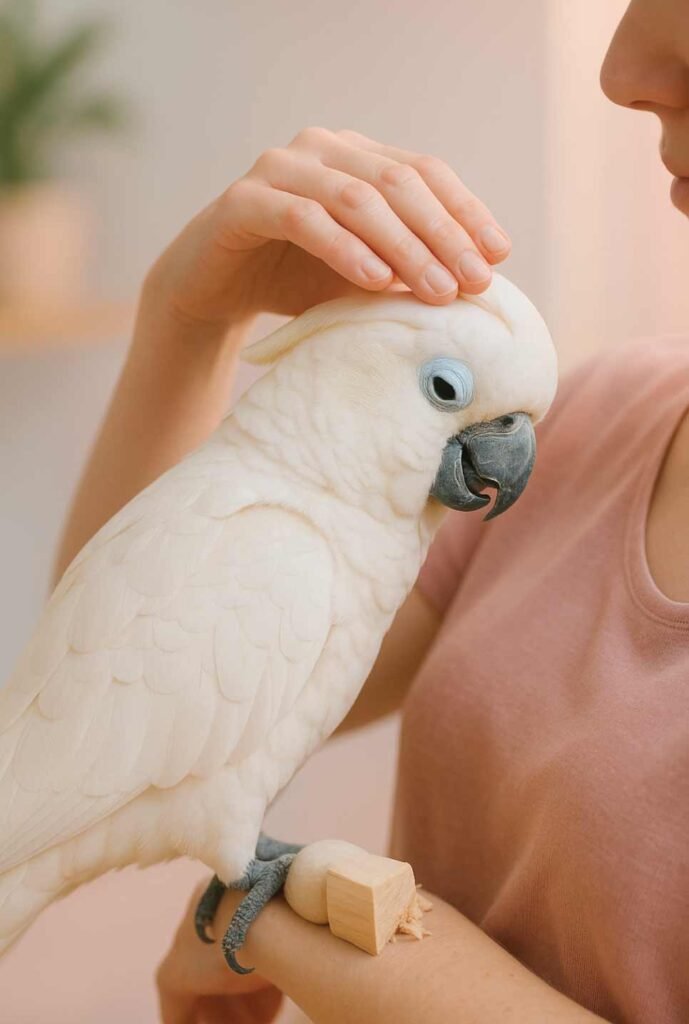
Pair Bonding: The Sweet Beginning That Turns Difficult
When a cockatoo over-bonds to one person, that person becomes their “mate.”
This can lead to:
- guarding behavior
- lunging at other family members
- screaming when the person leaves
- refusing to go to others
- biting
- reproductive behaviors
Something as simple as petting their back can trigger hormones.
This is why avian behaviorists repeat:
Only pet the head, nothing more.
It feels strict, but it may prevent years of behavioral stress for both the bird and the human.
Cockatoos Are Strategic, Not Just Smart
Cockatoos may:
- open locks
- plan escapes
- test your boundaries
- watch your habits
- mimic emotional tones
- learn what behaviors get attention
- “train” their owners without meaning to
They’re problem-solvers with a sense of humor.
Some owners report their cockatoos:
- pretending to fall for dramatic effect
- faking injuries for attention
- imitating crying or laughing
- unlocking cages by observing human movements
This intelligence is a gift, but also a responsibility.
Practical Management and Setting Boundaries
Now that we’ve discussed the challenges, here’s the hopeful part: cockatoos thrive with structure, boundaries, independence, and enrichment.
Beginners can succeed, with the right tools.
Build Independence on Day One
Without independence training, cockatoos may become clingy or anxious.
You can help them by:
- setting predictable routines
- creating several “stations” around the home
- rotating toys every few days
- rewarding calm behavior
- practicing short separation exercises
Helpful enrichment tools:
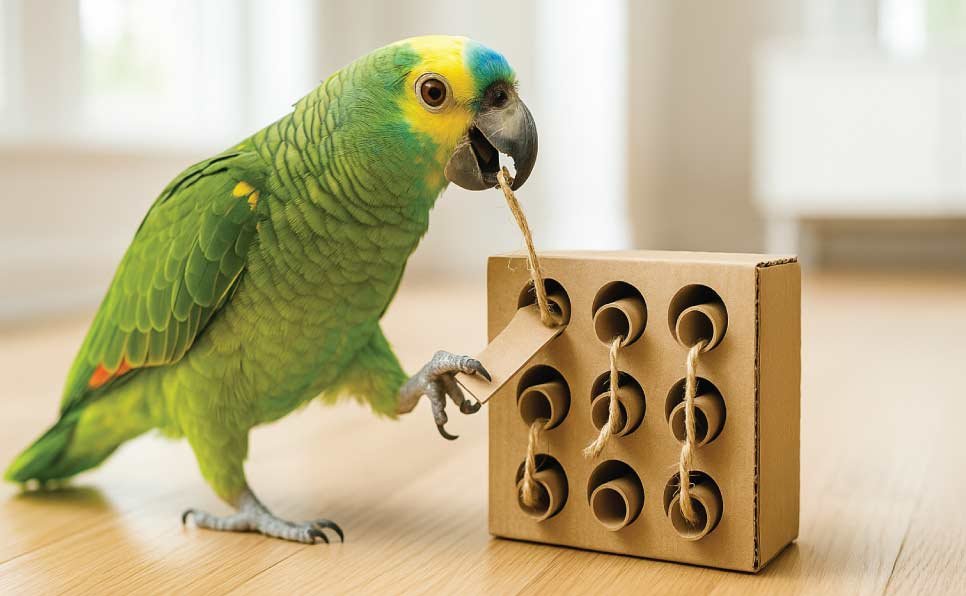
- PVC Forager is a fun and interactive toy for your cockatoo. This accessory has ample interior space for treats.
- Mobile Forager is the coolest, craziest toy to keep your cockatoo active and entertained! Four foraging treat cups with multicolored covers rotate on a PVC pipe mobile which hangs from the roof of any cage.
- Triple Treat Forager is three times the fun as other foraging toys. These three clear cups can hold dried fruit, insects or any other treat.
These encourage problem-solving and reduce stress.
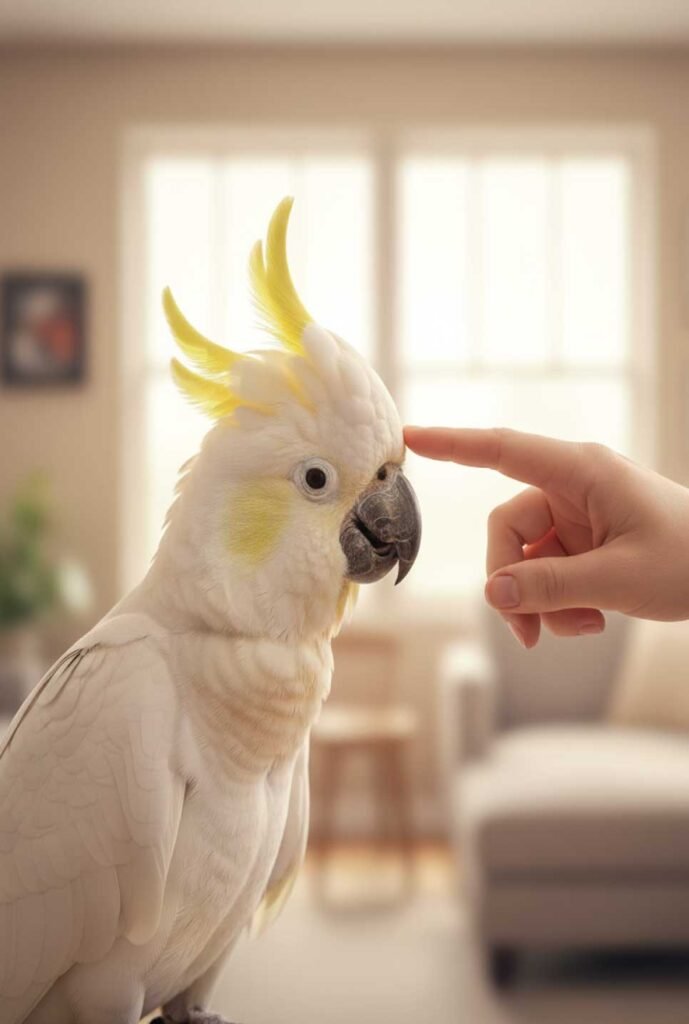
The Head-Only Petting Rule
This rule often protects new owners from future heartbreak.
Petting the back, wings, or under the wings may:
- trigger hormones
- increase frustration
- create a pair bond
- lead to aggression
Head scratches? Safe.
Body petting? May cause long-term problems.
Managing Screaming With Calm Consistency
Cockatoo screaming isn’t fully “fixable. But you can shape healthier habits.
Helpful steps:
- reward quiet moments
- respond to soft calls
- avoid reacting to loud screams
- offer foraging before predictable screaming times
- reduce overstimulation
Think of it as communication training.
Understanding and Preventing Biting
Cockatoos usually bite because:
- they feel threatened
- they’re overstimulated
- hormones are active
- they’re guarding someone
- they’re confused or scared
Watch for warning signs:
- raised crest
- intense eye pinning
- stiff posture
- leaning forward
When you see these, pause and give space.
With practice, many beginner owners learn to predict and prevent bites.
Housing, Diet, and Health Realities
Cockatoos Are Escape Artists
Many owners learn (often too late) that cockatoos can:
- slide food doors open
- undo simple locks
- figure out bolt snaps
- open drawers and cabinets
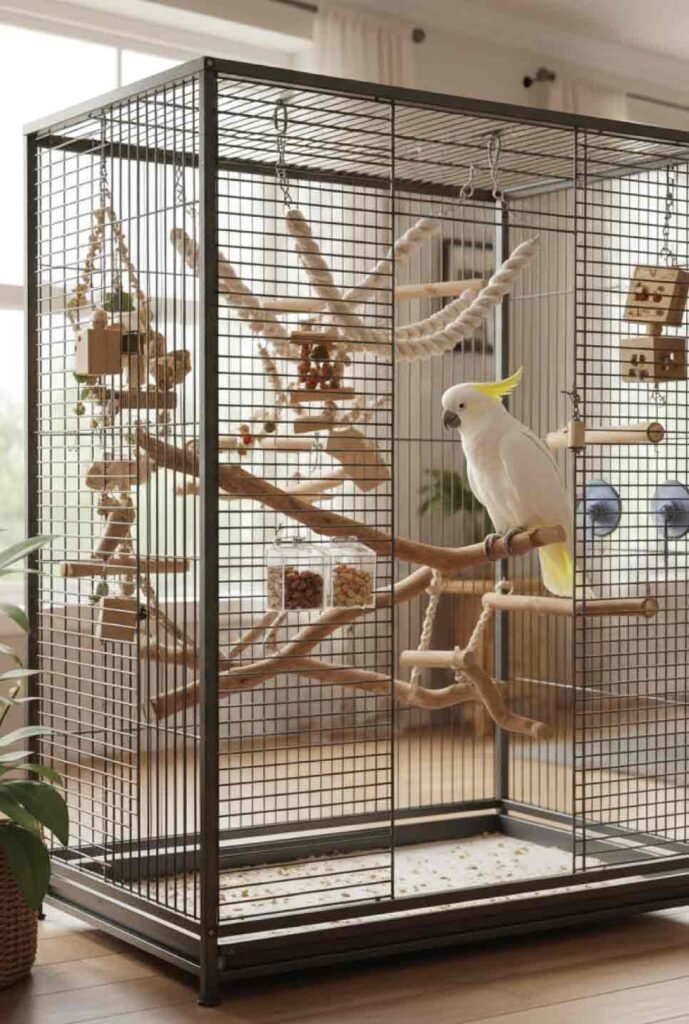
A beginner-friendly cage should be:
- large enough for flight and movement
- strong enough to resist chewing
- lockable with bird-proof mechanisms
Minimum recommended size:
24 x 48 x 48 inches (for medium/large cockatoos).
A solid choice:
- Borneo Cage featuring 38 ft cubic space, removable wired floor grates over the catch trays, four locking side access doors, and full-length front doors with stainless steel locks. Pull-out catch trays make cleaning a breeze.
Perches and Cage Setup
Cockatoos benefit from:
- natural wooden perches
- rope perches
- textured perches for foot health
- platforms for resting
Great accessories:
- Multi-Branch Perch climbing perch made from real wood, provides a place for your cockatoo to perch and swing on.
- Sandy Branch is the perfect way to provide your cockatoo with a post to rest, swing or climb from while keeping their nails safely filed down through the soft, sand abrasive material.
Rotate perch locations often to keep your cockatoo exploring.
Diet: Nutrition for a Long-Lived Bird
Cockatoos may develop serious health issues without a balanced diet. Veterinary nutrition guides, such as those on LafeberVet, explain that seed-heavy diets may contribute to obesity, fatty liver disease, and nutritional imbalance in cockatoos.
Healthy nutrition may include:
- 60–75% pellets
- 20–25% vegetables, grains, legumes
- up to 10% fruits
- seeds as treats only
Vegetables they often enjoy:
- butternut squash
- bell peppers
- leafy greens
- carrots
- sweet potato
- green beans
Avoid:
- avocado
- chocolate
- onion
- caffeine
- alcohol
Feather Dust: A White Cloud Everywhere
Powder-down cockatoos naturally produce a white, silky dust that:
- sticks to screens
- coats furniture
- floats in the air
- may bother allergies or asthma
Helpful tools:
- daily misting
- HEPA filtration
- weekly deep-cleaning of bird areas
Health Problems to Watch For
Cockatoos are prone to:
- PBFD
- fatty liver disease
- plucking
- self-mutilation
- respiratory irritation
- reproductive hormone issues
Routine avian vet visits may prevent major issues.
If you want to learn more about bird health, you can explore:
Next Steps and Ethical Sourcing
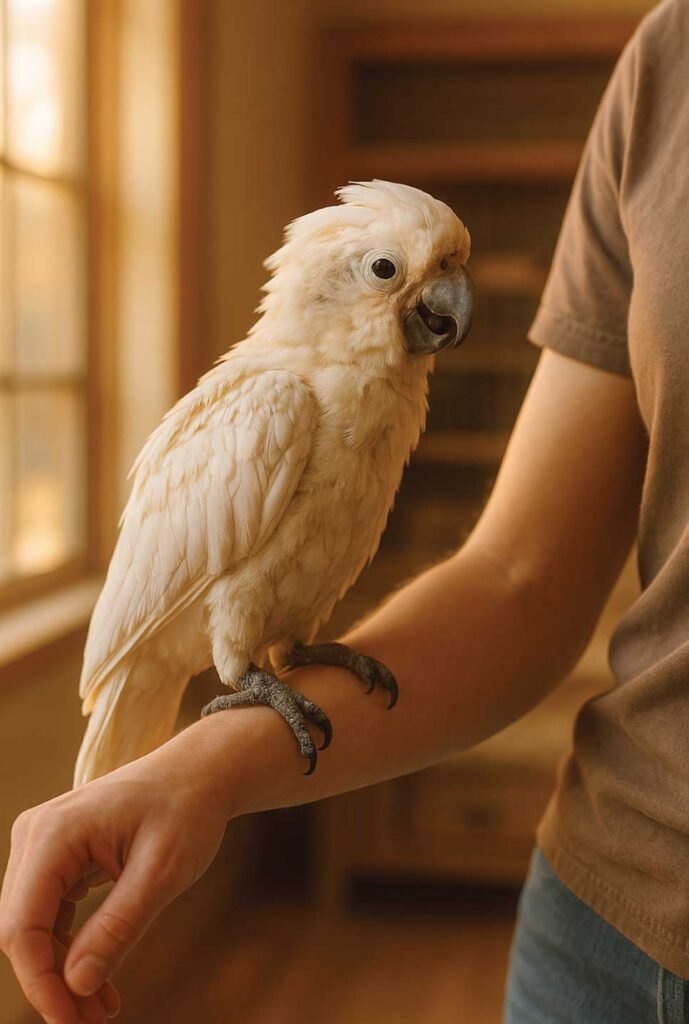
Adoption Is Often the Most Compassionate Choice
Because cockatoos are re-homed so often, rescues are full of birds who:
- were misunderstood
- developed emotional issues
- lost their homes due to life changes
- became too loud or destructive for their owners
Rescues often provide:
- behavior notes
- personality insights
- support during adoption
- reduced overall cost
Many adopted birds form deep, grateful bonds.
Legal Requirements: Cockatoos and CITES
Cockatoos are protected. You must receive:
- proof of captive breeding
- CITES documentation
- legal transfer papers
Never buy a bird without documents.
Work With Experts
A new cockatoo owner may benefit from:
- avian behaviorists
- cockatoo rescue volunteers
- bird trainers familiar with pair-bonding issues
Cockatoos are incredibly intelligent, some even craft tools, like the Palm Cockatoo using sticks to drum.
The right professional guidance may transform your experience.
Your First 30 Days With a Cockatoo (Beginner Action Plan)
Welcoming a cockatoo into your home may feel exciting, overwhelming, and emotional all at once. These first 30 days can shape your bird’s sense of safety, independence, and trust for years to come. Here’s a gentle, realistic beginner plan.
Days 1–3: Settling In and Creating Safety
Your new cockatoo may feel unsure, shy, or overstimulated during the first days. Try to keep things calm.
What you can do:
- Set up their cage in a stable, low-traffic area
- Keep noise low and avoid fast movements
- Sit near them without pushing interaction
- Offer familiar foods if possible
- Speak softly, using the same phrases each day
Signs things are going well:
- gentle preening
- exploring the cage
- soft chirps or whistles
Signs they may feel stressed:
- pacing
- freezing
- wide eyes
Go slowly. They’re learning that you’re safe.
Days 4–10: Building Routine and Predictability
Cockatoos thrive with routines. Establishing one early may prevent future anxiety.
Helpful habits to introduce:
- consistent feeding times
- morning “hello” ritual
- short training moments (5–10 minutes)
- foraging toys inside the cage
- predictable bedtimes (cockatoos need 10–12 hours of sleep)
During this time, avoid:
- excessive cuddling
- loud visitors
- frequent changes to the environment
Your goal is to teach your cockatoo that life with you is steady.
Days 11–20: Gentle Training and Independence
Now your cockatoo is feeling safer. This is the perfect window to teach independence.
Ideas to try:
- encourage stationing on a perch
- introduce toys like the PVC Forager or Mobile Forager (placeholder affiliate links)
- reward calm moments when they entertain themselves
- teach simple cues like “step up”
This prevents the overly dependent behaviors many cockatoos struggle with.
Days 21–30: Slow Socialization and Confidence Building
Once your cockatoo trusts you, they can begin exploring more.
Ways to build confidence:
- allow supervised cage-free time
- introduce a second play area or tree
- practice calm separation (short periods out of view)
- reinforce soft sounds and calm behavior
- slowly introduce one new family member at a time
If everything goes smoothly, your cockatoo will begin to feel at home, not because of constant cuddles, but because of stability, enrichment, and gentle boundaries.
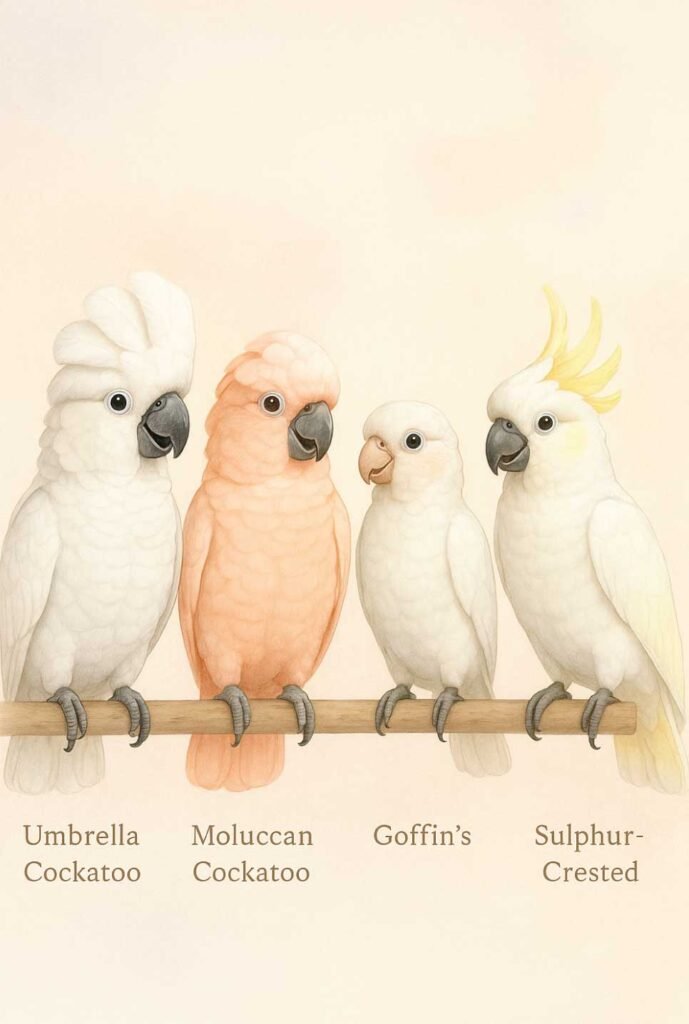
Species-Specific Notes for Beginners
Not all cockatoos are the same. Each species has its own personality, noise level, emotional needs, and challenges. These notes may help beginners choose wisely. For beginners who want deeper species-specific research, the Parrot Encyclopedia by the World Parrot Trust offers reliable cockatoo profiles and conservation notes.
Umbrella Cockatoos (U2)
Umbrella cockatoos are loving, dramatic, and incredibly expressive. Their huge crest makes their emotions easy to read.
They may be best for beginners who:
- want a highly affectionate bird
- are home most of the day
- have a quiet, predictable household
Challenges you may encounter:
- very loud contact calls
- high emotional dependency
- risk of pair bonding
- dust production
Umbrellas may require strong routines, clear boundaries, and plenty of foraging.
Moluccan Cockatoos (Salmon-Crested)
Moluccans are sometimes called the “drama queens” of the cockatoo world. They are extremely sensitive, deeply emotional, and incredibly intelligent.
Best for beginners who:
- understand emotional animals
- love to train and offer enrichment
- enjoy active, playful birds
Challenges:
- among the loudest parrots in the world
- prone to self-mutilation when distressed
- need LOTS of space and toy rotation
- regulation of hormones is important
Moluccans may thrive with beginners who enjoy a challenge and are dedicated to emotional balance.
Goffin’s Cockatoos
Goffin’s cockatoos are often considered “small but mighty.” They’re playful, charming, and exceptionally smart.
Good for beginners who:
- prefer a smaller cockatoo
- enjoy puzzle toys and training games
- want a more independent species
Challenges:
- escape artist tendencies
- high problem-solving intelligence (they WILL find your cabinet latches!)
- need daily mental challenges
Goffins may be easier for beginners compared to larger species, but still require structure.
Black Palm Cockatoos
These stunning birds are rare in the pet trade and extremely intelligent.
They may:
- use tools
- “drum” to communicate
- require large aviary-level housing
Not usually recommended for beginners due to:
- intense enrichment needs
- specialized diet
- strong beak strength
- sensitivity to routine changes
Sulphur-Crested Cockatoos
Energetic, loud, and hilariously dramatic.
They may be good for beginners who:
- love busy, playful birds
- enjoy active training
- want a big personality
Challenges:
- extremely loud (one of the loudest parrots)
- prone to hormonal behaviors
- require consistent boundaries
Sulphur-cresteds shine with beginners who love excitement and interaction.
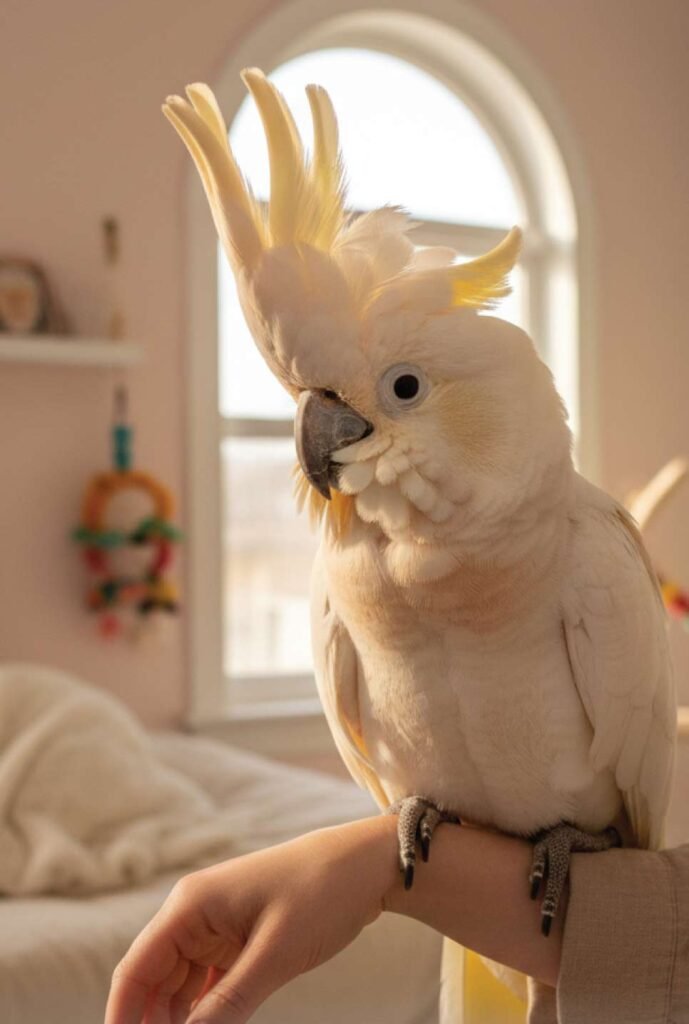
Conclusion: Are You Ready for a Cockatoo?
A cockatoo can be a beautiful companion for beginners, but only beginners who understand their deep emotions, long lifespan, and need for independence.
These birds may require:
- structure
- patience
- boundaries
- routine
- enrichment
- long-term commitment
And in return, they may offer a friendship full of silliness, connection, curiosity, and unforgettable moments.
So… Is a Cockatoo a Good Bird for Beginners?
Here’s the honest, gentle answer:
A cockatoo can be a wonderful companion for a beginner, but only if that beginner is ready for a deeply emotional, long-term, and sometimes challenging commitment.
These parrots may need patience, structure, boundaries, and enrichment. But in return, they may offer love, silliness, curiosity, and a relationship unlike anything else.
If you feel unsure, that’s okay. You may enjoy comparing cockatoos with other gentle species in
Whatever you decide, thank you for taking the time to learn. That alone shows you’re the kind of pet parent a bird would be lucky to have.
Cockatoo for Beginners: Frequently Asked Questions (FAQs)
Cockatoos can talk, but they’re usually not the strongest talkers compared to species like African Greys or Amazons. They may learn a handful of words or short phrases, but their real charm is usually in their emotional expression, body language, dancing, and hilarious sound effects. Some cockatoos mimic laughter, kitchen noises, or even the family dog more often than actual words.
Depending on where you live, a cockatoo’s annual care may include: high-quality pellets
- fresh produce
- enrichment toys
- vet checkups
- cage replacement parts
- cleaning supplies
Most beginners spend €800–€1,500 per year, not including emergencies or large cages. Cockatoos destroy toys quickly, so enrichment is often the highest monthly cost.
Some cockatoos may tolerate other birds, but many prefer being the only large parrot in the home. They can be territorial or jealous, especially if a pair bond has formed. Never house cockatoos with smaller birds, as their strong beaks can injure them accidentally. If you want multiple parrots, supervised interactions and separate cages are essential.
Yes, bathing is very important for cockatoos, especially because of their feather dust. Most birds enjoy: gentle sprays from a mist bottle
- shower perches in the bathroom
- warm (not hot) water sessions
- air-drying in a warm room afterward
Bathing 2–4 times a week may help keep their feathers healthy and reduce airborne dust in your home.
Cockatoos are considered one of the worst choices for allergy-sensitive homes because they produce constant powder down. This dust can irritate lungs, worsen asthma, and spread easily through the home. Air purifiers help, but they don’t fully eliminate the issue. Families with respiratory concerns may be happier with a non-dusty species like Pionus or Eclectus parrots.
Cockatoos may struggle with isolation because they are flock birds. While some may manage 4–6 hours alone with proper enrichment, many become anxious with long daily separations. If your lifestyle includes full workdays away from home, a cockatoo may require: a bird-safe room
- a foraging setup
- window perches
- sound enrichment (calm music or nature sounds)
- multiple play stations
Even then, they may need hours of connection after you return.
Recommended Products for Cockatoos (Beginner-Friendly)
- Borneo Cage, roomy and sturdy
- Multi-Branch Perch, great for foot variety
- Sandy Branch, helps reduce nail overgrowth
- PVC Forager, perfect for boredom prevention
- Forest Dangle Chew, safe chewing outlet
- Triple Treat Forager, encourages exploration